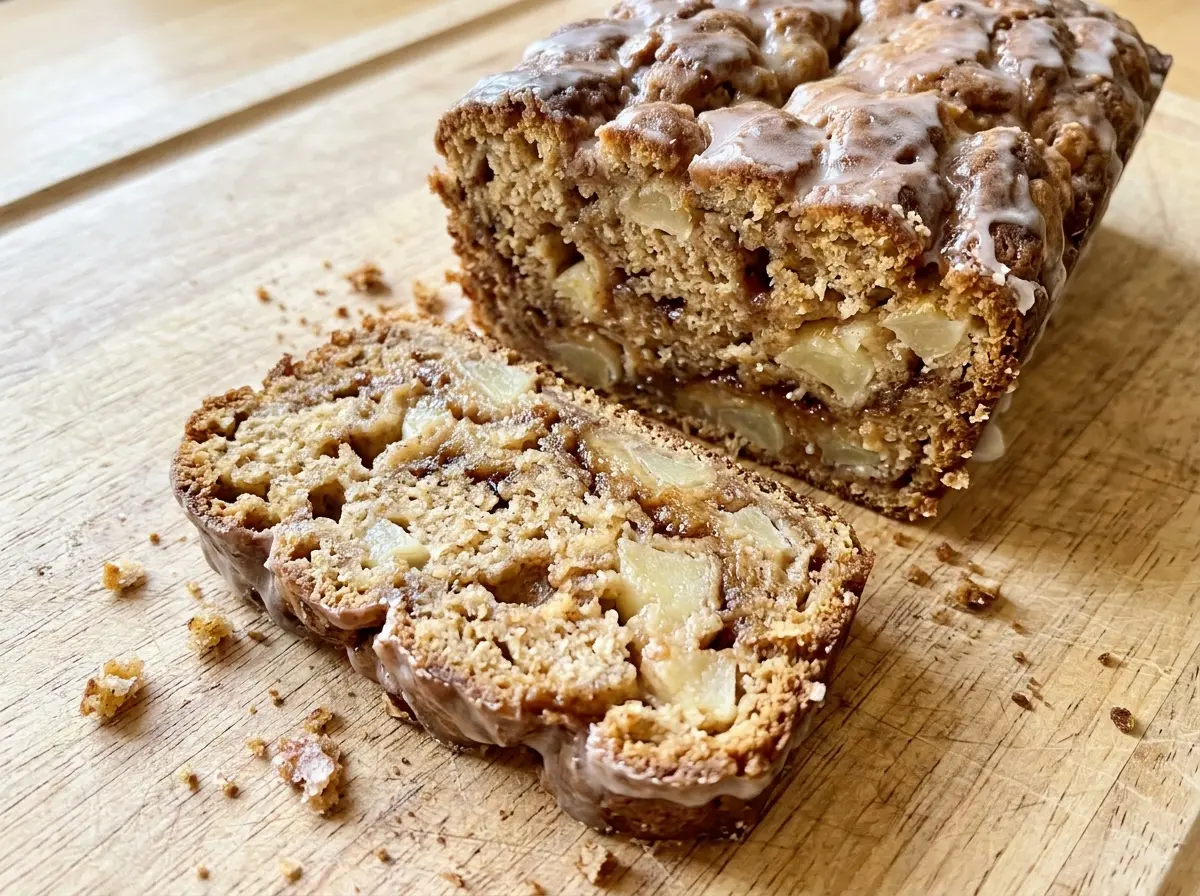
The apples turn glossy as the cinnamon sugar clings to their cut edges, and the whole bowl starts to smell like the best part of an apple fritter. That’s the moment this loaf starts to feel different from plain apple cake. Apple Fritter Bread has a soft, buttery crumb with pockets of tender apple and a thin drizzle of glaze on top.
I cream the butter and sugar until they look pale and fluffy, then build the batter by alternating the dry ingredients with the milk. That little bit of care gives the loaf a tender texture that can hold the apples without turning heavy. Layering the fruit through the batter also means you get cinnamon-sugar apples from top to bottom, not just a few pieces at the surface. Once the glaze settles over the cooled loaf, each slice has a soft crumb, a sweet apple ribbon, and a little shine.
Kitchen Note
Room-temperature eggs blend into the creamed butter more easily than cold ones. Set them out before you start, so the batter stays smooth as you add them one at a time.
Save this Apple Fritter Bread for a cozy bake: tender cinnamon apples tucked through a buttery loaf, finished with a simple milk glaze.
Why the Cinnamon Belongs on the Apples, Not in the Batter
It’s easy to reach for the cinnamon when you’re mixing the dry ingredients, but this loaf gets its fritter-like character from tossing the apples with cinnamon and sugar first. The spice coats the fruit, and the sugar draws out a little moisture as the apples sit. That mixture then bakes in distinct pockets instead of making the whole crumb taste uniformly spiced.
The layers matter, too. Half the batter goes down first, half the apples sit across it, and the remaining batter covers them before the last apples go on top. That gives the loaf fruit through the middle as well as along the crown. Press the top apples gently into the batter; they should stay visible rather than disappear under a heavy layer. If you stir the cinnamon apples through the batter instead, you’ll lose those clear pockets and can end up with streaky, uneven fruit. Keeping the mixture separate until assembly gives every slice a more recognizable apple-fritter feel.
What the Apples, Butter, and Milk Each Bring to the Loaf
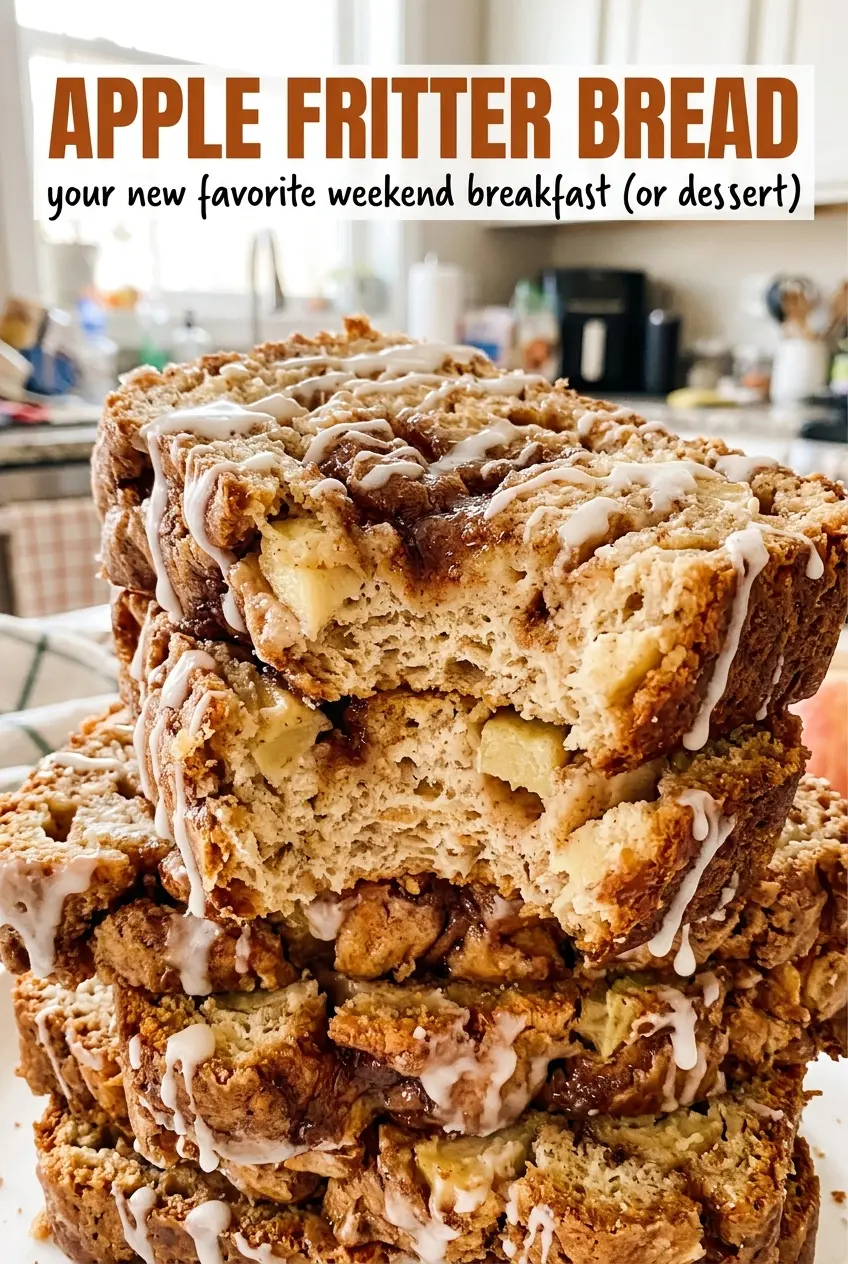
- Apples — Choose firm apples that keep their shape as they bake; a soft, mealy apple can collapse into the crumb. The fruit doesn’t need to be expensive, but freshness and a crisp texture make a difference. Peel and dice evenly so the pieces soften at roughly the same rate.
- Butter and sugar — Unsalted butter lets the small amount of salt stay in balance, while creaming it with the sugar builds the base of the loaf’s tender texture. A standard grocery-store butter works well; there’s no need for a specialty brand. If salted butter is what you have, the FAQ explains the simple adjustment.
- Flour and baking powder — All-purpose flour gives the batter enough structure to hold the fruit without turning this into a dense, chewy loaf. A regular store brand is fine. The baking powder provides the lift, so use a fresh container if yours has been open for a long time; old leavening can leave the center heavy.
- Whole milk — Milk loosens the batter and adds richness. If you only have 2% milk, it works measure-for-measure, though the crumb will be a touch less rich. Avoid replacing it with water, which removes that dairy richness without giving the batter the same body.
- Vanilla and glaze ingredients — Vanilla rounds out the buttery batter, and an ordinary extract is plenty here. Powdered sugar is the right choice for a smooth glaze; granulated sugar won’t dissolve the same way. Use milk to bring it together, adding it gradually if you’re adjusting a glaze that looks too thick.
Building the Batter and Layering the Apples Without Overworking It
Set Up the Pan and the Cinnamon Apples
Heat the oven to 350°F and grease a 9×5-inch loaf pan. Toss the peeled, diced apples with the cinnamon and the portion of sugar set aside for the fruit. The apples should look lightly coated, not buried in a dry layer of spice. Keep the mixture ready while you make the batter so you can layer it without leaving the fruit sitting for an extended stretch.
Cream the Butter, Then Alternate the Dry Ingredients and Milk
Whisk the flour, baking powder, and salt in a medium bowl. In a large bowl, beat the softened butter with the remaining sugar until light and fluffy, about 2 minutes, then beat in the eggs one at a time and add the vanilla. Add the flour mixture in three additions, alternating with the milk in two additions, and begin and end with flour. Once the flour is in, mix only until the batter comes together; a few strokes too many can make a quick bread tougher.
Make Two Apple Layers
Spread half the batter in the prepared pan, then scatter half the cinnamon apples over it. Add the remaining batter and finish with the rest of the apples on top. The batter can be thick, so spread it gently rather than dragging all the fruit into one spot. Press the top apples lightly into the surface; pressing hard can bury them and make the finished top less defined.
Bake Until the Bread Portion Tests Cleanly
Bake for 60–70 minutes, tenting the pan loosely with foil if the top browns too quickly. A toothpick should go into the bread portion, not an apple piece, and come out with a few moist crumbs. A toothpick through fruit can look wet even when the surrounding crumb is baked. If the top is already deeply browned before the middle is ready, the loose foil tent shields it while the loaf finishes.
Cool Completely Before Adding the Glaze
Let the loaf cool in the pan for 15 minutes, then remove it and cool completely on a wire rack. The loaf is delicate while warm, so give it time to settle before moving on. Stir the powdered sugar and milk until smooth, then drizzle the glaze over the cooled bread. Glazing a warm loaf makes the icing run off into the crumb instead of sitting in a clean, pale ribbon.
Three Small Changes for a Different Apple Fritter Loaf
Leave Off the Glaze
Skip the powdered-sugar glaze for a less-sweet loaf that lets the apples and cinnamon come forward. The crumb stays the same, but the top won’t have that thin, crisp-sweet finish once the glaze sets.
Make the Cinnamon More Pronounced
Increase the cinnamon in the apple mixture to 1½ teaspoons for a warmer, more noticeable spice note. Keep it with the apples rather than mixing it into the flour, so the cinnamon stays concentrated around the fruit.
Make It Dairy-Free
Use a firm dairy-free baking stick in place of the butter and unsweetened oat milk in place of the whole milk, using the same amounts. The loaf will still bake up tender, though it won’t have quite the same buttery richness. The eggs remain in the recipe, so this adaptation isn’t vegan.
Storage and Reheating
- Refrigerator: Keep the glazed loaf covered for up to 5 days. The crumb firms up when chilled, so let a slice sit at room temperature before eating.
- Freezer: Freeze the unglazed loaf or individual slices, wrapped tightly and placed in a freezer bag, for up to 2 months. Thaw at room temperature, then glaze the loaf if you’d like.
- Reheating: This bread is good at room temperature. For a warm slice, microwave briefly and stop as soon as it’s warm; prolonged heating can dry the crumb and melt the glaze.
Questions That Come Up When Baking Apple Fritter Bread
Apple Fritter Bread
Ingredients
Equipment
Method
- Heat the oven to 350°F.
- Grease a 9x5-inch loaf pan.
- Toss the apples with 1/3 cup of the sugar and the cinnamon in a medium bowl.
- Whisk the flour, baking powder, and salt together in a medium bowl.
- Beat the butter and remaining 2/3 cup sugar in a large bowl until light and fluffy, about 2 minutes.
- Beat in the eggs one at a time, then beat in the vanilla.
- Mix in the flour mixture in three additions, alternating with the milk in two additions, beginning and ending with the flour mixture.
- Spread half the batter in the prepared pan and scatter half the apple mixture over it.
- Spread the remaining batter on top, finish with the remaining apples, and gently press the apples into the batter.
- Bake for 60–70 minutes, tenting loosely with foil if the top browns too quickly, until a toothpick inserted into the bread portion comes out with a few moist crumbs.
- Cool in the pan for 15 minutes.
- Remove the loaf and cool completely on a wire rack.
- Stir the powdered sugar and milk together until smooth.
- Drizzle the glaze over the cooled loaf.