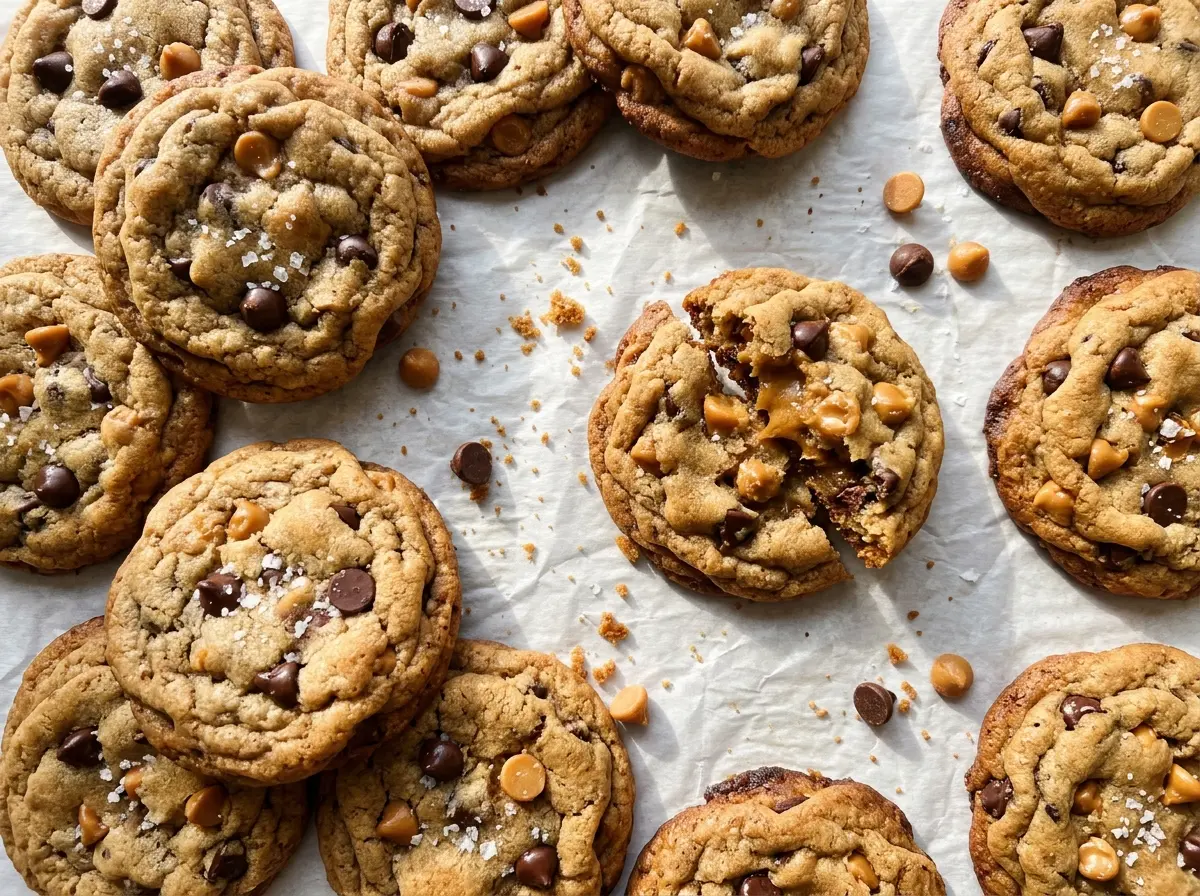
When the first tray comes out, the edges should be lightly golden while the centers still look a little soft; that contrast is what keeps these cookies chewy after they cool. I make these butterscotch chocolate chip cookies with sea salt when a plain chocolate chip cookie needs a deeper caramel note, but I don’t want every bite to taste sugary. Semisweet chocolate keeps the butterscotch from taking over, and flaky salt on top gives each warm cookie a crisp, salty finish.
The dough starts with softened, not melted, butter, and the eggs go in one at a time. That gives the mixture a smooth base before the flour enters; once the flour is in, mixing stops as soon as no dry streaks remain. A short chill makes the portions easier to handle, and baking one sheet at a time keeps the timing simple. I watch the first tray closely near the end because those last couple of minutes decide whether the centers stay soft or turn crisp.
Kitchen Note
Line the baking sheets with parchment rather than setting the dough straight on the pan. The cookies lift cleanly after their short rest, and parchment makes it easier to move the warm batch without breaking the edges.
Save these butterscotch chocolate chip cookies with sea salt for a chewy cookie with a sweet-salty finish and two kinds of chips in every batch.
Why This Dough Needs a Chill Before It Goes in the Oven
Softened butter makes a dough that’s easy to mix, but it also means the fat is pliable when the cookies first hit the heat. Chilling the dough for 30 minutes firms it back up, which helps the portions hold their shape long enough for the edges to set. Skip that pause and the dough is softer to scoop; the cookies are more likely to spread before they’ve developed their golden edges.
This is a short rest, not an overnight transformation. The dough should feel firmer and less sticky when you scoop it, but it shouldn’t be hard or crumbly. Covering the bowl keeps the surface from drying while it chills. That half hour also gives you time to finish preparing the baking sheets without rushing through the mixing.
What the Butter, Sugars, and Two Chips Each Bring

- Unsalted butter and the sugars — Standard unsalted butter works well here, and using it lets the table salt stay in control. Light brown sugar gives the dough its caramel-like note, while granulated sugar keeps the flavor from leaning too heavily in that direction. Dark brown sugar can replace the light brown sugar for a deeper molasses taste; the cookies will taste a little richer.
- Eggs and vanilla — Room-temperature eggs blend into softened butter more smoothly than cold eggs, so take them out ahead of mixing. Good vanilla adds warmth behind the butterscotch, but an everyday pure vanilla extract is fine; there’s no need to use an especially expensive bottle. Eggs provide structure as well as moisture, so a flax egg isn’t a dependable one-for-one swap in this cookie dough.
- All-purpose flour and baking soda — All-purpose flour gives these cookies enough structure to hold the chips without making the centers bready. For a gluten-free batch, use a measure-for-measure gluten-free baking blend that includes xanthan gum in place of the all-purpose flour. Almond or coconut flour isn’t a direct substitute; both behave differently and would need a separately developed formula.
- Butterscotch and semisweet chocolate chips — Use chips that taste good on their own, since both stay in distinct pockets throughout the cookie. Semisweet chocolate gives the sweeter butterscotch a darker counterpoint. Bittersweet chocolate chips work in its place if you prefer a less-sweet, more chocolate-forward bite.
Mixing, Chilling, and Baking Without Guesswork
Cream the Butter and Sugars Until Fluffy
Heat the oven to 350°F and line two rimmed baking sheets with parchment paper. Beat the softened butter with the light brown and granulated sugars on medium speed for 2 to 3 minutes. The mixture should look lighter in color and fluffy, not shiny or melted. If the butter looks greasy, it was too warm to start; pause until it firms up before continuing.
Add the Eggs, Then Keep the Flour Mixing Brief
Beat in the eggs one at a time, letting each disappear into the butter mixture before adding the next, then mix in the vanilla. In a separate bowl, whisk together the flour, baking soda, and table salt so the leavening is evenly distributed. Add the dry mixture on low speed and stop when it’s just combined. A few seconds too much mixing after the flour goes in can make the cookies tougher.
Fold in Both Chips and Chill the Covered Dough
Stir in the butterscotch chips and semisweet chocolate chips until they’re spread through the dough. Scrape the bottom of the bowl once so you don’t leave an unmixed patch behind. Cover the dough and refrigerate it for 30 minutes. When it’s ready, it should be firm enough to scoop into portions that hold their shape.
Bake One Sheet at a Time and Finish While Warm
Scoop the dough into 2-tablespoon portions, placing 12 on each baking sheet about 2 inches apart. Bake one sheet at a time at 350°F for 10 to 12 minutes. Look for lightly golden edges with centers that still look soft; don’t wait for the middle to look fully set in the oven. Sprinkle the warm cookies with flaky sea salt, let them sit on the sheet for 5 minutes, then transfer them to a wire rack to cool.
Three Small Changes That Give These Cookies a Different Spin
Make the batch gluten-free
Replace the all-purpose flour with a measure-for-measure gluten-free baking blend that contains xanthan gum, using the same amount. The cookies may be a little more delicate, so let them complete their 5-minute rest on the baking sheet before moving them.
Turn up the molasses note
Use dark brown sugar instead of light brown sugar. The finished cookies have a deeper, more pronounced brown-sugar flavor that stands up well to the butterscotch, without changing the mixing method.
Make the chocolate more intense
Swap the semisweet chocolate chips for bittersweet chips. Their less-sweet, deeper chocolate taste balances the butterscotch more sharply, while keeping the same cookie texture.
Storage and Reheating
- Refrigerator: Baked cookies don’t need refrigeration. Keep them in an airtight container at room temperature for up to 5 days; the refrigerator can make them firm sooner.
- Freezer: Freeze completely cooled cookies in an airtight container for up to 2 months, separating layers with parchment. Thaw at room temperature.
- Reheating: Warm a cookie in the microwave for about 5 to 8 seconds if you want the chips soft again. Longer heating can make the cookie hot and tough rather than gently warm.
Questions That Come Up While Making These Cookies
Butterscotch Chocolate Chip Cookies with Sea Salt
Ingredients
Equipment
Method
- Heat the oven to 350°F.
- Line two rimmed baking sheets with parchment paper.
- In a large bowl, beat the butter, brown sugar, and granulated sugar with an electric mixer on medium speed until light and fluffy, 2 to 3 minutes.
- Beat in the eggs one at a time.
- Mix in the vanilla.
- In a medium bowl, whisk together the flour, baking soda, and table salt.
- Add the flour mixture to the butter mixture and mix on low just until combined.
- Stir in the butterscotch chips and chocolate chips.
- Cover the dough and refrigerate it for 30 minutes.
- Scoop the dough into 2-tablespoon portions.
- Arrange 12 portions about 2 inches apart on each prepared baking sheet.
- Bake one sheet at a time at 350°F for 10 to 12 minutes, until the edges are lightly golden and the centers still look soft.
- Sprinkle the warm cookies with flaky sea salt.
- Let the cookies cool on the baking sheet for 5 minutes.
- Transfer the cookies to a wire rack to cool.