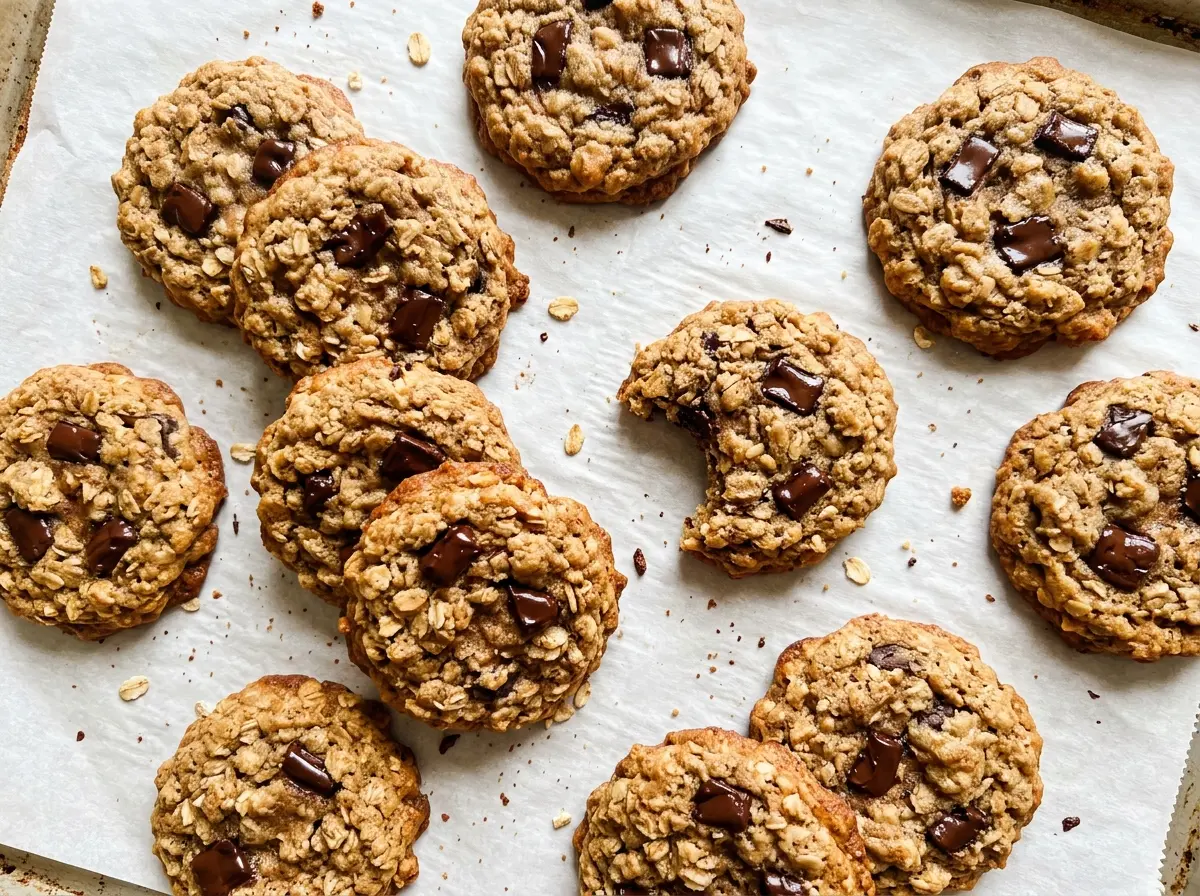
When the oats go into the bowl, the dough changes from smooth and airy to thick and nubbly. That’s exactly what I want for oatmeal chocolate chunk cookies: a sturdy, chewy bite with semisweet chocolate tucked through it, not a thin cookie where the chocolate overwhelms everything else.
I cream the butter and sugars until they look light and fluffy, then add the eggs one at a time so the mixture stays smooth. Once the flour goes in, I stop mixing as soon as it disappears; the oats and chocolate get stirred in after that. It’s a simple order, but it keeps the dough tender and lets the old-fashioned oats hold their shape. You’ll get golden edges, soft centers, and generous chocolate in every cookie.
Kitchen Note
Let the baking sheet cool before you scoop the next batch onto it. Dough on a warm sheet starts softening before it reaches the oven, and the cookies can spread more than you expect.
Save these oatmeal chocolate chunk cookies for a bake when you want a chewy oat cookie with pockets of semisweet chocolate.
Why These Cookies Need More Oats Than Flour
In these cookies, the oats aren’t there just to make a familiar chocolate chip cookie feel different. They’re a major part of the texture. The old-fashioned oats give each bite a distinct chew, while the flour holds the dough together and helps the edges turn golden. That balance is what makes the centers substantial without making the cookies dense.
It also explains why the mixing order matters. Flour develops gluten when it’s worked, and too much mixing at that point can make a cookie tough. I bring the flour mixture in only until it’s combined, then stir in the oats and chocolate chunks. The dough will look thick and full of oats; it shouldn’t look smooth like cake batter. Those uneven bits are what give the baked cookies their chewy texture and chocolate in every bite.
What the Oats, Butter, and Chocolate Bring to the Dough
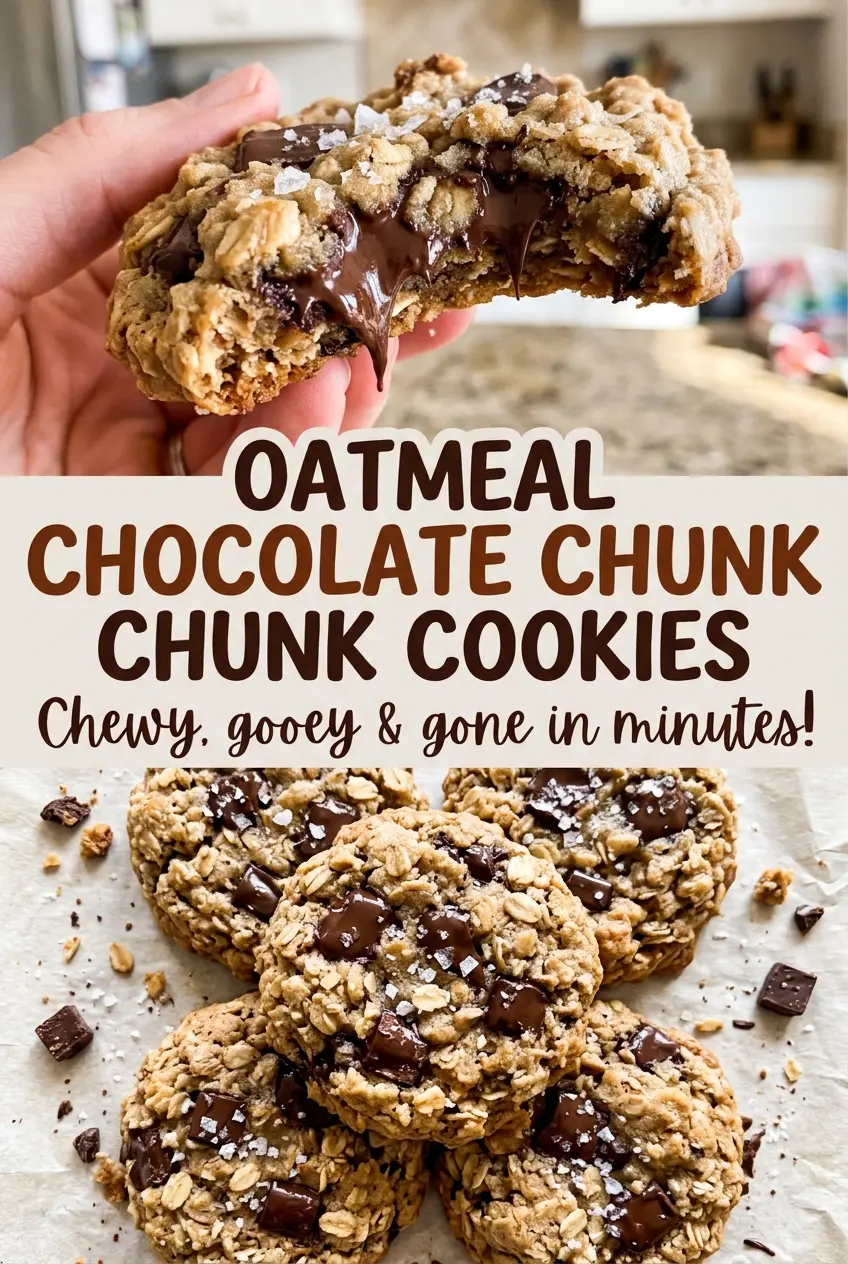
- Old-fashioned rolled oats — These stay distinct in the baked cookie and provide its signature chew. Quick oats break down more and make a softer, less textured cookie, so I stick with rolled oats here. Store-brand oats work well; there’s no need to buy a specialty variety.
- Unsalted butter — Softened butter creams smoothly with the sugars and gives the cookies their rich base. Standard unsalted butter is a good choice; a dairy-free version works best as a baking stick rather than a soft tub spread, which can make dough too loose.
- Light brown and granulated sugars — Brown sugar brings moisture and a deeper caramel note, while granulated sugar helps the edges bake up. Dark brown sugar can replace the light brown sugar in the same amount for a stronger molasses taste and slightly softer cookies.
- Room-temperature eggs — They blend into the creamed butter more readily than cold eggs, helping the dough come together evenly. For an egg-free adaptation, a commercial egg replacer made for baking is the most practical option, though the cookies may be less rich and a little more fragile.
- Semisweet chocolate chunks — Chunks give you larger, irregular pockets of chocolate than chips. Semisweet chips can replace them in the same amount for a more even distribution; use a brand you enjoy eating, since the chocolate stands out in each bite.
Mixing and Baking for Chewy Centers
Start with a Light, Fluffy Butter Base
Heat the oven to 350°F and line a large baking sheet with parchment paper. Whisk the flour, baking soda, and table salt together in a medium bowl so the leavening is distributed before it reaches the dough. In a large bowl, beat the softened butter with both sugars for 2 to 3 minutes, until the mixture looks lighter and fluffy. If the butter is still firm, it won’t cream evenly; it should give slightly when pressed but shouldn’t look melted.
Add the Eggs Before the Flour
Beat in the eggs one at a time, letting each blend into the butter mixture before adding the next. Mix in the vanilla, then add the flour mixture. Stop as soon as you no longer see dry flour; continuing to beat at this stage can make the cookies firm rather than tender. Scrape the bowl if flour is clinging to the sides, then mix just enough to bring it in.
Fold in the Oats and Chocolate
Stir in the rolled oats and chocolate chunks until they’re spread through the dough. The mixture will be thick, and a sturdy spoon or spatula makes this easier than trying to beat the additions in. Keep stirring only until the oats and chocolate are distributed, so you don’t overwork the flour. Scoop rounded 2-tablespoon portions onto the lined sheet, leaving about 2 inches between them.
Use the Edges to Judge the Bake
Bake at 350°F for 10 to 12 minutes. Look for golden edges while the centers still appear slightly soft; they’ll continue to set as they rest. Leave the cookies on the baking sheet for 5 minutes, then move them to a wire rack to cool. If the centers look soft at that point, that’s expected—the brief rest lets the cookies firm enough to transfer without baking them dry.
Easy Changes for Different Chocolate and Dietary Needs
A Gluten-Free Oatmeal Cookie
Replace the all-purpose flour with a cup-for-cup gluten-free baking blend and use certified gluten-free rolled oats. The cookies may have a slightly different texture depending on the blend, but the oats and chocolate keep the chewy, chunky character of the original.
Make Them Dairy-Free
Use an equal amount of plant-based baking sticks in place of the butter, plus dairy-free semisweet chocolate chunks. Choose sticks rather than spread from a tub for a dough that creams more like butter; expect a less buttery flavor and some variation in spread.
Use Dark Chocolate for a Less Sweet Cookie
Swap the semisweet chunks for dark chocolate chunks in the same amount. The oatmeal base stays the same, but the chocolate tastes more intense and less sweet. Chopped chocolate bars work too; cut them into uneven, bite-size pieces.
Storage and Reheating
- Refrigerator: Store in an airtight container for up to 1 week; the cookies will firm up when chilled. They don’t need refrigeration, though, and keep well at room temperature in an airtight container for about 4 days.
- Freezer: Freeze fully cooled cookies in an airtight freezer container for up to 3 months. Separate layers with parchment, then thaw at room temperature.
- Reheating: Warm a cookie in a 300°F oven for about 5 minutes, or microwave it briefly until the chocolate softens. Don’t heat it for too long or the cookie will dry out.
Questions That Come Up While Baking These Cookies
Oatmeal Chocolate Chunk Cookies
Ingredients
Equipment
Method
- Heat the oven to 350°F.
- Line a large baking sheet with parchment paper.
- Whisk the flour, baking soda, and salt together in a medium bowl.
- Beat the butter, brown sugar, and granulated sugar in a large bowl until light and fluffy, about 2 to 3 minutes.
- Beat in the eggs one at a time.
- Mix in the vanilla extract.
- Mix in the flour mixture just until combined.
- Stir in the oats and chocolate chunks.
- Drop rounded 2-tablespoon portions of dough onto the baking sheet, spacing them about 2 inches apart.
- Bake at 350°F for 10 to 12 minutes, until the edges are golden and the centers still look slightly soft.
- Cool the baking sheet before baking subsequent batches.
- Let the cookies rest on the baking sheet for 5 minutes.
- Transfer them to a wire rack to cool.