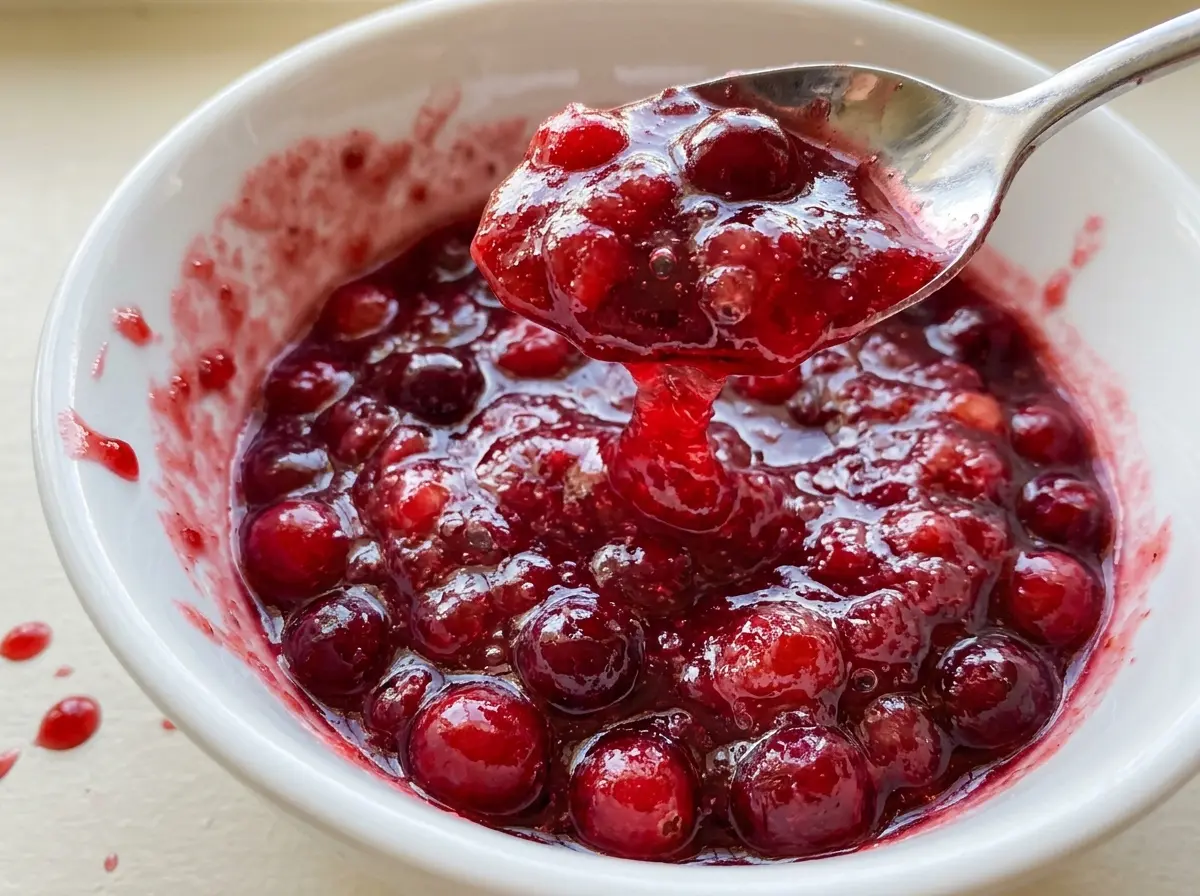
A few cranberries pop against the side of the saucepan before the rest begin to split, and the sharp, tart berry smell fills the kitchen. That’s the moment this cranberry sauce starts to look like itself. I keep the berries moving with an occasional stir, then add the sugar only after most have burst. The result is a bright, spoonable sauce that’s ready to go into jars while it’s still hot.
For canning, the proportions and jar size matter just as much as the simmer. I use fresh cranberries, granulated sugar, and water, then fill six hot half-pint jars with a little room left at the top. Cranberries bring plenty of their own tartness and natural pectin, so there’s no need to add anything extra to get a lovely set as the sauce cools. Each sealed jar holds that tangy cranberry taste, with enough sweetness to round it out.
Kitchen Note
Don’t start the processing clock as soon as the jars go back into the canner. Wait until the water has returned to a full boil, then start timing; that gives every jar the full processing time.
Save this canning cranberry sauce for its ruby color, bright tartness, and handy half-pint jars.
Why This Sauce Can Look Loose Before It Sets
Hot cranberry sauce can look thinner in the saucepan than you expect, and that isn’t a reason to keep boiling it past the specified time. Cranberries contain natural pectin, which helps the sauce thicken as it cools. The berries also release juice as they burst, so the mixture can seem quite fluid while it’s still bubbling.
That texture is useful when you’re filling jars: hot sauce flows into the jars without needing to be pressed or packed down. Once cooled, the sauce becomes thicker and the berries hold together in a soft, spoonable texture. Most berries should burst during their simmer, but a few whole or partly split berries are fine. I don’t blend the batch or add extra thickener; keeping the sauce simple preserves its cranberry character and lets it set naturally as it cools.
Why Fresh Cranberries and Granulated Sugar Stay in This Canning Batch

- Fresh cranberries — Pick through them and rinse before cooking, removing any berries that are soft or shriveled. Their tartness and natural pectin shape the sauce, so I stick with fresh cranberries for this batch rather than changing the fruit.
- Granulated sugar — Regular granulated sugar dissolves cleanly into the hot berries and balances their sharp flavor. Keep the amount unchanged in jars intended for pantry storage; swapping sweeteners or reducing the sugar changes this formula. Adjust an individual portion after opening if you want a different flavor.
- Water — Water gives the berries enough liquid to begin softening and releasing their juices. There’s no need to replace it with juice or another liquid; use plain water to keep the batch consistent.
How to Cook, Fill, and Process the Jars Without Rushing
Warm the Jars While the Canner Heats
Wash six half-pint canning jars and arrange them on the rack in your boiling-water canner. Cover the jars with water by at least 1 inch and heat the canner to a simmer. Prepare the lids according to the manufacturer’s directions. Keeping the jars hot while the sauce cooks helps you fill them without pouring hot sauce into cold glass.
Let Most of the Cranberries Burst
Combine the water and rinsed cranberries in a 4-quart saucepan. Bring the mixture to a boil over medium-high heat, then reduce the heat and simmer for 5–10 minutes, stirring occasionally. Watch for the berries to split and release juice; the mixture should look saucy, with most of the cranberries burst. If many are still whole, give them more time within that simmer range rather than increasing the heat.
Dissolve the Sugar and Fill the Hot Jars
Stir in the granulated sugar until it dissolves, then return the sauce to a boil. Boil gently for 3 minutes, stirring frequently so the sauce doesn’t catch on the bottom of the pan. Remove hot jars from the canner one at a time and fill with the hot sauce, leaving 1/4 inch of headspace. Remove air bubbles, wipe each rim clean, then apply the lids and bands fingertip-tight.
Process at the Right Altitude and Cool Undisturbed
Return the filled jars to the canner and check that they’re covered by at least 1 inch of water. Process at a full boil for 15 minutes at 0–1,000 feet, 20 minutes at 1,001–3,000 feet, 25 minutes at 3,001–6,000 feet, or 30 minutes above 6,000 feet. Turn off the heat, remove the canner lid, and let the jars rest in the canner for 5 minutes before lifting them onto a towel. Leave them undisturbed to cool for 12–24 hours, then check the seals.
How to Change a Serving Without Changing the Canning Formula
Keep the jars plain for safe pantry storage, and make any flavor changes only to a portion after opening. Sealed jars belong in a cool, dark place. These small adjustments are for the bowl, not for the saucepan or canner.
A less-sweet portion with applesauce
For a serving with less added sugar per spoonful, stir some unsweetened applesauce into a portion of opened cranberry sauce. It softens the tart-sweet balance and makes the texture looser; don’t add applesauce to jars before processing.
A citrusy cranberry-orange finish
Stir finely grated orange zest into a small portion after opening. The citrus lifts the cranberry flavor and adds a fragrant finish, while leaving the shelf-stable jars and their canning formula unchanged.
A gently spiced bowl
Stir a little ground cinnamon into an opened portion for a warmer, spiced note. Add it gradually and taste as you go; keep spices out of the canning batch so the jars stay true to the original formula.
Storage and Reheating
- Refrigerator: Refrigerate any unsealed jar. After opening a sealed jar, cover and refrigerate the sauce; use it within 3–4 days.
- Freezer: Freeze leftover sauce in a freezer-safe container, leaving room for expansion. Thaw it in the refrigerator; the texture may soften slightly.
- Reheating: Warm only the portion you plan to serve in a small saucepan over low heat, stirring gently. Never heat a sealed canning jar.
Questions About Canning Cranberry Sauce
Canning Cranberry Sauce
Ingredients
Equipment
Method
- Wash six half-pint canning jars and place them on the rack in a boiling-water canner; cover with water by at least 1 inch and heat to a simmer. Prepare the lids according to the manufacturer’s directions.
- Combine the 1 cup water and cranberries in a 4-quart saucepan and bring to a boil over medium-high heat; reduce the heat and simmer for 5–10 minutes, stirring occasionally, until most of the berries have burst.
- Stir in the sugar until dissolved, return the mixture to a boil, and boil gently for 3 minutes, stirring frequently.
- Remove the hot jars from the canner one at a time and fill with the hot sauce, leaving 1/4 inch of headspace. Remove air bubbles, wipe the rims clean, and apply the lids and bands fingertip-tight.
- Return the jars to the canner, making sure they are covered by at least 1 inch of water, and process at a full boil for 15 minutes at 0–1,000 feet, 20 minutes at 1,001–3,000 feet, 25 minutes at 3,001–6,000 feet, or 30 minutes above 6,000 feet; start timing when the water returns to a full boil.
- Turn off the heat, remove the canner lid, and let the jars rest in the canner for 5 minutes before lifting them onto a towel to cool undisturbed for 12–24 hours.
- Check the seals, refrigerate any unsealed jars, and store sealed jars in a cool, dark place.