The grapes are the first pieces to wander when a board feels crowded, and wet fruit can leave the whole arrangement looking messy. I dry the grapes and tomatoes thoroughly, then build the food in clear horizontal rows so the green and red produce help define the shape. This Christmas Tree Charcuterie Board serves 10, with cheese and folded salami giving each row a satisfying mix of color and texture.
Folding the salami slices into quarters keeps them compact instead of spreading flat across the other food. That small change makes it easier to see the rows, while the cheddar star, rosemary sprigs, and pretzel-stick trunk finish the tree without needing extra decorations. The result is a festive centerpiece made entirely from snack-board favorites.
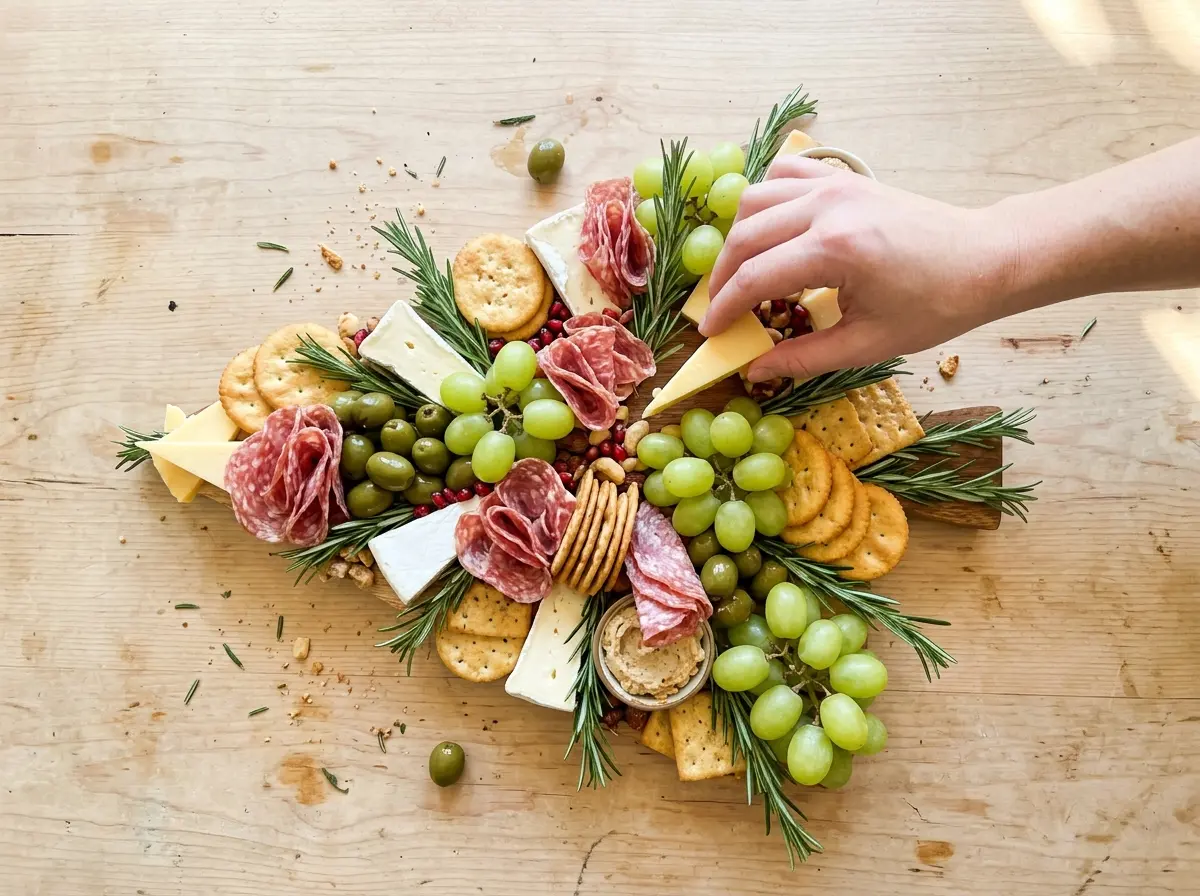
Kitchen Note
Fold each salami slice into quarters before arranging it. The compact shape sits neatly in a row instead of spreading over the ingredients beside it, and the folded edges give the board a tidy look.
Save this Christmas Tree Charcuterie Board for a festive centerpiece with five colorful rows and a cheddar star on top.
Why Five Shortening Rows Make This Look Like a Tree
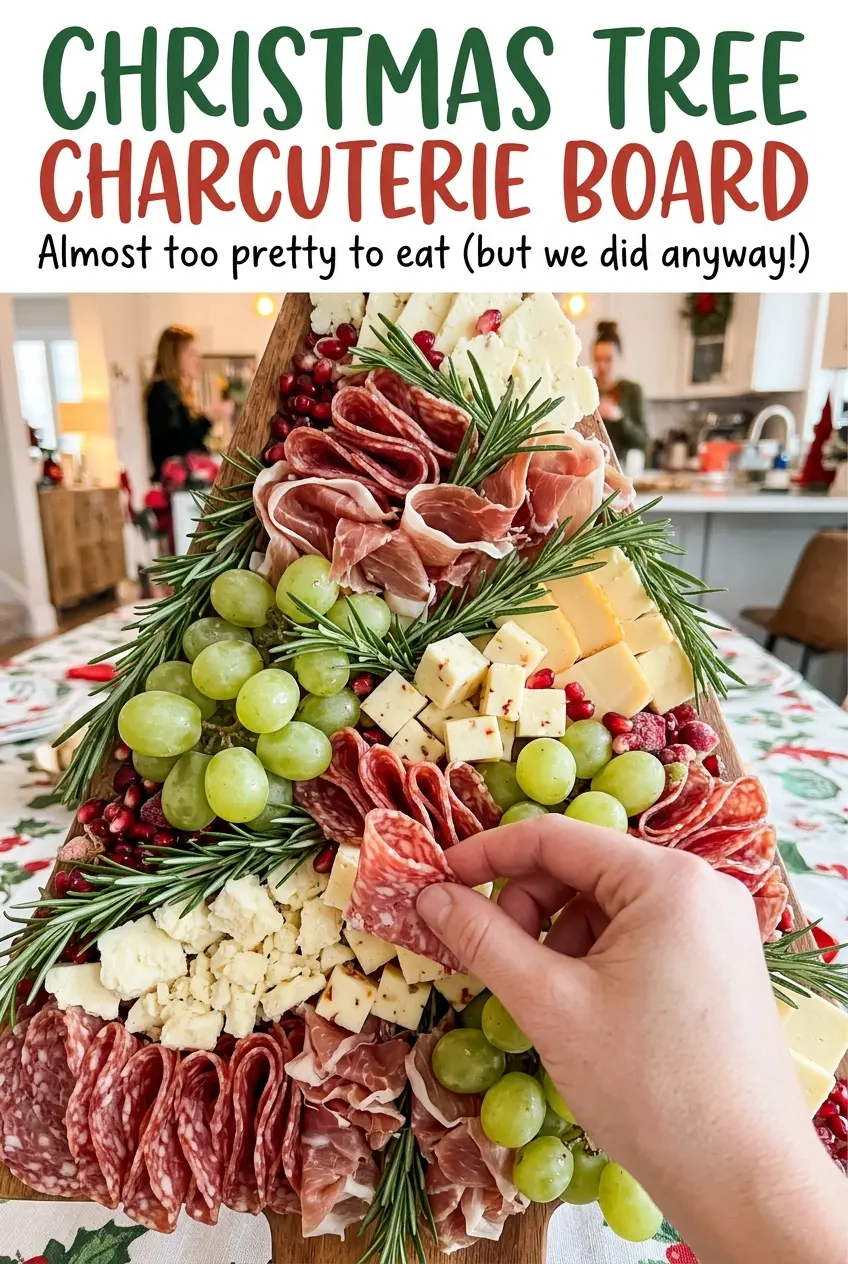
A tree-shaped board depends more on its outline than on elaborate decorations. Five horizontal rows give the eye a clear path from the wide bottom to the short top, so the silhouette reads as a tree even before the cheddar star and rosemary go on. If the rows stay nearly the same length, the board looks more like a rectangular snack spread; if they shorten gradually, the tree shape is easy to recognize.
Think of the ingredients as a mix that needs to fit within that outline, not as separate piles that happen to sit together. Grapes, tomatoes, both cheeses, and salami share the rows, while the pitted olives tuck into open spaces. That use of the olives matters: they fill small gaps without creating another long band that competes with the tree shape. The pretzel sticks at the bottom finish the outline as a trunk, and the rosemary along the sides gives the edges definition.
Keep the rows horizontal as they get shorter toward the top. That simple structure also makes the board easier to serve: guests can see what’s available instead of having to pick through a mound of mixed ingredients.
What Each Ingredient Adds to the Tree
- Green grapes — Their color establishes the evergreen look, and individual grapes tuck into the horizontal rows more neatly than a bunch left on its stem. Choose firm, unbroken fruit; ordinary grocery-store grapes work well here.
- Cherry tomatoes — These provide the red contrast that keeps the green rows from looking flat. Look for firm tomatoes with unbroken skins so they hold their shape on the board.
- Cheddar — A block gives you both the half-inch cubes and the reserved slice for the star. The star depends on that flat slice, so pre-cubed cheddar won’t do the whole job on its own.
- Pepper jack — The pale cubes break up the stronger colors and bring a little peppery heat alongside the cheddar. Keep the pieces evenly cut so they sit comfortably within the rows.
- Hard salami — Sliced hard salami folds into compact quarters, making it easy to place without covering nearby ingredients. Choose slices that are flexible enough to fold cleanly.
- Pitted green olives — Their small shape makes them useful for filling spaces between larger pieces, and pitted olives are easier to pick up and eat from a shared board.
- Assorted crackers — A mix gives the base some variety in shape and crunch. If you only have one sturdy kind, it will still work; the cracker fan will just look more uniform.
- Pretzel sticks and fresh rosemary — Straight pretzel sticks form the trunk, while fresh rosemary holds a visible branch-like line along each side. Dried rosemary won’t give the same sprig shape.
Building the Five Rows and Finishing the Tree
Prep the Produce, Star, and Salami
Rinse the grapes and cherry tomatoes, then dry them thoroughly before they go onto the board. Damp fruit can make the arrangement less tidy, so take the time to remove surface water. Cut a star from the reserved cheddar slice with a small star-shaped cutter. Fold the salami slices into quarters so they’re ready to place in compact pieces.
Shape the Rows from the Bottom Up
On a large serving board, arrange the grapes, tomatoes, cheddar, pepper jack, and salami in five horizontal rows. Start with the longest row at the bottom and make each row shorter as you work toward the top. Keep the overall edges angled inward to create the tree outline. Fill gaps between the ingredients with the pitted olives.
Add the Star, Rosemary, and Trunk
Place the cheddar star at the top of the tree, where it’s easy to see against the rows below. Lay the rosemary sprigs along the two sides to mark the outer edges. Set the pretzel sticks at the bottom as the trunk. Keep these finishing pieces distinct so the tree’s outline stays clear.
Fan the Crackers Around the Base
Arrange the crackers in a fan around the base of the tree, then serve. The fan gives guests a clear place to reach for crackers without covering the pretzel-stick trunk. If the crackers are buried beneath the rows, the base looks crowded and they’re harder to pick up.
Three Ways to Change the Board’s Shape or Serving Layout
Make a Shorter, Wider Tree
Use the same five horizontal rows, but give the lower rows a broader footprint and keep the top rows short. The result is a fuller, squat tree that suits a wide serving board while keeping the same ingredients and recognizable outline.
Keep the Tree Slim and Tall
Arrange the five rows in a narrower shape, shortening them more sharply from bottom to top. This gives the same lineup a taller silhouette and leaves more open board around the tree without changing the ingredient list.
Give the Crackers Their Own Crescent
Keep the tree centered, but fan the crackers in a crescent along one edge of the board instead of around the base. This separates the crunchy pieces from the tree outline and gives them a little more room for guests to reach.
Make-Ahead and Leftovers
- Before serving: Rinse and thoroughly dry the grapes and tomatoes, cut the cheeses, and fold the salami. Keep the components covered and refrigerated separately, then arrange the board close to serving so the crackers stay crisp.
- Refrigerator: Store leftover cheese, salami, and produce covered at 40°F or below and use within 3 to 4 days. Keep leftover crackers separate; fruit may soften and crackers can lose their crunch.
- Freezer: The assembled board doesn’t freeze well. The fruit loses its fresh texture, and crackers soften after thawing.
- Serving: Serve this board cold; reheating isn’t needed. Don’t leave perishable leftovers at room temperature for more than 2 hours, or more than 1 hour when it’s above 90°F.
Questions That Come Up When Assembling This Charcuterie Tree
Christmas Tree Charcuterie Board
Ingredients
Equipment
Method
- Rinse the grapes and tomatoes and dry them thoroughly.
- Cut a star from the reserved cheddar slice with a small star-shaped cutter, then fold the salami slices into quarters.
- On a large serving board, arrange the grapes, tomatoes, cheddar, pepper jack, and salami in five horizontal rows that decrease in length from the bottom to the top, filling gaps with the olives.
- Place the cheddar star at the top of the tree, lay the rosemary sprigs along the tree’s sides, and arrange the pretzel sticks at the bottom as a trunk.
- Fan the crackers around the base of the tree and serve.