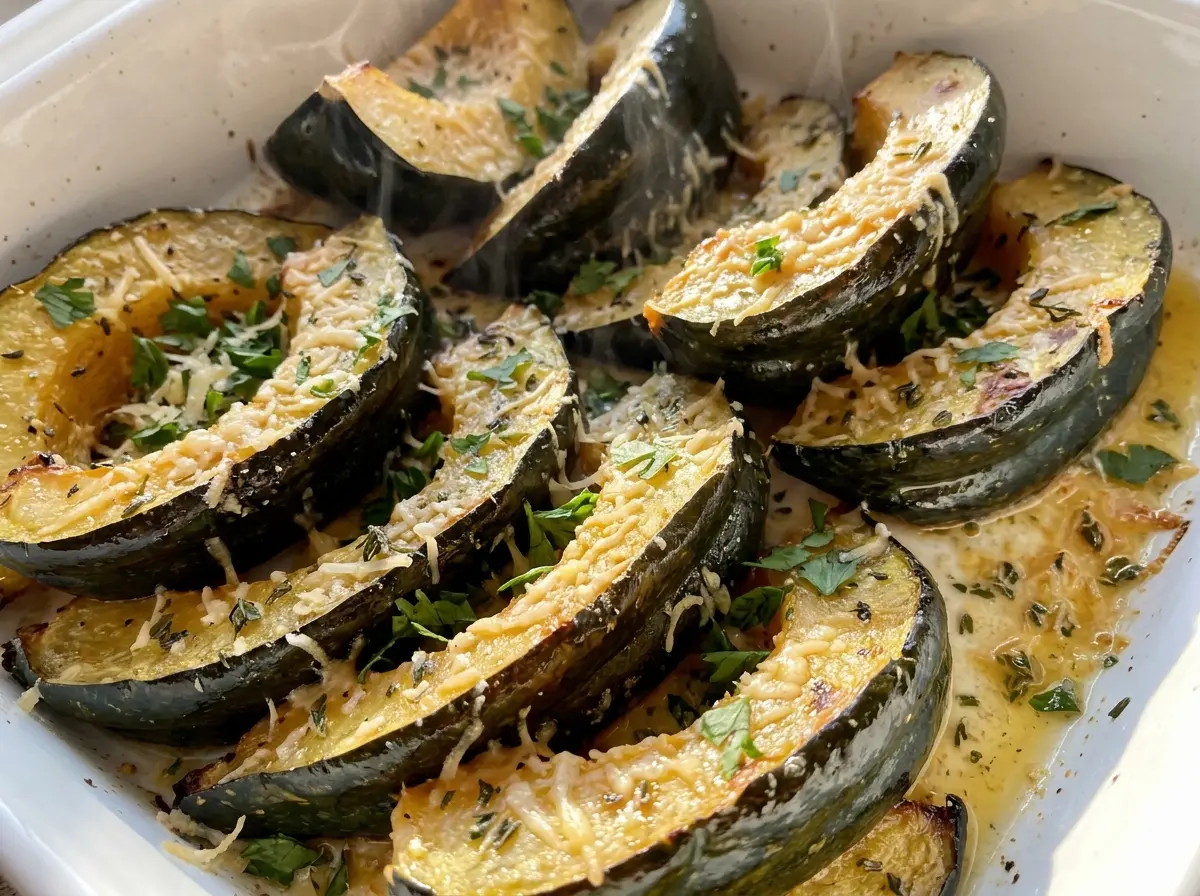
The squash wedges come out of the oven with browned corners, soft centers, and a little Parmesan clinging to the edges. The first time I made them, I expected the cheese to go on before roasting; it browned too quickly before the squash had time to turn tender. Adding it partway through changed the whole result.
For these Parmesan herb roasted acorn squash wedges, I cut the squash into even pieces and coat them with olive oil and dried seasonings before they go onto the pans. The first stretch in the oven gives the squash a head start. Then I turn the wedges and add the cheese, so it has time to melt and brown without taking the full heat from the beginning.
They’re savory, a little sweet from the squash, and sturdy enough to lift right off the parchment. The edges are the part I reach for first.
Kitchen Note
Use both baking sheets and give every wedge its own space. When pieces overlap, the covered sides soften instead of browning, and you lose those crisp, savory edges.
Save these Parmesan herb roasted acorn squash wedges for a savory side with tender centers and golden, cheesy edges.
Why the Parmesan Goes on After the First Roast
Parmesan has a head start on browning if it spends the entire time in a hot oven. The squash needs that first stretch of roasting to soften, and the cheese can turn dark or dry before the thickest part of a wedge is ready. Giving the squash 20 minutes on its own lets its cut surfaces begin to color while the centers start to soften.
Then I turn the wedges and scatter the finely grated cheese over them. The newly exposed sides get direct contact with the hot pan, while the Parmesan has just 10 to 15 minutes to melt and brown around the edges. That order gives you tender squash with a savory top, rather than a layer of cheese that tastes overdone.
Don’t wait for every wedge to look deeply browned before checking tenderness. The useful finish cue is a fork that slides into the thickest part without resistance, alongside browned edges. Acorn squash varies a little from piece to piece, so check more than one wedge before taking the pans out.
What the Squash, Herbs, and Parmesan Each Bring
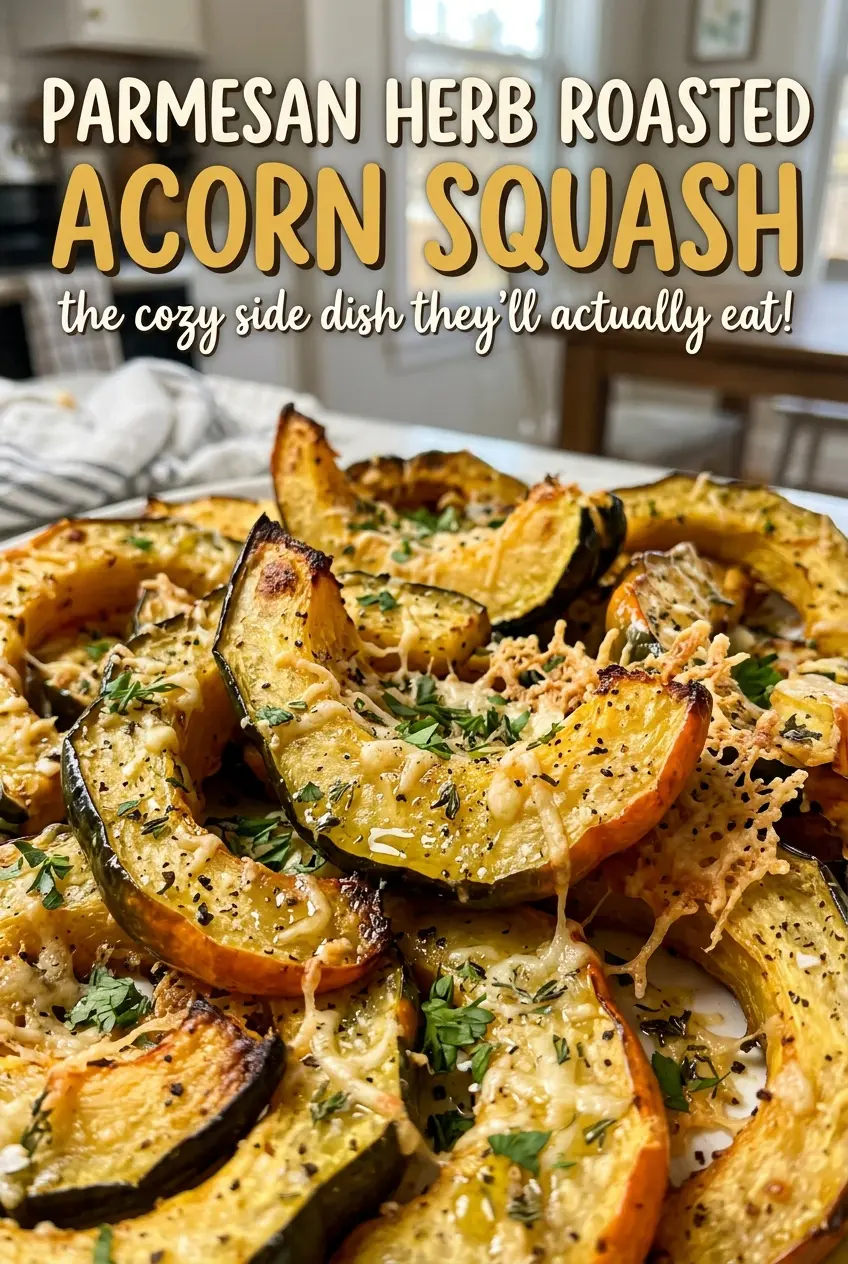
- Acorn squash — Medium squash around 2 pounds each give you wedges that are thick enough to stay soft inside while their cut sides brown. Choose squash that feel heavy for their size and have firm, unbroken skin. There’s no need to peel them; the wedges roast with the skin on.
- Olive oil — The oil helps the dried seasonings cling and encourages browning where the squash touches the pan. A standard olive oil works well here; a more delicate or expensive bottle won’t make a noticeable difference after roasting.
- Dried thyme and garlic powder — Dried thyme distributes evenly over the wedges and stays present through roasting. Garlic powder coats more consistently than fresh chopped garlic, which could darken on the exposed pan. Use the dried forms for the even, hands-off seasoning this method relies on.
- Finely grated Parmesan — A fine grate spreads over the curved wedges and melts into a thin savory layer. Finely grated Parmesan from a tub is convenient; fresh Parmesan grated finely tends to melt more smoothly. Coarse shreds won’t cover the squash as evenly, so break them into smaller pieces before sprinkling.
Roasting the Wedges Until Tender and Golden
Heat the Oven and Prepare the Pans
Heat the oven to 425°F and line two 18×13-inch rimmed baking sheets with parchment paper. Set up both pans before cutting the squash so the seasoned wedges can go straight onto them. Parchment keeps the squash from sticking as its surfaces brown. The two pans give you room to arrange the pieces in a single layer.
Cut and Season the Squash
Cut each squash in half from stem to tip, then scoop out the seeds. Slice each half into wedges that are 1 inch thick; keeping the pieces close in size helps them cook at the same pace. Toss the wedges with olive oil, dried thyme, garlic powder, kosher salt, and black pepper until the seasonings are distributed over the cut surfaces. If some wedges are much thicker than others, the thin ones may soften sooner.
Roast the First Side
Arrange the wedges in a single layer on the prepared baking sheets and roast for 20 minutes. Let the first side sit against the pan so it has time to brown instead of moving the pieces early. At this point, the wedges are beginning to soften but need more time to become tender. Keep the Parmesan off for this first roast.
Turn, Add Parmesan, and Finish
Turn each wedge, then sprinkle the Parmesan evenly over the squash. Return the pans to the oven for 10 to 15 minutes, until a fork pierces the thickest part easily and the edges are browned. Check a few pieces because the narrow tips can finish before the wider centers. Take the wedges out when they’re tender; waiting for every surface to darken can dry the thinner edges.
Two Simple Ways to Adapt the Herb-and-Cheese Finish
Dairy-Free Thyme and Garlic Wedges
Leave off the Parmesan and keep the olive oil, thyme, garlic powder, salt, and pepper. Roast the wedges for 20 minutes, turn them, and roast another 10 to 15 minutes until tender and browned at the edges. The squash will have a lighter, less savory finish, but the herbs still season it well.
A Thyme-Forward Version Without Garlic
Leave out the garlic powder and keep the rest of the ingredients and roasting method unchanged. The thyme and Parmesan come through more clearly, with a gentler savory note. This is a useful adjustment when you want the squash’s natural sweetness to stand out.
Storage and Reheating
- Refrigerator: Cool and refrigerate the cooked wedges within 2 hours, sealed in an airtight container. They keep for 3 to 4 days; the squash softens as it sits.
- Freezer: Freeze the cooled wedges in an airtight freezer-safe container for up to 2 to 3 months. They’ll be softer after thawing, so expect less definition at the edges.
- Reheating: Warm them in the oven until heated through; this brings back more browning than the microwave. The microwave works, but it softens the edges, so use short bursts and stop once the centers are hot.
Questions That Come Up While Roasting Acorn Squash
Parmesan Herb Roasted Acorn Squash
Ingredients
Equipment
Method
- Heat the oven to 425°F.
- Line two 18x13-inch rimmed baking sheets with parchment paper.
- Cut each squash in half from stem to tip.
- Scoop out the seeds.
- Slice each half into 1-inch-thick wedges.
- Toss the wedges with the olive oil, thyme, garlic powder, salt, and pepper.
- Arrange the wedges in a single layer on the baking sheets.
- Roast for 20 minutes.
- Turn the wedges and sprinkle them evenly with Parmesan.
- Roast for 10 to 15 minutes more, until tender when pierced with a fork and browned at the edges.