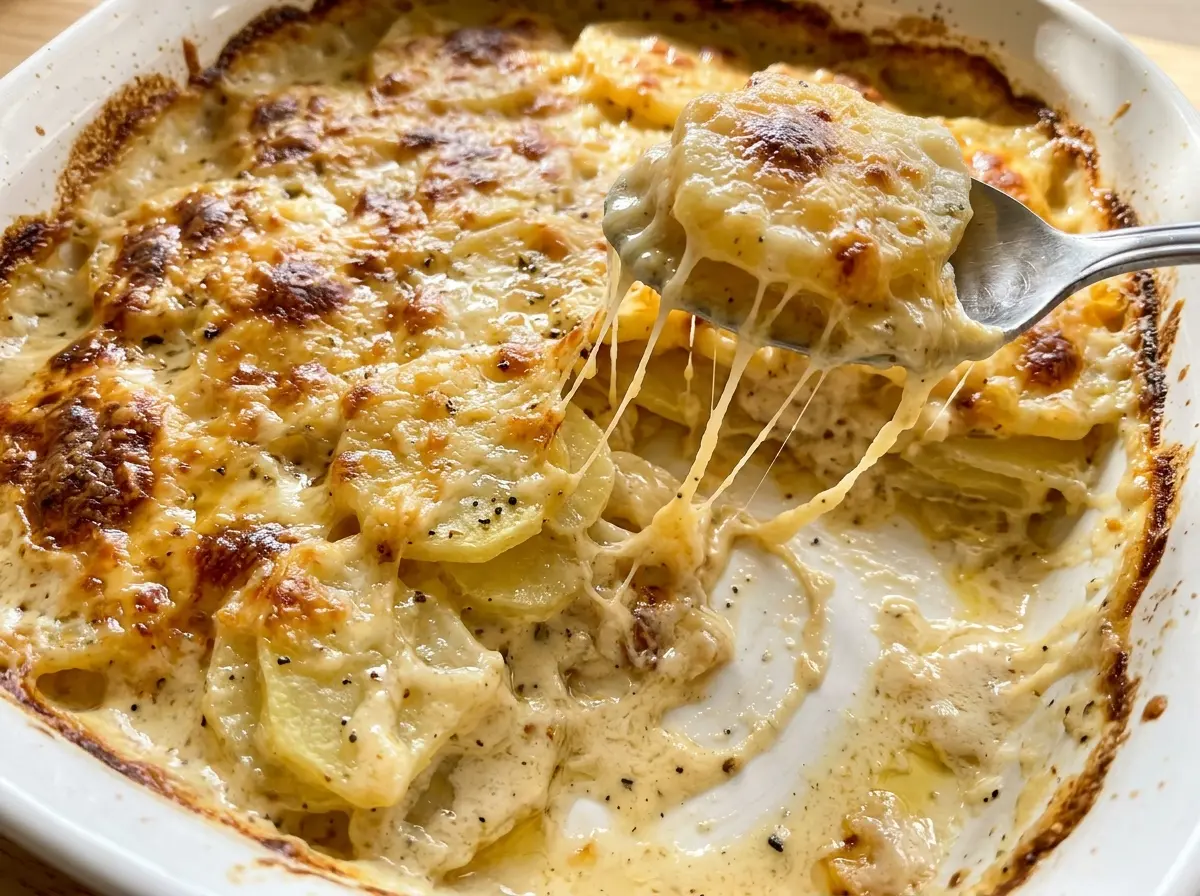
When the foil comes off, the top is still pale and the potatoes are covered in a creamy sauce. The uncovered bake is what turns that surface golden while the potatoes finish softening at the center. These au gratin potatoes are layered in a 9×13-inch dish, so each slice gets sauce between the layers instead of relying on a thick blanket on top.
I use russet potatoes for their tender, starchy texture and make the cheddar sauce on the stovetop before it goes into the dish. The sauce should coat the back of a spoon, not pour like milk; that gives it enough body to cling to the potatoes as they bake. A little rest after baking helps the layers settle, with a browned cheddar top and creamy potatoes underneath.
Kitchen Note
Keep the potato slices close to 1/8 inch all the way through. Thick slices can still feel firm when the thinner ones are ready, so check the center with a knife before you take the dish out.
Save these au gratin potatoes for a cozy dinner or holiday table: tender russets tucked under a golden sharp-cheddar top.
Why the Cheddar Goes Into the Sauce Off the Heat
Cheddar has plenty of flavor, but it can turn grainy if it gets too hot while melting. The sauce needs to be hot enough to melt the shreds, not bubbling on the burner. Taking the saucepan off the heat before stirring in the cheese gives it a gentler landing and helps keep the sauce smooth.
The flour and butter do a different job: they give the milk and cream enough structure to stay with the potatoes through baking. A sauce that’s too thin can settle at the bottom of the dish, while a properly thickened one coats the spoon and spreads between the layers. Sharp cheddar brings a more pronounced taste through the creamy base, so you don’t have to depend on a heavy layer of cheese on top for flavor. The small amount on the surface can then brown while the sauce underneath stays creamy.
What Russets, Cream, and Cheddar Each Bring to the Dish

- Russet potatoes — Their starch gives the baked layers a soft, tender texture. Choose firm potatoes without green patches; a Yukon Gold swap works, but the slices hold a waxier, less fluffy shape. Peel and slice them shortly before layering.
- Whole milk and heavy cream — Milk keeps the sauce fluid enough to pour, while cream adds richness. If you don’t have both, replace their combined volume with an equal volume of half-and-half; the sauce will be a little less rich. Standard grocery-store dairy is fine here.
- Sharp cheddar — Sharpness stands up to the creamy sauce, and a block shredded at home melts more smoothly than pre-shredded cheese. Monterey Jack can replace it in the same quantity for a milder, softer-tasting result, though it won’t bring the same tang.
- All-purpose flour — This thickens the butter and dairy into a sauce that clings to the potato layers. A measure-for-measure gluten-free flour blend formulated for baking is the most useful swap; the sauce may be a touch less silky. There’s no need for a specialty brand of regular flour.
From a Silky Cheddar Sauce to Tender Potatoes
Prepare the Dish and Slice the Potatoes
Heat the oven to 375°F and grease a 9×13-inch baking dish with softened butter. Peel the russets, then slice them 1/8 inch thick. Take a moment to keep the slices consistent rather than leaving a few noticeably thick pieces. Set the prepared dish nearby so you can layer the potatoes as soon as the sauce is ready.
Build the Cream Sauce
Melt the butter in a medium saucepan over medium heat, whisk in the flour, and cook it for 1 minute. Gradually whisk in the milk and cream; adding them steadily helps the mixture turn smooth instead of lumpy. Whisk in the kosher salt, black pepper, and garlic powder, then cook and stir for about 5 minutes. The sauce is ready when it thickens enough to coat the back of a spoon.
Melt the Cheddar and Layer the Potatoes
Take the saucepan off the heat and stir in 1 1/2 cups of the shredded cheddar until melted. Arrange half the potato slices in the buttered dish and pour half the sauce over them. Add the remaining potatoes and sauce, then scatter the remaining cheddar over the top. Spread the layers across the dish so the sauce isn’t all pooled in one spot.
Bake Until a Knife Slides Through the Center
Cover the dish tightly with foil and bake for 45 to 55 minutes. Uncover and bake for another 20 to 25 minutes, until the top is golden and a knife slides easily into the potatoes at the center. If the top looks ready but the center still resists the knife, the potatoes need more baking time. Let the dish rest for 10 minutes before serving so the layers can settle.
Three Swaps That Change These Au Gratin Potatoes
Make the sauce gluten-free
Replace the all-purpose flour with the same quantity of a measure-for-measure gluten-free flour blend. Whisk it into the melted butter just as you would regular flour; the sauce may be slightly less silky, but it still gives the dairy enough body to coat the potatoes.
Give the cheese a nuttier edge
Use Gruyère in place of the cheddar, keeping the same total amount and dividing it between the sauce and topping in the same way. It melts into the creamy layers and gives the dish a mellow, nutty flavor rather than cheddar’s sharper tang.
Add a smoky cheddar note
Swap in smoked cheddar for the sharp cheddar, using the same total quantity and keeping the sauce-and-topping division. The smoky taste carries through the creamy potatoes, so this version is bolder without changing the layering or bake.
Storage and Reheating
- Refrigerator: Store covered leftovers for 3 to 4 days. The sauce firms up when chilled, and the potato layers will be softer after reheating.
- Freezer: Freeze baked portions in airtight containers for up to 2 months. Thaw them overnight in the refrigerator; the sauce may be a little less smooth after freezing.
- Reheating: Reheat covered at 350°F until the center reaches 165°F. Leaving the dish uncovered can dry the top before the middle is hot.
Questions That Come Up Before Baking Au Gratin Potatoes
Au Gratin Potatoes
Ingredients
Equipment
Method
- Heat the oven to 375°F and grease a 9x13-inch baking dish with the softened butter.
- Peel and slice the potatoes 1/8 inch thick.
- Melt the butter in a medium saucepan over medium heat, whisk in the flour, and cook for 1 minute.
- Gradually whisk in the milk and cream until smooth.
- Whisk in the salt, pepper, and garlic powder.
- Cook, stirring, until the sauce thickens enough to coat the back of a spoon, about 5 minutes.
- Remove the saucepan from the heat and stir in 1 1/2 cups of the cheddar until melted.
- Arrange half of the potatoes in the baking dish and pour over half of the cheese sauce.
- Layer in the remaining potatoes and sauce, then sprinkle the remaining 1/2 cup cheddar over the top.
- Cover the dish tightly with foil and bake for 45 to 55 minutes.
- Uncover and bake for 20 to 25 minutes, until the top is golden and a knife slides easily into the potatoes at the center.
- Let the potatoes rest for 10 minutes before serving.