When pork shoulder first hits hot oil, the sound is a steady sizzle; a few minutes later, the browned edges tell you the pot is ready for the apples and onions. I used to move the meat too soon, before it had built a proper crust. Give each side its full sear, and those deep brown bits become part of the braising liquid instead of getting left behind.
For this apple cider braised pork shoulder, the oven does the slow work while cider, chicken broth, vinegar, and Dijon bring different kinds of balance to the pot. The pork goes in whole, then gets turned once as it braises, so there’s no need to fuss over it every half hour.
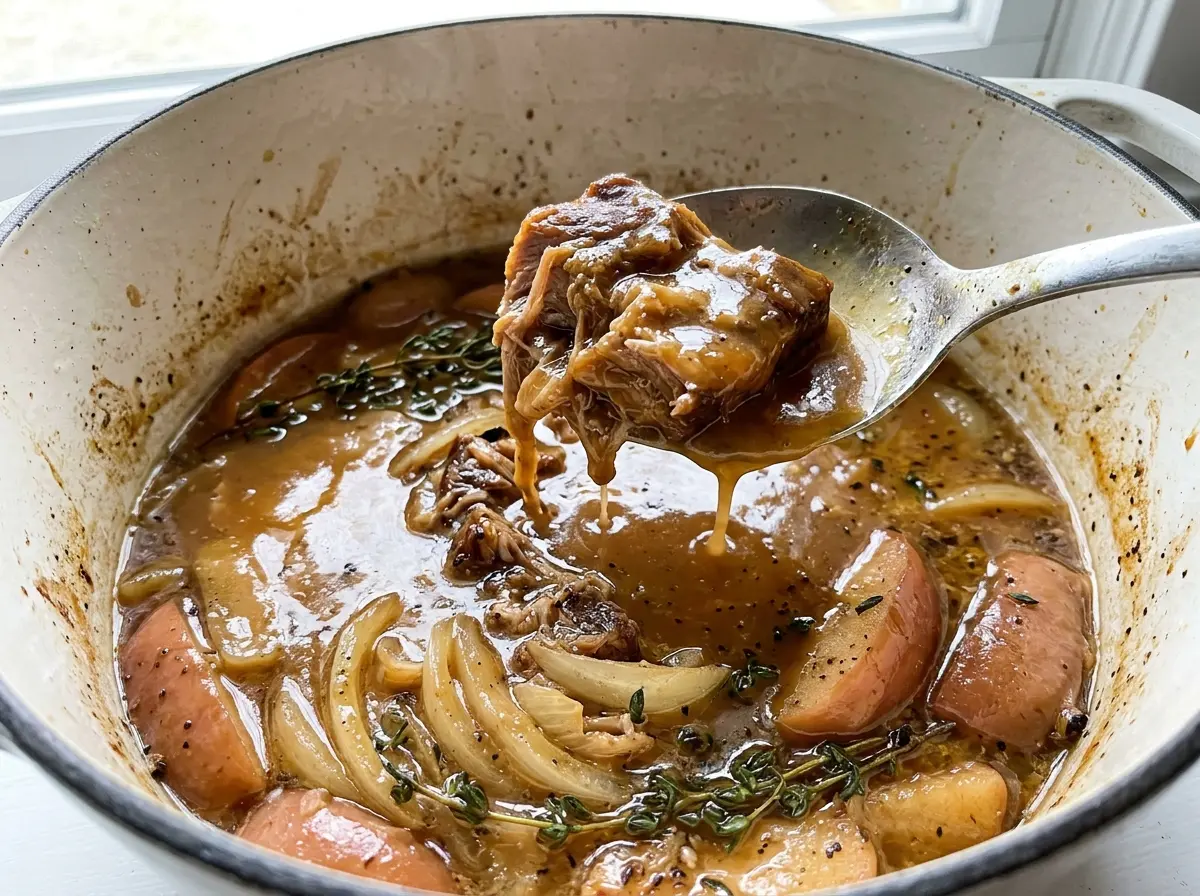
By the time it’s ready, a fork slips into the shoulder easily, and the apples and onions have softened into the savory-sweet liquid. Rest the pork before shredding, then bring it to the table with plenty of that braising liquid spooned over the top.
Kitchen Note
Don’t shred the pork as soon as it leaves the pot. Letting it rest on the cutting board for 15 minutes makes it easier to handle, and the meat stays juicy as you pull it apart.
Save this apple cider braised pork shoulder for a slow, hands-off dinner with tender shredded pork and a savory-sweet apple braising liquid.
Why This Braise Needs More Than Apple Cider
Cider gives the pork a clear apple note, but using cider alone would make the cooking liquid taste one-dimensional and too sweet. Chicken broth brings a savory backbone, while apple cider vinegar cuts through the richness of the shoulder. Dijon adds a little sharpness and helps the liquid taste rounded rather than sugary. Each one has a job, and together they make a sauce that works with both the meat and the softened fruit.
The liquid doesn’t need to turn into a thick gravy to taste full. As the covered pot cooks, the pork releases its own juices, and the onion and apples soften into the cider mixture. Stirring the Dijon into the liquid before the pork goes back in distributes it evenly, so you don’t get a concentrated mustard bite in one spot. The result is a loose, spoonable braising liquid that belongs on the shredded pork, not a separate sauce that needs extra work.
Which Ingredients Shape the Cider-Braised Flavor

- Boneless pork shoulder — This cut has enough connective tissue and fat to become tender during a long, covered braise. Choose a piece with some visible marbling; a lean pork loin isn’t a useful swap because it won’t give you the same shreddable texture. Boneless shoulder is also straightforward to sear on all sides.
- Tart apples — Their bright edge keeps the braise from tasting like sweet cider alone, and firm apples hold their shape better than soft, mealy ones. If you need a stand-in for one tart variety, use another firm tart apple; a sweeter apple will make the finished liquid taste rounder and less sharp. Core the apples and cut them into wedges so they’re ready when the pork comes out of the pot.
- Apple cider — Use apple cider rather than hard cider; the latter is a different product and won’t give the same straightforward apple flavor. A cider with a clear, fresh apple taste is worth choosing here, while an expensive specialty bottle isn’t necessary. The vinegar and Dijon already supply the sharper notes.
- Low-sodium chicken broth, apple cider vinegar, and Dijon — These make the braising liquid savory, bright, and gently sharp instead of cloying. Low-sodium broth leaves the seasoning easier to control alongside the kosher salt. Dijon is a better fit than a sweet mustard because its tang works with the cider and vinegar.
- Onion, garlic, thyme, and bay leaf — The onion gives the liquid a savory base, and smashed garlic releases its flavor quickly. Fresh thyme and the bay leaf add herbal depth during the long cook; remove their stems and the leaf before serving.
The Four Stages of Building a Tender Pork Braise
Brown the Shoulder Before Adding the Fruit
Heat the oven to 300°F and place a rack in the lower third. Pat the pork dry, season it all over with the salt and pepper, then heat the olive oil in a 6-quart Dutch oven over medium-high heat. Sear the pork for 3 to 4 minutes per side, until the surface is deeply browned, then transfer it to a plate. If the meat sticks when you try to turn it, give that side more time to form its crust instead of forcing it loose.
Soften the Apples and Onion in the Browned Pot
Add the sliced onion and apple wedges to the Dutch oven and cook for 5 minutes, stirring and scraping the browned bits from the bottom. Those bits loosen as the vegetables release moisture, so keep scraping rather than leaving them to scorch. Add the smashed garlic and cook for 30 seconds. Garlic needs only that brief moment before the liquid goes in; it shouldn’t turn dark or smell burnt.
Bring the Cider Mixture to a Simmer
Stir in the apple cider, chicken broth, apple cider vinegar, and Dijon mustard until the mustard is dispersed through the liquid. Add the thyme sprigs and bay leaf, then bring the pot to a simmer on the stove. The liquid should be gently bubbling before the pork returns. Scrape the bottom once more so the browned flavor is in the braise, not stuck to the pot.
Braise Until the Shoulder Gives Easily
Return the pork and any juices from the plate to the Dutch oven, then cover it and transfer it to the oven. Braise for 3 1/2 to 4 1/2 hours, turning the pork once halfway through, until it’s fork-tender and measures at least 195°F in the thickest part. If the fork still meets resistance, keep the pot covered and continue cooking; a tough-feeling shoulder needs more time to soften. Transfer the pork to a cutting board, discard the thyme stems and bay leaf, rest the meat for 15 minutes, then shred it and serve it with the apples, onions, and braising liquid.
Two Thoughtful Ways to Adapt the Cider Braise
Choose a sharper apple
Use a particularly tart, firm variety such as Granny Smith for the apples. It gives the finished braise a brighter edge and leaves the fruit with more shape; a milder tart variety makes the liquid taste softer and sweeter.
Keep the braise gluten-free
Choose chicken broth and Dijon mustard specifically labeled gluten-free, while keeping the other ingredients and cooking method the same. That keeps the apple-and-herb flavor intact; the broth and mustard are the ingredients most likely to vary by brand.
Storage and Reheating
- Refrigerator: Store the pork with the apples, onions, and braising liquid in a covered container for 3 to 4 days. The chilled liquid will firm up as its fat cools; it loosens again when warmed.
- Freezer: Freeze shredded pork with enough braising liquid to coat it in an airtight freezer-safe container for up to 3 months. Thaw it in the refrigerator before reheating for the most even result.
- Reheating: Warm the pork gently in a covered saucepan with its braising liquid, stirring occasionally, until it reaches 165°F. High heat can dry out the shredded edges before the center warms through.
Questions That Come Up With Apple Cider Braised Pork
Apple Cider Braised Pork Shoulder
Ingredients
Equipment
Method
- Heat the oven to 300°F.
- Set a rack in the lower third.
- Pat the pork dry and season it all over with the salt and pepper.
- Heat the olive oil in a 6-quart Dutch oven over medium-high heat.
- Sear the pork for 3 to 4 minutes per side, until deeply browned, then transfer it to a plate.
- Add the onion and apples to the pot and cook for 5 minutes, stirring and scraping up browned bits.
- Add the garlic and cook for 30 seconds.
- Stir in the apple cider, chicken broth, vinegar, and Dijon mustard, then add the thyme and bay leaf; bring the liquid to a simmer.
- Return the pork and any accumulated juices to the pot, cover, and braise in the oven for 3 1/2 to 4 1/2 hours, turning the pork once halfway through, until fork-tender and at least 195°F in the thickest part.
- Transfer the pork to a cutting board, discard the thyme stems and bay leaf, and rest the pork for 15 minutes before shredding it.
- Serve the pork with the apples, onions, and braising liquid.