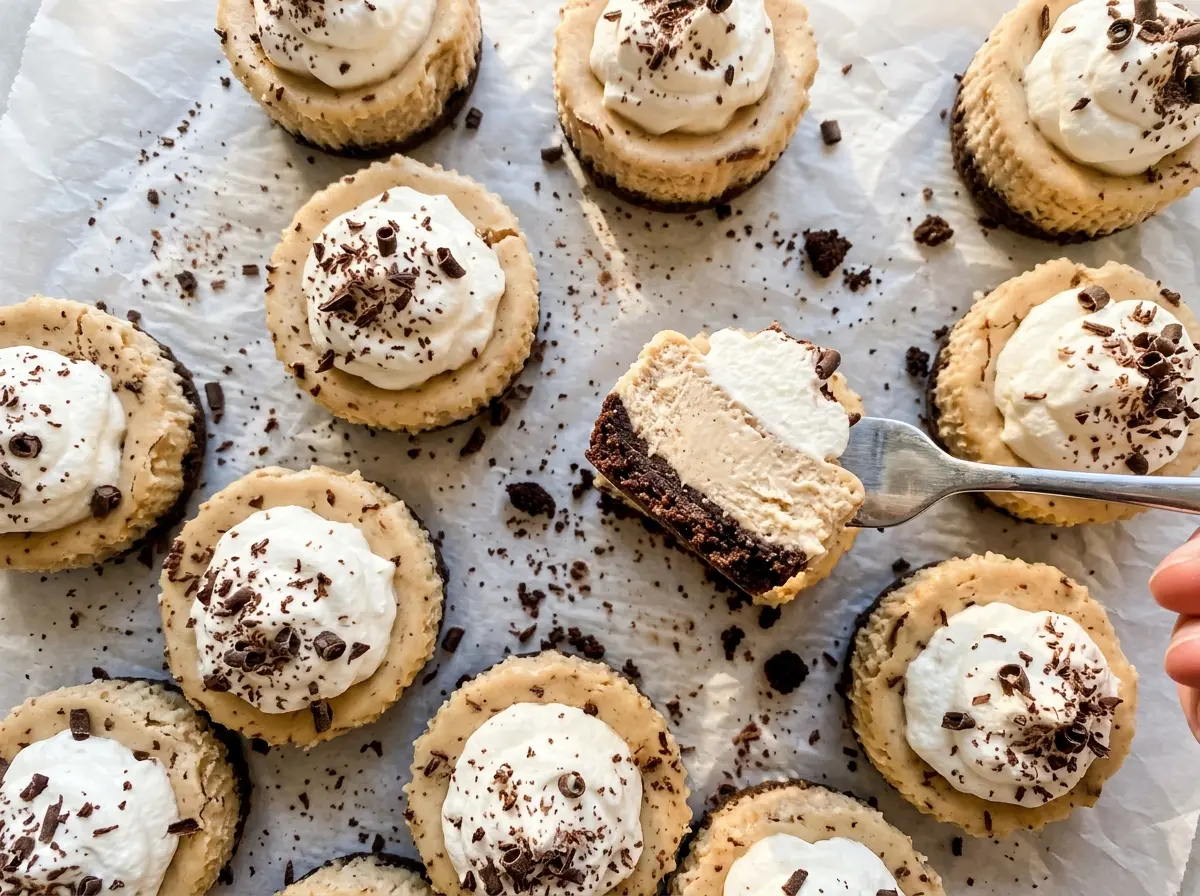
The edges of these little cheesecakes turn matte before the centers do, and that slight wobble can look like a reason to leave the pan in longer. I learned to trust the cue: the minis finish setting as they cool, and a little movement in the middle keeps them creamy instead of dry. These Boozy Baileys Mini Cheesecakes bake in a standard muffin pan, with a graham cracker base under a smooth Irish cream filling.
The filling gets its body from two packages of cream cheese, eggs, and a spoonful of flour. I mix the eggs in on low speed, one at a time, then stop as soon as the Baileys, vanilla, and flour are incorporated. That keeps the batter smooth without beating in more air than it needs.
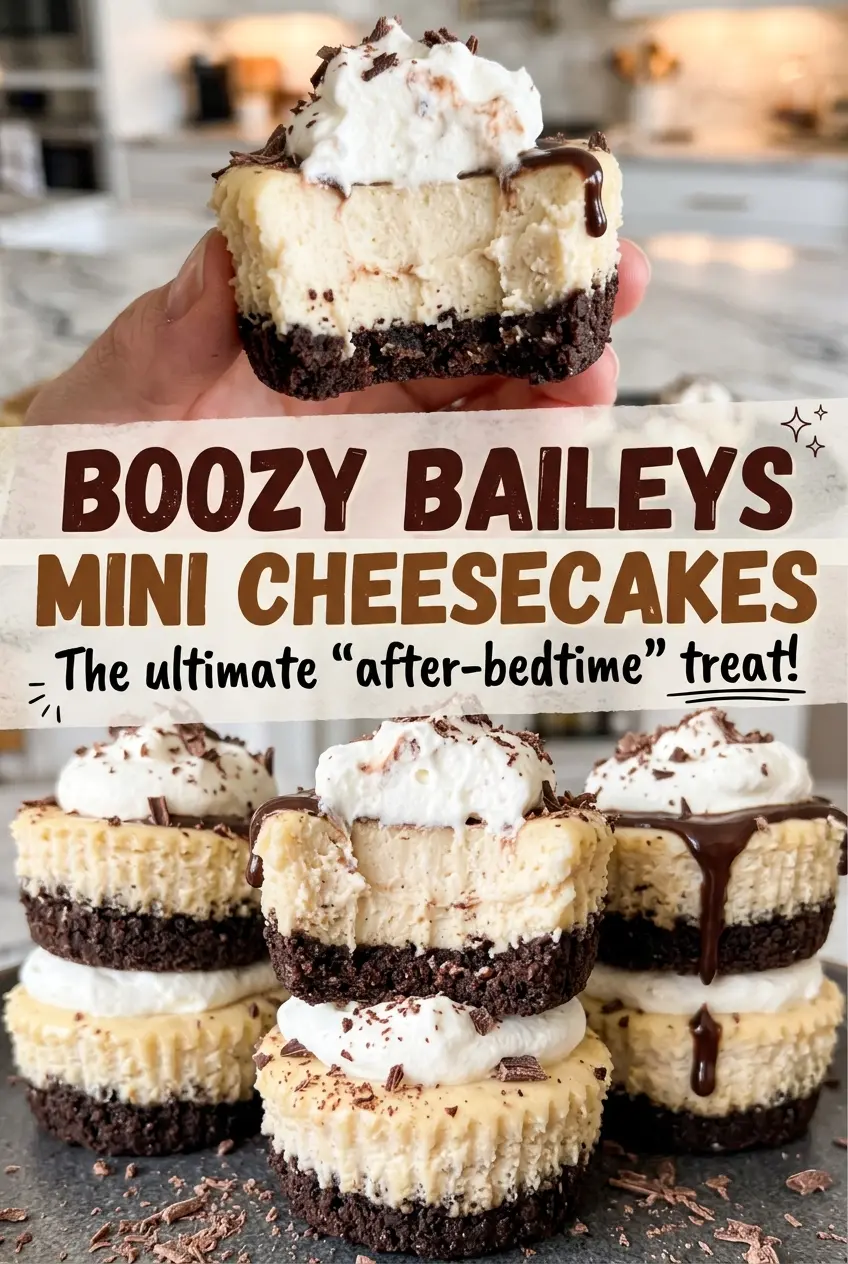
After a short bake, the cheesecakes cool in the pan and then spend at least four hours in the refrigerator. That wait gives the centers time to firm up, so each one lifts from its paper liner with a neat crumb base and a cool, creamy middle.
Kitchen Note
Press the crumb mixture firmly across the bottom of each liner, right up to the edges. A loose, sandy crust tends to break apart when you peel the paper away; a compact layer holds together under the filling.
Save these Boozy Baileys Mini Cheesecakes for a make-ahead dessert with a buttery graham crust and a cool Irish cream center.
Why the Centers Should Still Wobble When You Pull the Pan
Mini cheesecakes can fool you because the edges set well before the middle looks firm. If you wait for the whole surface to look completely still in the oven, the centers are likely to bake past their best texture. The gentle wobble is the useful signal here: the edges should hold their shape, while the centers move slightly when you give the pan a careful shake.
These portions are small, so they continue setting after they leave the oven. They cool in the muffin pan first, then firm further during their long refrigerator rest. That change from soft and wobbly to sliceable and creamy is part of the bake, not a sign that they were underdone.
The flour helps give the filling a little structure, but it doesn’t turn the centers into a dense cake. Combined with the cream cheese and eggs, it supports a smooth, custardy texture that can hold its shape once chilled. Trust the visual cue rather than baking until the middle looks rigid.
What the Baileys and Flour Do in This Mini Cheesecake Filling
- Cream cheese — The two packages give the filling its rich, tangy base. Let them soften before mixing; cold, firm cream cheese is harder to beat smooth. Plain cream cheese is the right choice here, rather than a whipped spread with a lighter, airier texture.
- Baileys Irish Cream — This is where the filling gets its recognizable Irish cream taste and its boozy note. Another Irish cream liqueur can replace it in the same volume, though the sweetness and whiskey flavor may vary by brand. Leaving it out changes both the taste and the amount of liquid, so it isn’t a straightforward omission.
- Eggs — Large eggs at room temperature blend more evenly into the cream cheese mixture. Keep them at room temperature as listed; cold eggs can make a smooth batter harder to maintain.
- All-purpose flour — A small amount helps the filling set cleanly without taking away its creamy texture. Keep the flour in the batter; it isn’t interchangeable with more sugar or a different dry ingredient.
- Graham cracker crumbs — Fine crumbs pack into an even base more reliably than coarse pieces. If you have whole graham crackers, crush them finely before measuring the crumbs for the crust.
- Unsalted butter and granulated sugar — Butter binds the crumbs, while sugar sweetens both the crust and filling. Salted butter works in the crust in the same amount, but the base will taste a little saltier than it does with unsalted butter.
Build the Crust and Filling Without Overworking Either
Set Up the Muffin Pan and Crumb Bases
Heat the oven to 325°F and line a standard 12-cup muffin pan with paper liners. Stir the graham cracker crumbs, sugar, and melted butter until the crumbs are evenly moistened, then divide them among the liners. Press the mixture firmly into each bottom so it forms a level base. Bake the crusts for 5 to 7 minutes, then let them cool while you prepare the filling.
Beat the Cream Cheese Until Smooth
Beat the softened cream cheese and sugar in a large bowl until the mixture looks smooth. Scrape down the sides of the bowl as needed so no firm patches are left around the edge. Starting with a smooth base matters because lumps are harder to work out once the eggs and Irish cream have loosened the batter.
Add the Eggs and Irish Cream Gently
Beat in the eggs one at a time on low speed. Once they’re incorporated, mix in the Baileys, vanilla, and flour just until combined. Stop when the batter looks even; extended beating isn’t needed to smooth it out and can make the filling puff more than you want.
Bake to a Gentle Wobble, Then Chill
Divide the filling among the cooled crusts and bake at 325°F for 18 to 22 minutes. Look for set edges and centers that still wobble slightly when you gently shake the pan. Cool the cheesecakes in the pan for 30 minutes, then refrigerate them for at least 4 hours before serving so the centers can firm up.
Two Ways to Change the Format Without Changing the Flavor
Make a Six-Cheesecake Half Batch
Halve every ingredient and fill six wells in the standard muffin pan. The individual portions stay the same size, so use the same oven temperature and look for set edges with a slight center wobble; start checking toward the earlier end of the bake time.
Skip the Graham Cracker Crust
For a crustless version, leave out the crust ingredients and the crust-baking stage, then divide the filling among the paper-lined muffin cups. The result is softer at the base and lacks the buttery crunch, but the Irish cream filling remains the focus. Use the same doneness cue and allow the minis to chill fully before serving.
Make-Ahead and Storage
- Refrigerator: Keep the cheesecakes covered and refrigerated for 3 to 4 days. The crust gradually softens as it sits, but the chilled filling holds its shape.
- Freezer: Freeze the fully chilled minis in a single layer until firm, then wrap them individually and store in a freezer-safe container for up to 1 month for best quality.
- Thawing: Thaw overnight in the refrigerator and serve cold. Don’t leave them out to thaw on the counter; the filling is a dairy-based dessert.
Questions That Come Up When Baking Baileys Mini Cheesecakes
Boozy Baileys Mini Cheesecakes
Ingredients
Equipment
Method
- Heat the oven to 325°F.
- Line a standard 12-cup muffin pan with paper liners.
- Stir the graham cracker crumbs, granulated sugar, and melted unsalted butter together.
- Divide the crumb mixture evenly among the liners and press firmly into the bottoms.
- Bake the crusts for 5 to 7 minutes.
- Let the crusts cool while you make the filling.
- Beat the softened cream cheese and granulated sugar in a large bowl until smooth, scraping down the sides of the bowl as needed.
- Beat in the eggs one at a time on low speed.
- Mix in the Baileys Irish Cream, vanilla extract, and all-purpose flour just until combined.
- Divide the filling among the crusts.
- Bake at 325°F for 18 to 22 minutes, until the edges are set and the centers still wobble slightly when the pan is gently shaken.
- Cool the cheesecakes in the pan for 30 minutes.
- Refrigerate for at least 4 hours before serving.