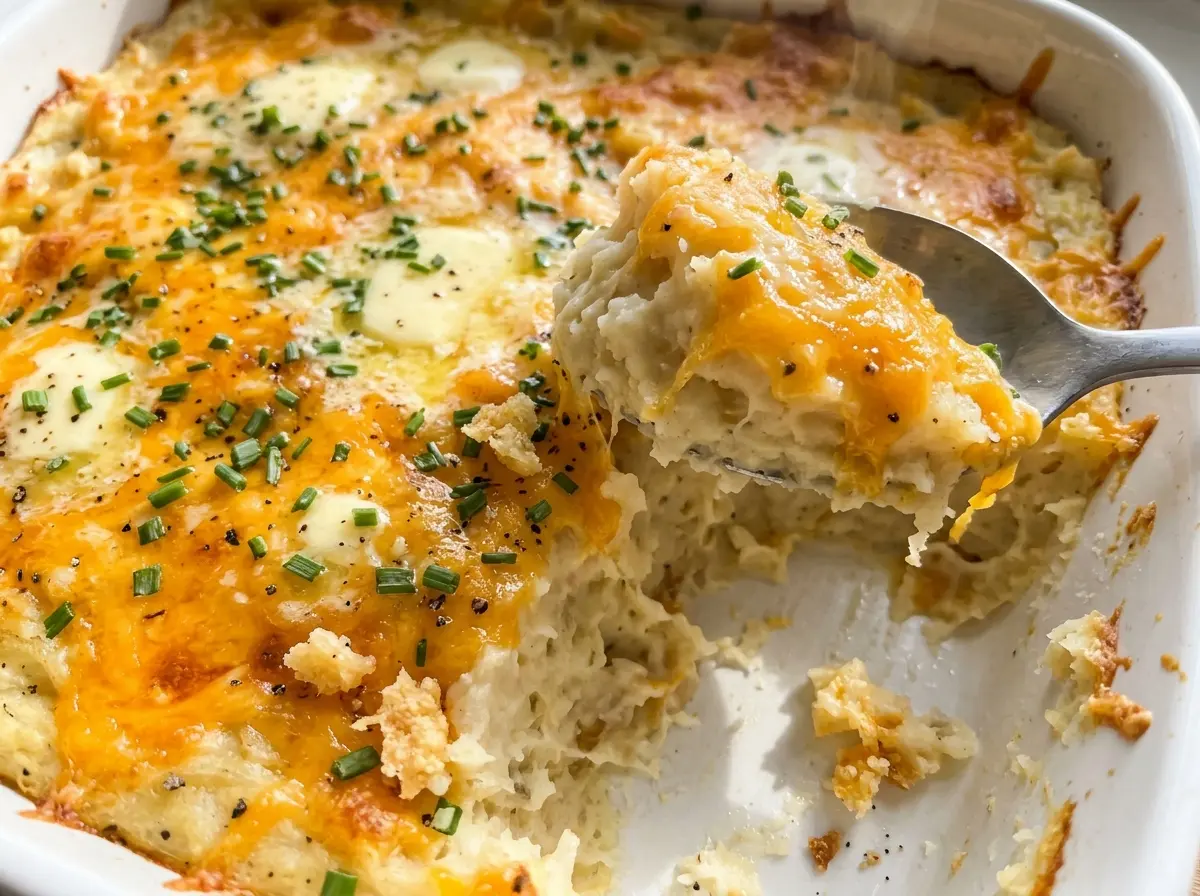
The first spoonful should come up soft and creamy, with a bit of melted cheddar stretching from the lightly golden top. I pull these Sour Cream Cheddar Baked Mashed Potatoes from the oven while the cheese still looks glossy, before the edges get too dark. Baking them in a casserole dish gives the mashed potatoes a warm, cheesy finish without asking the oven to do the work of cooking the potatoes.
I like the balance here: russets make a fluffy base, sour cream brings a little tang, and sharp cheddar gives the mash a savory bite. Warming the butter and milk before they meet the potatoes helps everything come together while the mash is still warm. It’s a generous side for eight, and that browned cheese on top makes every scoop feel a little more special.
Kitchen Note
Give the casserole its full five-minute rest before serving. The hot cheese and creamy mash settle as they sit, so each scoop holds together better instead of sliding apart on the spoon.
Save these Sour Cream Cheddar Baked Mashed Potatoes for a cozy side with fluffy potatoes and a golden cheddar top.
Why the Cheddar Belongs in Two Places
Cheddar does two different jobs in this casserole. Stirred into the mash, it gives the potatoes a savory cheese flavor all the way through. Scattered over the top, it melts into a distinct layer that turns lightly golden in the oven. Keeping some cheese for the surface gives you a contrast between the soft, creamy potatoes underneath and the richer top.
The oven time is for heating the assembled dish and melting that topping, not for cooking raw potatoes. That’s why the potatoes need to be fork-tender before they’re mashed and spooned into the baking dish. If they’re still firm when you drain them, the casserole won’t fix the texture; the finished mash will keep those firm bits. Starting with fully cooked potatoes lets the oven do its best work on the cheese without leaving you with undercooked centers.
Why Russets, Warm Dairy, and Sharp Cheddar Matter Here

- Russet potatoes — Their starchy texture makes a fluffy mash that takes well to butter, milk, and sour cream. Peel them and cut them into evenly sized pieces so they cook at about the same pace. Yukon Gold potatoes can stand in if that’s what you have; expect a denser, more buttery texture rather than the fluffier russet result.
- Whole milk and butter — Together, they soften the potatoes and add richness without making the mash taste heavy. Warming them together helps the mixture blend into the hot potatoes instead of cooling them as you stir. Unsalted butter keeps the seasoning easier to control because kosher salt is added separately.
- Sour cream — Its tang keeps the rich butter and cheddar from tasting flat, while its thick texture adds body to the mash. I wouldn’t replace it with a thinner dairy ingredient here; the sour cream is part of what makes the potatoes creamy and gives them their distinct tang.
- Sharp cheddar — Sharp cheddar has enough flavor to come through the potatoes and the melted top. Pre-shredded sharp cheddar works, while cheese shredded from a block often melts more smoothly. Mild cheddar will still melt, but the finished casserole will have a gentler cheese flavor.
From Fork-Tender Potatoes to a Golden Casserole
Boil the Russets Until a Fork Slides In Easily
Heat the oven to 350°F and grease a 9×13-inch baking dish with 1 tablespoon of butter. Bring 4 quarts of water to a boil in a 6-quart pot, then add 2 teaspoons of kosher salt and the peeled, 1 1/2-inch potato pieces. Cook them for 15 to 20 minutes, checking that a fork passes through without resistance. If the centers still feel firm, give them more time before draining.
Let the Drained Potatoes Release Steam
Drain the potatoes and return them to the pot. Set the pot over low heat for 1 minute, shaking it occasionally so the pieces move and excess moisture can evaporate. You’ll see steam rise as the surface dries. Don’t skip this short pause: water clinging to the potatoes can leave the finished mash looser than you want.
Mash with the Warm Butter-Milk Mixture
While the potatoes dry, warm the remaining 6 tablespoons of butter with the milk in a small saucepan over low heat for 2 to 3 minutes, until the butter has melted and the milk feels warm. Remove the potatoes from the heat and mash them, then stir in the warm butter-milk mixture, sour cream, the remaining 1 teaspoon of kosher salt, black pepper, and 1 cup of cheddar. Stop once everything is combined; prolonged beating can make mashed potatoes sticky and gluey.
Bake Until the Cheddar Melts and Turns Lightly Golden
Spoon the mash into the prepared baking dish and scatter the remaining 1 cup of cheddar over the surface. Bake uncovered for 25 to 30 minutes, until the potatoes are hot and the cheese has melted with a lightly golden finish. Keep an eye on the color near the end, since a deep-brown top is past the soft, melted finish this dish is meant to have. The casserole is ready to come out when the cheese is glossy and lightly colored.
Two Easy Ways to Change the Texture or Cheese Flavor
Use mild cheddar for a gentler cheese taste
Swap mild cheddar for the sharp cheddar, keeping the same total amount and dividing it between the mash and topping. It melts into the same kind of casserole, but the cheese flavor will be subtler and less pronounced against the sour cream.
Leave a little texture in the mash
For a more rustic casserole, stop mashing while a few small, tender pieces of potato remain, then stir in the dairy and cheddar until combined. The potatoes will feel less silky and more homespun, while the melted cheese still gives the top its creamy finish.
Storage and Reheating
- Refrigerator: Store leftovers covered for 3 to 4 days; the mash may firm up as it chills. Refrigerate within 2 hours of baking.
- Freezer: Freeze cooled portions in airtight containers for up to 1 month for best texture. Thaw overnight in the refrigerator; the potatoes may be a little less fluffy after freezing.
- Reheating: Warm in an oven-safe dish, covered, at 350°F until hot throughout. Leaving the dish uncovered for the whole reheating time can dry out the potatoes before the center warms.
Questions That Come Up When Baking These Mashed Potatoes
Sour Cream Cheddar Baked Mashed Potatoes
Ingredients
Equipment
Method
- Preheat the oven to 350°F.
- Grease a 9x13-inch baking dish with 1 tablespoon of the butter.
- Bring the water to a boil in a 6-quart pot.
- Add 2 teaspoons of the salt and the potatoes, and cook for 15 to 20 minutes, until the potatoes are fork-tender.
- Drain the potatoes and return them to the pot.
- Set the pot over low heat for 1 minute, shaking the pot occasionally to evaporate excess moisture, then remove from the heat.
- Warm the remaining 6 tablespoons butter and the milk in a small saucepan over low heat for 2 to 3 minutes, until the butter melts and the milk is warm.
- Mash the potatoes.
- Stir in the warm butter-milk mixture, sour cream, remaining 1 teaspoon salt, pepper, and 1 cup cheddar until combined.
- Spoon the potatoes into the prepared dish.
- Sprinkle with the remaining 1 cup cheddar.
- Bake uncovered for 25 to 30 minutes, until hot and the cheese is melted and lightly golden.
- Let the potatoes rest for 5 minutes before serving.