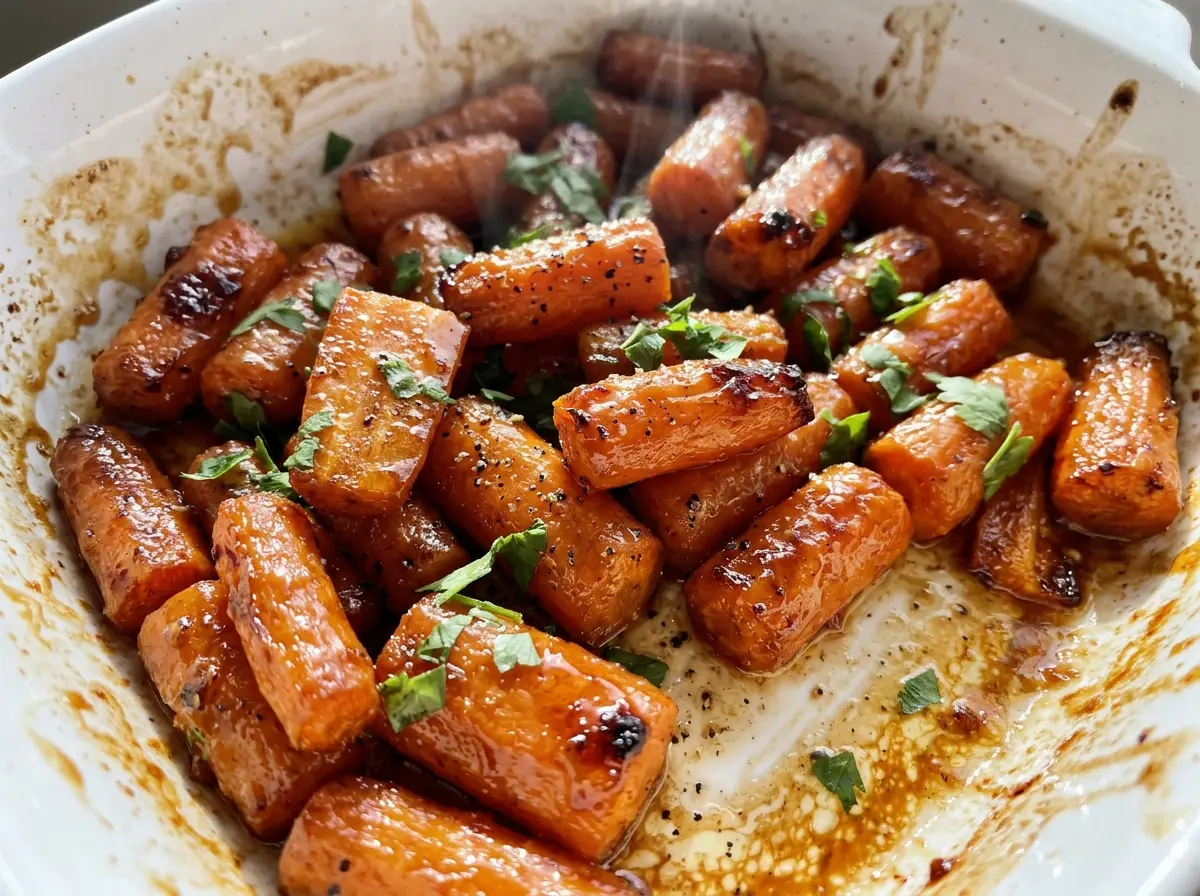
When the carrots come out of the oven, the edges should be browned and the centers tender, with a little butter-and-sugar glaze clinging to each piece. The first time I made them, I cut the thick carrots too large and ended up with pieces that browned outside before the centers softened. Cutting them into 2-inch pieces and halving the thick ones lengthwise fixes that unevenness in these roasted brown sugar carrots.
The coating is deliberately simple: melted butter helps the brown sugar stick, while salt and black pepper keep the sweetness from taking over. The sugar may look sandy when you first toss everything together; it melts as the carrots roast, so the bowl doesn’t need to look like it already has a smooth glaze. Give the carrots room on the pan, and you’ll get browned edges instead of a steamy pile.
They’re a straightforward side for a weeknight dinner, but the lightly sweet coating also fits right in on a holiday table. I like the contrast between the tender centers and those darker, caramelized corners.
Kitchen Note
The coating can look grainy in the bowl, and that’s fine. The brown sugar melts in the oven, so resist adding extra butter just to make the carrots look glossy before they roast.
Save these roasted brown sugar carrots for a side with tender centers, buttery coating, and browned edges.
Why a Crowded Pan Leaves These Carrots Pale
Carrots give off moisture as they roast. When the pieces are packed together, that moisture has nowhere to go, so the carrots soften in the damp air around them instead of browning at their edges. The brown sugar and butter still coat them, but the result can taste more steamed than roasted.
Spread the pieces in a single layer on a large rimmed baking sheet, with a little room between them where you can manage it. If the pan looks crowded, divide the carrots between two sheets rather than piling them higher. The surface area matters here: exposed sides can dry and brown while the centers turn tender. That contrast is what gives the finished carrots their best texture.
Cutting the carrots to a similar size helps the pan roast evenly, too. Thick pieces need to be halved lengthwise so they don’t lag behind the smaller pieces. You’re looking for a tender bite with browned edges, not uniform dark color on every surface. A little variation from piece to piece is part of the appeal.
What the Carrots, Butter, and Brown Sugar Each Bring
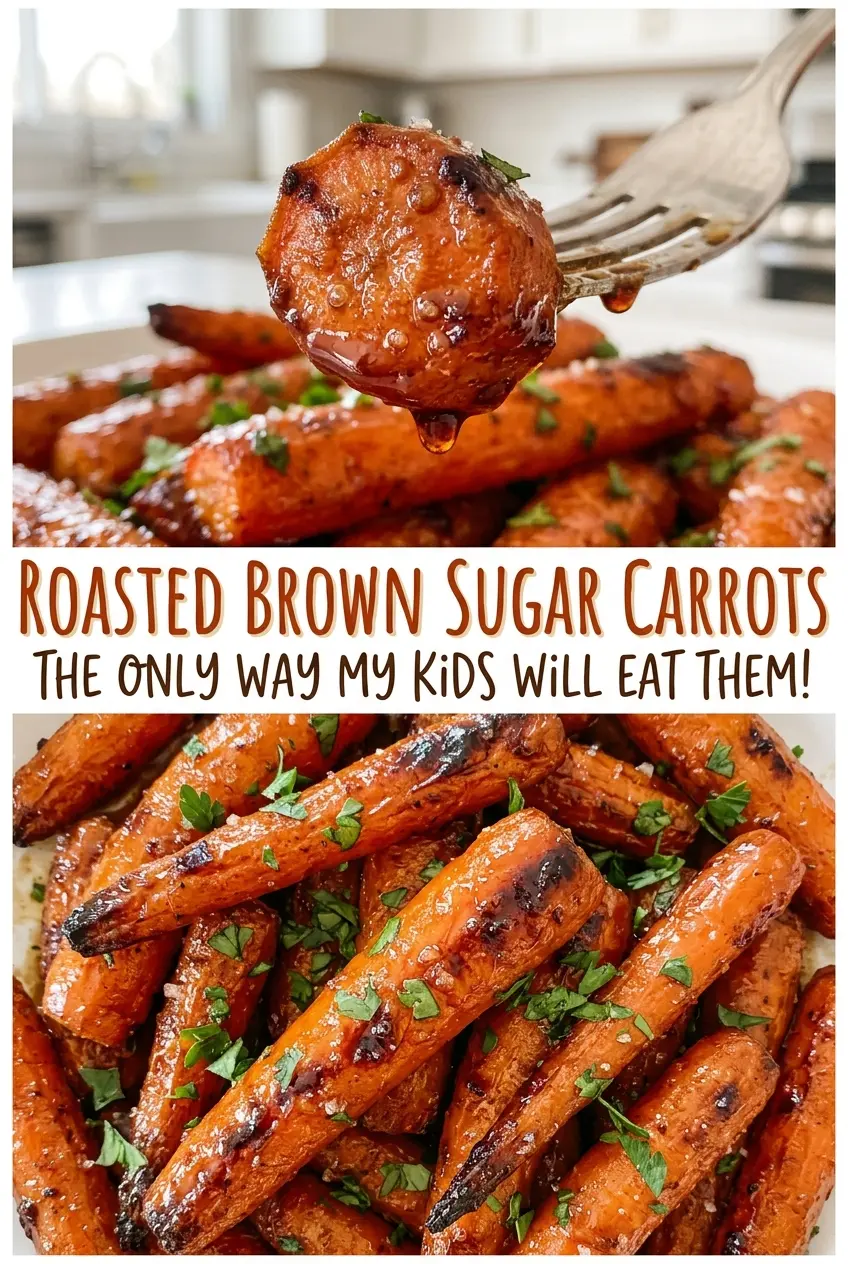
- Carrots — Firm, fresh carrots are easiest to peel and cut cleanly, but an ordinary bag of carrots works well; there’s no need to seek out a specialty variety. Peel them and cut them into 2-inch pieces, halving the thick pieces lengthwise so they roast at the same pace. Parsnips are the closest root-vegetable swap, though they taste earthier and can soften sooner, so check them early if you use them.
- Unsalted butter — Butter gives the coating a rounded, rich taste and helps the sugar cling. A basic store-brand butter is fine; the carrots bring plenty of their own sweetness. For a dairy-free version, use vegan butter in the same amount. It will keep the buttery quality, though its flavor and browning can vary by brand.
- Light brown sugar — Its mild molasses note adds sweetness without overwhelming the carrots, and it melts into the butter as the pan heats. Use soft brown sugar that breaks apart easily rather than a hard, dried-out lump. Dark brown sugar also works in the same amount, with a deeper molasses flavor.
- Kosher salt and black pepper — The seasoning keeps the sugar from tasting one-dimensional. Freshly ground pepper has a more pronounced aroma, but pre-ground pepper is perfectly serviceable here. Table salt is finer and packs differently than kosher salt, so don’t swap it volume-for-volume without adjusting the amount.
From Evenly Cut Carrots to Browned Edges
Cut for an Even Roast
Peel the carrots and cut them into 2-inch pieces, halving any thick pieces lengthwise. Look at the pieces together before you coat them: they don’t need to be identical, but very thick pieces will take longer to turn tender. Line a large rimmed baking sheet with parchment paper while the oven heats to 425°F. The rim helps keep the butter coating on the pan rather than slipping off the edge.
Coat Every Piece
Toss the carrots with the melted butter, packed light brown sugar, kosher salt, and black pepper until the pieces are coated. Scrape the bottom of the bowl as you toss so the sugar and seasoning don’t stay behind. Spread the carrots on the prepared sheet in a single layer. If several pieces are touching, separate them before the pan goes into the oven.
Roast, Turn, and Check
Roast for 25 to 30 minutes, turning the carrots halfway through. The coating should look melted, and the edges should have browned spots rather than staying uniformly pale. Test a thicker piece with a fork; it should be tender without falling apart. Start checking at the lower end of the time range, since carrot size and thickness affect how quickly the centers soften.
Easy Ways to Change the Sweetness or Make Them Dairy-Free
Use Vegan Butter for a Dairy-Free Side
Replace the unsalted butter with the same amount of vegan butter. The carrots will still get a buttery coating, though the finished flavor may be less rich and the browning will depend on the brand you choose.
Go Deeper with Dark Brown Sugar
Use dark brown sugar in place of the light brown sugar, keeping the same amount. The extra molasses gives the coating a more pronounced, almost toffee-like note, so the carrots taste a little less lightly sweet.
Skip the Sugar for a Savory Roast
Leave out the brown sugar for a less sweet side, keeping the butter, salt, and pepper. You’ll lose the sugary glaze and some of the caramelized sweetness, but the carrots will still roast until tender and brown at the edges.
Storage and Reheating
- Refrigerator: Refrigerate leftovers within 2 hours and keep them in an airtight container for up to 4 days. The carrots soften as they sit, and the coating won’t stay as glossy.
- Freezer: They freeze safely, but thawed carrots are softer. Freeze them in a single layer until firm, then transfer them to a freezer-safe container for up to 2 months.
- Reheating: Spread refrigerated carrots on a baking sheet and warm them at 400°F until hot, about 8 to 10 minutes. Avoid reheating them in a covered dish, which traps steam and softens the edges further.
Questions I Get Asked About These Roasted Carrots
Roasted Brown Sugar Carrots
Ingredients
Equipment
Method
- Preheat the oven to 425°F.
- Line a large rimmed baking sheet with parchment paper.
- Toss the carrots with the melted butter, brown sugar, salt, and pepper.
- Spread the carrots in a single layer on the baking sheet.
- Roast for 25 to 30 minutes, turning the carrots halfway through, until tender and browned at the edges.