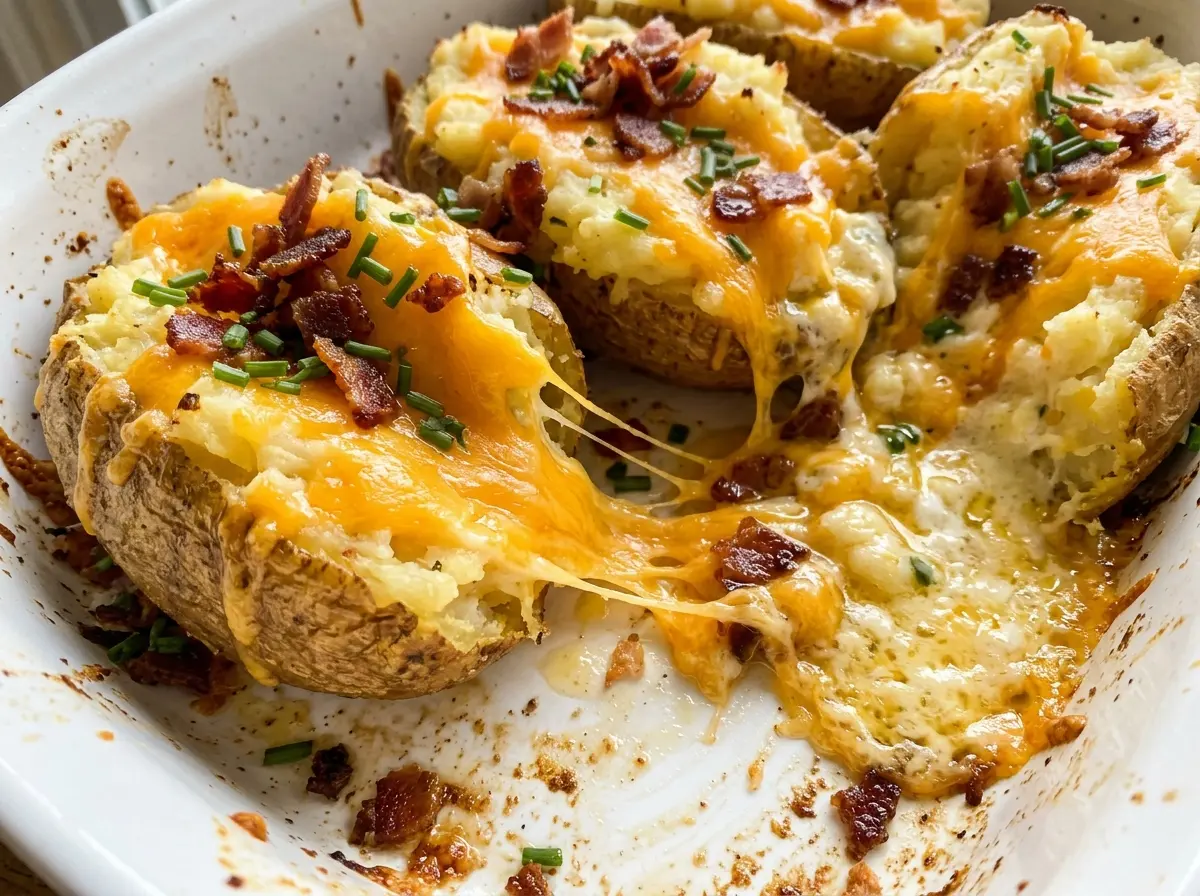
The knife tells you when the potatoes are ready: it should slide into the center without resistance, while the skins still feel sturdy enough to hold. After the second bake, the cheddar melts over a creamy filling, and each russet half is easy to lift from the pan. That balance is what I want from creamy twice baked potatoes—not a pile of mashed potato with a skin that falls apart underneath.
I keep the filling simple and build its texture with softened butter, sour cream, and warm milk. The warm milk blends in without cooling the potato, while sharp cheddar and scallions give the mash enough flavor to stand on its own. Leave a little potato inside each skin before filling it; those shells need a cushion to hold their shape in the oven.
Kitchen Note
I divide the salt between the potato skins and the filling for a reason. Seasoning the outside gives the shells their own flavor, so the first bite doesn’t depend on the creamy center to carry everything.
Save these creamy twice baked potatoes for a cozy dinner side, with sharp cheddar folded into the filling and melted over the top.
Why Russets Keep Twice-Baked Potatoes Fluffy Instead of Dense
The potato you start with shapes the filling more than any extra seasoning could. Large russets have a dry, starchy interior that mashes into a light, fluffy base. Once you add butter, sour cream, and milk, that potato flesh turns creamy without needing a heavy hand with the dairy. A waxier potato tends to stay more compact, so the filling can feel heavier and the skins are less dependable as little serving boats.
There are two textures to protect here: the airy mash and the intact shell. Baking the potatoes whole first gives the skins time to firm while the centers soften. Then, when you scoop, leave about a quarter inch of potato attached to each skin. That layer helps the shell hold its shape when you spoon the filling back in and bake it again. If you scrape right down to the skin, even a perfectly creamy filling won’t stop a thin shell from sagging or tearing under its weight.
Pick potatoes that feel firm and have enough size to make a generous half once they’re split lengthwise. Their shape doesn’t need to match; just avoid ones with soft spots or damaged skins, since those are harder to scoop and refill neatly.
What the Dairy and Cheddar Do in the Filling

- Russet potatoes — Their fluffy interior is the base of the filling, and their skins are sturdy enough to refill. Choose firm potatoes; there’s no need to seek out a specialty variety beyond russet.
- Olive oil — A light coating helps the salt cling to the skins as they bake. A standard olive oil is all you need here; save a delicate, expensive oil for a dish where its flavor stays prominent.
- Unsalted butter — Softened butter blends smoothly into the hot potato flesh and adds richness without making the filling loose. If you only have salted butter, the filling will taste saltier, so hold back on the salt added to the mash and season carefully.
- Sour cream — It brings a gentle tang that keeps the buttery mash from tasting flat. Use a fresh tub with a clean, pleasantly tart aroma; a sharp or off smell is a reason to replace it.
- Milk — Warm milk loosens the potato without bringing down its temperature as much as cold milk would. Warm it before mixing, rather than pouring it straight from the refrigerator.
- Sharp cheddar — The stronger flavor comes through in the creamy filling and makes the melted topping taste distinctly cheesy. Shredded cheddar is convenient; cheddar shredded at home usually melts a little more evenly than pre-shredded cheese.
- Scallions — Thin slices spread their mild onion flavor through the filling without overwhelming the potato. Slice them finely so they mix in evenly instead of gathering in long pieces.
From Baked Russet to Creamy, Refilled Skin
Bake the potatoes until the centers give easily
Heat the oven to 400°F and line a rimmed baking sheet with foil. Rub the scrubbed, dried potatoes with olive oil, sprinkle them with half the kosher salt, and set them on the pan. Bake for 50 to 65 minutes; the dependable cue is a knife sliding easily into the center. If it catches or feels firm, give the potato more time rather than trying to finish a hard center during the shorter second bake.
Cool enough to handle, then scoop carefully
Let the potatoes rest on the baking sheet for about 10 minutes, until they’re easy to handle. Slice each one lengthwise and scoop the flesh into a medium bowl, leaving about a quarter inch of potato inside the skin. A spoon works well; move around the inside rather than digging hard into one spot. Set the emptied skins back on the foil-lined sheet so they’re ready to refill.
Mash while the potato is still warm
Add the softened butter, sour cream, warmed milk, remaining salt, and black pepper to the potato flesh. Mash until the mixture looks creamy, with no large dry chunks, then fold in three-quarters of the cheddar and the thinly sliced scallions. Warm potato takes in the butter and dairy more readily, so the mixture comes together without needing vigorous mixing. Stop once it’s creamy; pushing the mash far past that point can make potato feel pasty.
Fill the shells and melt the cheddar
Spoon the filling evenly into the potato skins, then scatter the remaining cheddar over the tops. Bake on the same baking sheet for 15 to 20 minutes, until the filling is hot and the cheese has melted. The tops should look soft and glossy rather than dry. If the filling is still cool in the middle, give it additional time in the oven instead of serving it before it’s hot through.
Simple Ways to Change the Texture or Batch Size
A chunkier, more rustic filling
Mash the potato flesh just until the butter and dairy are incorporated, leaving a few small pieces rather than smoothing it completely. The filling will feel more substantial and less uniform, while the scallions and cheddar still run through it.
A lighter cheddar top
Stir the full cup of shredded cheddar into the filling instead of reserving a portion for the tops. The potatoes will have an even, cheesy interior without the distinct melted layer on top; keep the same total amount of cheddar.
A half batch for two
Use two large russet potatoes and halve each of the other ingredient amounts. Keep the potatoes whole for their first bake, since their size—not the number on the pan—determines when the centers are tender. You’ll have four halves to fill.
Storage and Reheating
- Refrigerator: Store cooled leftovers in a covered container for 3 to 4 days. The filling firms up when chilled, but softens again as it warms.
- Freezer: Freeze the filled potatoes individually, tightly wrapped, for up to 2 months. Thaw them in the refrigerator; the filling may be a little softer after freezing.
- Reheating: Reheat in the oven until the centers reach 165°F. If the cheese on top browns before the middle is hot, cover the potatoes loosely; microwaving heats the filling quickly but softens the skins.
Questions That Come Up While Making Twice-Baked Potatoes
Creamy Twice Baked Potatoes
Ingredients
Equipment
Method
- Preheat the oven to 400°F.
- Line a rimmed baking sheet with foil.
- Rub the potatoes with the olive oil.
- Sprinkle the potatoes with 1/2 teaspoon of the salt.
- Place the potatoes on the baking sheet.
- Bake for 50 to 65 minutes, until a knife slides easily into the centers.
- Let the potatoes cool on the baking sheet until they are easy to handle, about 10 minutes.
- Slice each potato in half lengthwise.
- Scoop the flesh into a medium bowl, leaving about 1/4 inch of potato in the skins so they hold their shape.
- Mash the potato flesh with the butter, sour cream, warm milk, remaining 1/2 teaspoon salt, and pepper until creamy.
- Stir in 3/4 cup of the cheddar and the scallions.
- Spoon the filling evenly into the potato skins.
- Sprinkle with the remaining 1/4 cup cheddar.
- Bake on the baking sheet for 15 to 20 minutes, until the filling is hot and the cheese is melted.