The cranberries start popping one by one as they simmer, and the sauce thickens from a loose, glossy mixture into something you can turn into a firm center. The first time I made chocolate covered cranberry sauce, I expected the fruit to set on its own. It didn’t hold a clean edge, so gelatin became part of the plan.
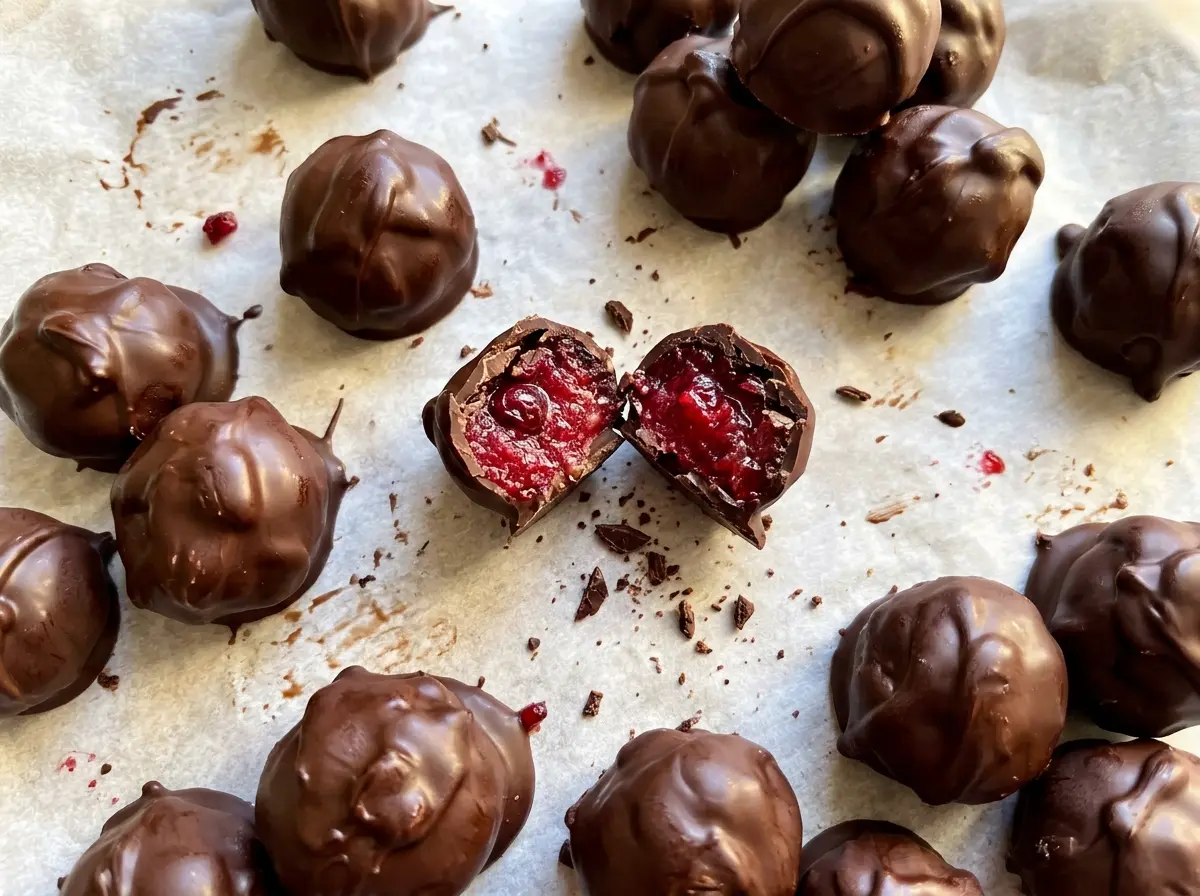
Blending and straining the cooked berries gives these pieces a smooth, tart center instead of a jammy one with bits of skin. Once it’s chilled and firm, each piece gets dipped in semisweet chocolate. The coconut oil helps the coating flow around the cold centers without hiding the cranberry’s sharp, bright taste.
There’s a little waiting between cooking and dipping, but the hands-on work is straightforward. The finished pieces have a thin chocolate shell and a pleasantly tangy middle.
Kitchen Note
Let the melted chocolate cool until it’s warm, not hot, before dipping. Around 90°F gives you a fluid coating without bringing unnecessary heat to the firm cranberry centers.
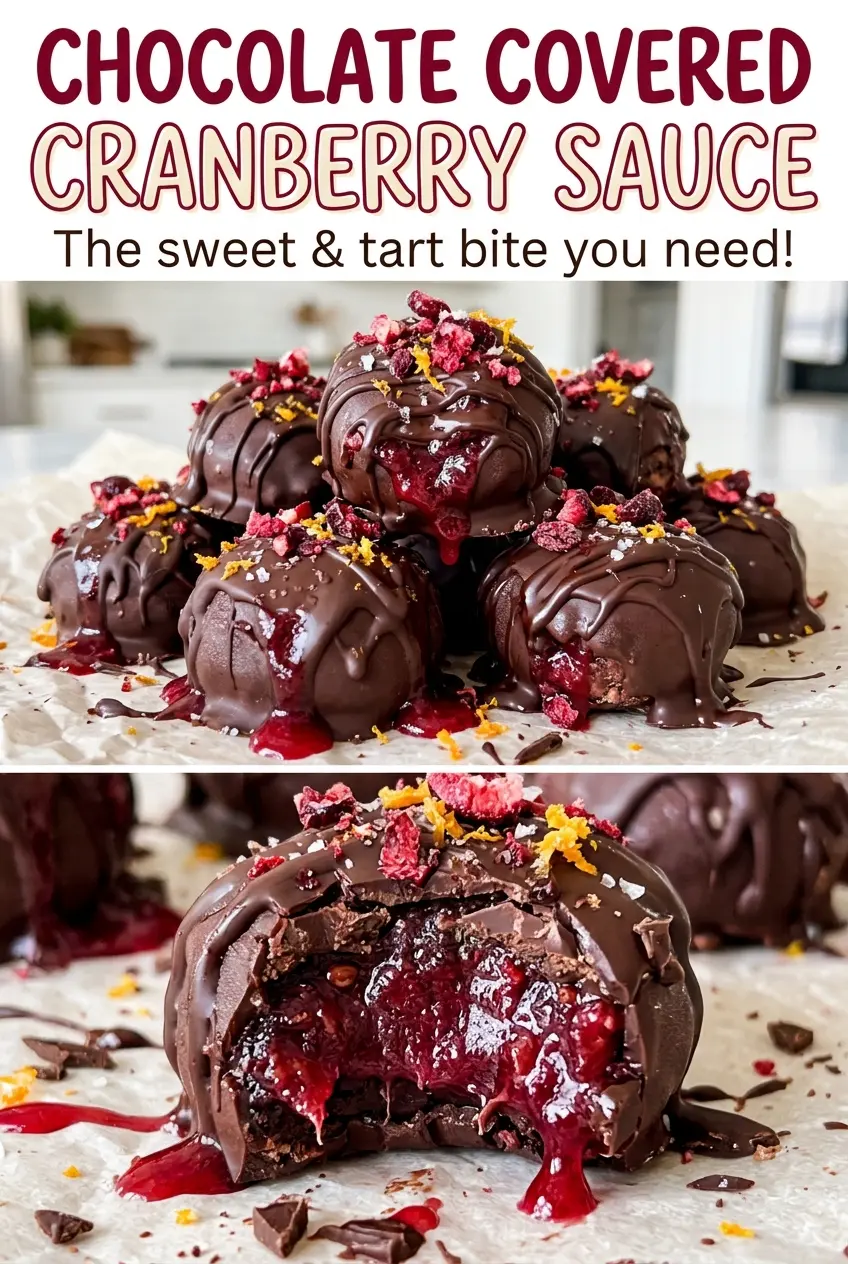
Save these chocolate covered cranberry sauce bites for a make-ahead treat with a tart fruit center and a semisweet chocolate shell.
Why a Smooth Cranberry Puree Makes a Better Chocolate Center
Cranberries have plenty of tartness and natural body, but cooking them into sauce doesn’t automatically give you a neat candy center. The skins and any small fruit pieces can leave the texture uneven, and a soft sauce won’t hold its shape well enough for dipping. That’s why I blend the cooked berries and then press the puree through a fine-mesh sieve before it goes into the pan to set.
Straining takes a little extra time, but it changes the bite: the center becomes smooth and consistent, with no tough flecks competing with the chocolate shell. The gelatin then gives that puree the structure a spoonable cranberry sauce doesn’t have. Chilling it in a loaf pan creates a slab that’s easy to lift out and portion once it’s firm.
There’s a useful distinction here: the cooked fruit should be thick before it’s strained, but the final candy texture comes from the chilled puree. Don’t judge the center while it’s still warm in the bowl. Once it has had time in the refrigerator, it should be firm enough to cut and handle before the quick freeze that prepares it for dipping.
What Each Ingredient Is Doing in These Cranberry Chocolate Bites
- Fresh cranberries — They bring the tart flavor and fruit base for the centers. Use fresh berries for the most predictable cookdown; canned cranberry sauce is already sweetened and prepared, so it won’t behave like whole berries in this method.
- Granulated sugar — Sugar rounds out the berries’ sharpness and helps the cooked puree taste balanced against semisweet chocolate. I wouldn’t reduce it for this batch; the center is meant to be tart, but not harsh.
- Unflavored powdered gelatin — This is what makes the chilled puree firm enough to portion and dip. There isn’t a reliable equal-measure substitute that sets the same way, so keep the powdered gelatin for this formula.
- Cold water — Part of the water gives the gelatin time to bloom, while the rest cooks with the cranberries. Keep the gelatin’s portion cold so it hydrates before it meets the hot puree.
- Semisweet chocolate chips — Their sweetness balances the tart center without making the coating overly sweet. A familiar grocery-store brand works well here; the more important detail is keeping the chips semisweet.
- Coconut oil — It loosens the melted chocolate so it coats the cold pieces smoothly. Butter isn’t a direct swap because it contains water and can change how the chocolate behaves.
From Thick Cranberry Sauce to a Set Chocolate Shell
Bloom the Gelatin and Cook the Berries
Sprinkle the gelatin over the smaller portion of cold water in a small bowl and leave it for 5 minutes. Meanwhile, bring the cranberries, sugar, and remaining water to a simmer over medium-high heat. Reduce the heat to medium and cook for 10 to 12 minutes, stirring occasionally, until the berries have burst and the sauce looks thick. If the cranberries are still mostly whole, give them more time within that cooking range and stir so the fruit cooks evenly.
Blend, Strain, and Set the Puree
Take the saucepan off the heat and blend the sauce until smooth with an immersion blender. Press it through a fine-mesh sieve into a bowl, working the puree through rather than leaving most of it behind. Stir the bloomed gelatin into the hot puree until you can’t see any granules. Pour it into a parchment-lined 8×4-inch loaf pan and refrigerate for at least 4 hours, until the slab feels firmly set.
Portion and Firm the Cranberry Centers
Lift the chilled slab out using the parchment, then cut it into 16 pieces. If the center smears or flexes while you’re cutting, it needs more chilling rather than a harder push with the knife. Arrange the pieces on a parchment-lined plate and freeze them for 20 to 30 minutes, until very firm. This short freeze makes the centers easier to handle during dipping.
Melt the Chocolate and Dip
Combine the chocolate chips and coconut oil in a narrow microwave-safe bowl. Microwave at 50% power in 30-second intervals, stirring between each interval, until the mixture is smooth. Let it cool until warm but not hot, about 90°F, then dip each cranberry piece to coat and set it on parchment. Refrigerate the dipped pieces for 20 minutes, until the chocolate is set.
Two Ways to Change the Shape or Skip the Coating
Cut the centers into slim bars
Keep the same batch and make 16 narrow rectangles instead of square-looking pieces. They’ll still dip in the same chocolate, but the longer shape gives each bite a little more cranberry center relative to its width.
Leave the centers uncoated
For a fruit-forward version, make the cranberry slab and cut it into pieces, but leave out the chocolate chips and coconut oil. The result is a softer, sharper cranberry bite without the chocolate shell; keep it chilled and handle it gently.
Storage and Reheating
- Refrigerator: Store the finished pieces in an airtight container for 3 to 4 days. The center may soften slightly as it sits, so keep the candies chilled until serving.
- Freezer: I don’t recommend freezing the finished, coated pieces; condensation as they thaw can leave the chocolate dull or streaky. The brief freeze before dipping is for firming the centers, not long-term storage.
- Reheating: These are served cold, so there’s no reheating step. Don’t microwave the finished candies; the chocolate shell will melt before the centers warm evenly.
Questions That Come Up When Dipping Cranberry Centers
Chocolate Covered Cranberry Sauce
Ingredients
Equipment
Method
- Sprinkle the gelatin over 2 tablespoons cold water in a small bowl and let it stand for 5 minutes.
- Combine the cranberries, sugar, and remaining 1/2 cup water in a medium saucepan and bring to a simmer over medium-high heat.
- Reduce the heat to medium and cook for 10 to 12 minutes, stirring occasionally, until the cranberries have burst and the sauce is thick.
- Remove the pan from the heat and blend the sauce until smooth with an immersion blender.
- Press the sauce through a fine-mesh sieve into a bowl.
- Stir the bloomed gelatin into the hot cranberry puree until dissolved.
- Pour the cranberry puree into a parchment-lined 8x4-inch loaf pan.
- Refrigerate for at least 4 hours, until firmly set.
- Lift the cranberry slab from the pan and cut it into 16 pieces.
- Arrange the pieces on a parchment-lined plate.
- Freeze for 20 to 30 minutes, until very firm.
- Combine the chocolate chips and coconut oil in a narrow microwave-safe bowl.
- Microwave at 50% power in 30-second intervals, stirring between each, until smooth.
- Let the chocolate cool until warm but not hot, about 90°F.
- Dip each cranberry piece to coat and set it on parchment.
- Refrigerate the pieces for 20 minutes, until the chocolate is set.