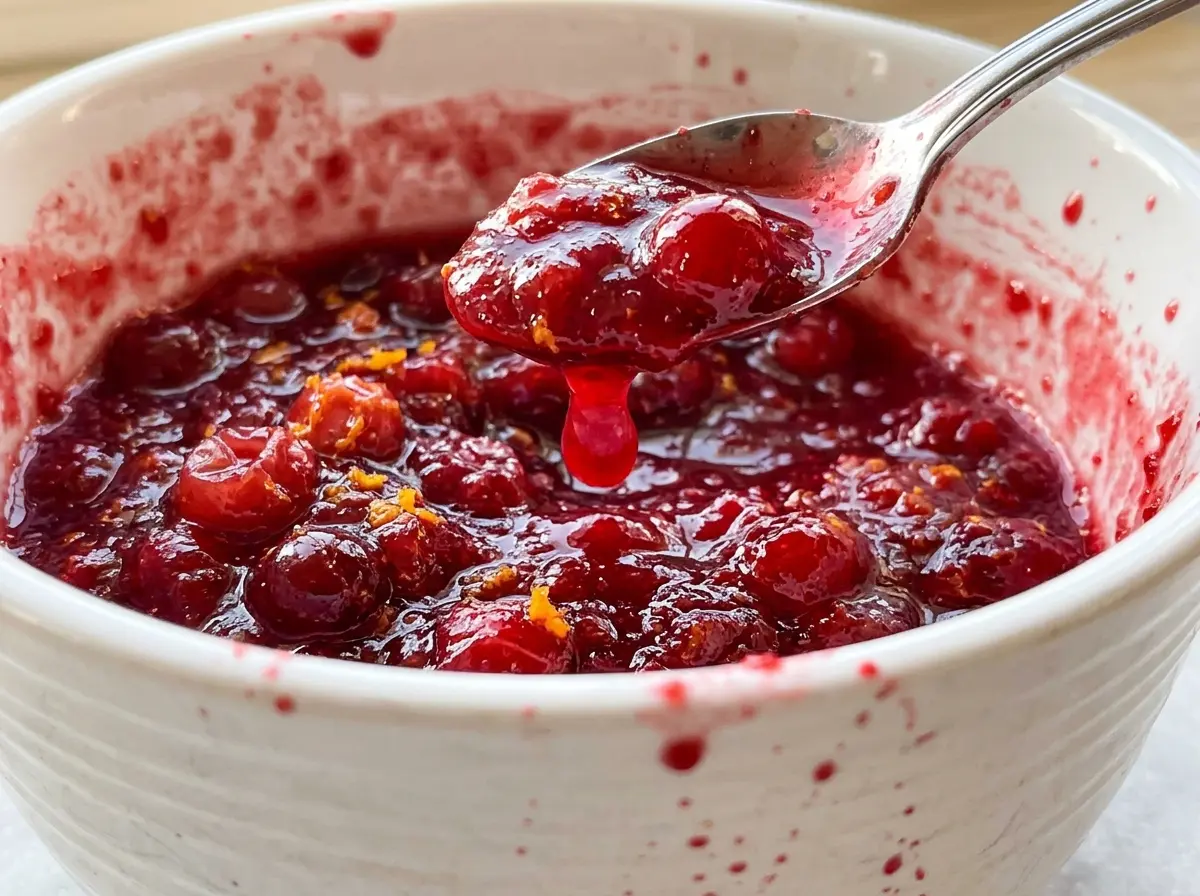
As the cranberries heat, you’ll hear a few soft pops, then the berries begin to collapse and tint the orange-sugar mixture a deep ruby red. I used to expect the sauce to look thick while it was still simmering, but that’s not how this Best Ever Cranberry Sauce finishes. It comes together in one saucepan, and the final texture develops as it cools.
The orange juice gives the cranberries a rounded citrus note, while finely grated zest brings a brighter aroma without adding more liquid. I stir the sugar mixture until it dissolves before adding the berries; that gives the cranberries an even, clear base to cook in. Once most of them have burst, the sauce is ready to leave the heat, with a little more thickening still to come. It’s tart, gently sweet, and glossy with whole berries tucked through it.
Kitchen Note
Pick through the cranberries before they go into the pan. A soft or damaged berry can be easy to miss in the bag, and taking a moment to remove it keeps the finished sauce tasting clean and bright.
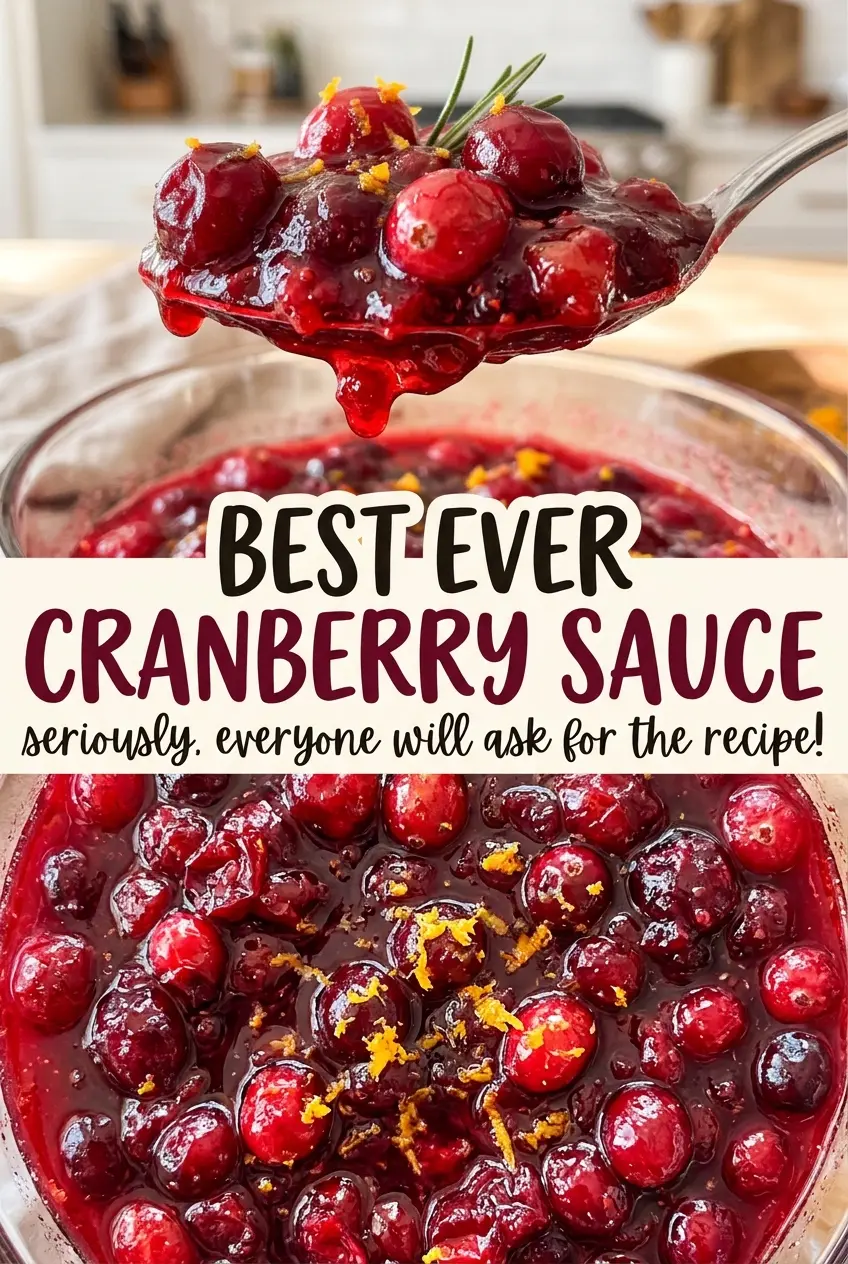
Save this Best Ever Cranberry Sauce for its bright orange aroma, ruby color, and berries that soften into a spoonable sauce.
Why Cranberry Sauce Can Look Thin Until It Cools
Cranberries don’t turn into a thick sauce the moment they hit the pan. As the berries heat, their skins split and the fruit softens, releasing the pectin and juice that help the mixture set. That means a bubbling saucepan can still look looser than you expect, especially while the berries are actively releasing liquid.
Let the visual cues guide you: most berries should have burst, and the liquid should look thicker than it did at the start of the simmer. It doesn’t need to look as firm as the finished sauce. Once the pan comes off the heat, the mixture continues to thicken as it cools to room temperature. Cooking it longer just to force a firm texture in the hot pan can leave you with a denser sauce than you wanted.
The orange juice is part of that balance, not just a flavoring. It adds liquid for the cranberries to cook in, while the sugar rounds out their natural tartness. The combination gives you a sauce that holds together after cooling without needing a thickener.
What the Cranberries, Orange, and Sugar Each Bring
- Fresh cranberries — Firm berries are the right starting point here: they hold their shape long enough to soften and burst during the simmer. Pick out soft or damaged ones, then rinse the rest. There isn’t a direct substitute that gives the same tart, berry-forward result; frozen berries can soften differently, so the timing and texture may not match.
- Granulated sugar — It balances the cranberries’ sharpness and contributes to the sauce’s body as it cools. Granulated sugar dissolves cleanly in the warm liquid. Swapping in a liquid sweetener changes both the sweetness and the amount of liquid in the pan, so I keep the granulated sugar for this version.
- Orange juice — Juice gives the sauce its citrus note while helping create the liquid base the berries simmer in. A standard orange juice works; a sweetened orange drink would change the balance. The zest adds a more fragrant orange aroma, so extra juice alone won’t quite replace it.
- Finely grated orange zest — The fine texture lets the zest disperse through the sauce rather than leaving large strips. Grate only the colored outer peel; the white pith underneath is bitter. Freshly grated zest is worth the small effort because its aroma is more vivid than juice alone.
- Kosher salt — A small amount sharpens the contrast between sweet sugar and tart cranberries. Keep it in the mixture rather than sprinkling it over the finished sauce, so it dissolves evenly.
From Dissolved Sugar to a Set, Spoonable Sauce
Sort and rinse the cranberries
Rinse the berries and pick through them, removing any that feel soft or look damaged. Firm cranberries should feel plump and hold their shape. This quick check is easier before the berries are in the saucepan, when you can see each one clearly. Set the rinsed berries aside while you build the sweet orange base.
Dissolve the sugar in the orange base
In a medium saucepan, stir together the sugar, water, orange juice, orange zest, and kosher salt over medium-high heat. Keep stirring until the sugar dissolves and the mixture comes to a boil. Look for a clear, evenly mixed liquid rather than sugar sitting at the bottom of the pan. Starting with dissolved sugar helps the berries cook in a consistent base.
Simmer until most berries burst
Stir in the cranberries and bring the mixture back to a boil. Then reduce the heat to medium-low and simmer for 10 to 12 minutes, stirring occasionally. You’ll hear the berries pop as their skins split; most should have burst by the time the sauce thickens. If plenty of berries are still whole and the liquid looks thin, keep cooking within that simmering window and watch for the texture to change.
Let the sauce finish thickening off the heat
Remove the saucepan from the heat when the berries have mostly burst and the sauce has thickened. Let it cool to room temperature before judging its final consistency. The sauce will continue to thicken as it cools, so don’t keep it bubbling just to make it look fully set while hot. The cooled sauce should be glossy and easy to spoon.
Two Simple Ways to Adjust the Finished Sauce
A smaller batch for a smaller table
Scale every ingredient down by the same proportion to keep the cranberry-orange balance intact. Use the same saucepan sequence and rely on the berry-bursting and thickening cues, since a smaller volume may move through the simmer differently. This is a useful option when you want less sauce without changing its character.
A firmer, chilled finish
For a sauce that holds its shape more firmly on a spoon, let it cool to room temperature and then chill it in a covered container. The colder temperature gives the set a firmer feel than serving it at room temperature, while keeping the same cranberry and orange flavor. This is a texture change, not a different ingredient balance.
Storage and Reheating
- Refrigerator: Store in a covered container for 3 to 4 days. It will become firmer as it chills.
- Freezer: Freeze in an airtight container for up to 2 to 3 months. Thaw it in the refrigerator before serving; the texture may be a little softer after thawing.
- Reheating: Warm gently in a saucepan over low heat, stirring occasionally, until heated through. Avoid a hard boil, which can make the sauce reduce further and turn thicker than intended.
Questions That Come Up With This Cranberry Sauce
Best Ever Cranberry Sauce
Ingredients
Method
- Rinse the cranberries and pick out any soft or damaged berries.
- Stir together the sugar, water, orange juice, orange zest, and salt in a medium saucepan over medium-high heat until the sugar dissolves and the mixture comes to a boil.
- Stir in the cranberries and return the mixture to a boil.
- Reduce the heat to medium-low and simmer for 10 to 12 minutes, stirring occasionally, until most of the berries have burst and the sauce has thickened.
- Remove the pan from the heat.
- Let the sauce cool to room temperature; it will thicken further as it cools.