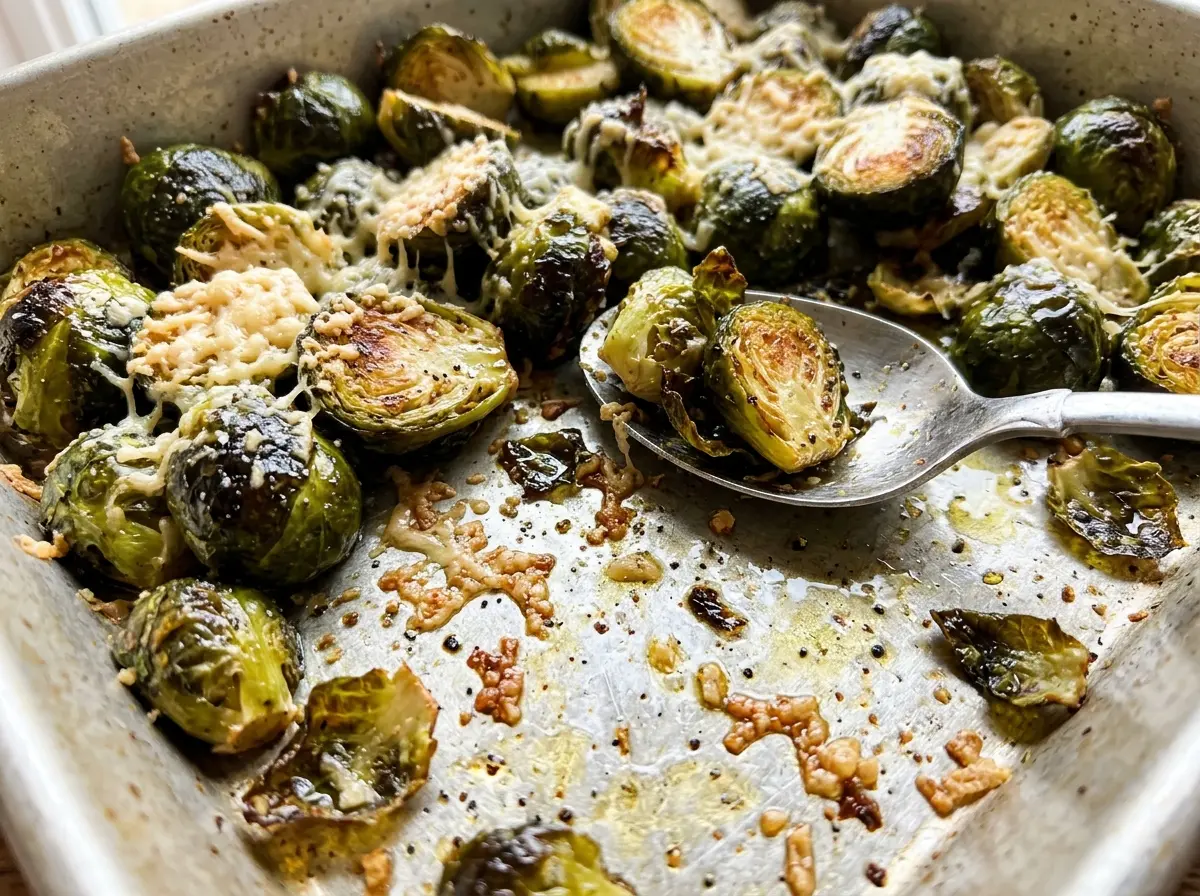
The cut sides of the Brussels sprouts should meet the hot pan like little green coins. When they do, they turn deeply brown while the rounded tops stay tender, and the oven does most of the work. I used to scatter the halves across the pan without thinking about which side faced down; the sprouts cooked, but they never developed the browned edges that make Parmesan Roasted Brussels Sprouts worth serving.
Now I arrange them cut-side down in one layer on the baking sheet, then leave them alone until they’re fork-tender. Finely grated Parmesan goes on at the end, just long enough to melt over the sprouts without hiding their roasted flavor. The finished bites are savory, tender inside, and browned where they meet the pan.
Kitchen Note
Keep the Parmesan finely grated and scatter it evenly over the sprouts. Big clumps melt at different speeds, so you can end up with bare spots beside thick patches of cheese.
Save these Parmesan Roasted Brussels Sprouts for a side dish with deeply browned edges and a melted, savory Parmesan finish.
Why the Cut Side Needs to Touch the Pan
Brussels sprouts have a lot of surface area tucked inside their layers, but the cut face is the part that gets the most direct contact with the baking sheet. Set that flat side down and it has a chance to brown while the rounded side roasts in the oven’s heat. Turn the halves cut-side up, or pile them on top of each other, and you lose that steady contact; the result can be tender without the deep color that makes each bite taste roasted.
The single layer matters for the same reason. Crowded sprouts release moisture close together, and that damp air makes it harder for the cut surfaces to brown. An 18×13-inch rimmed baking sheet gives the halved sprouts room to sit flat without stacking. If your sprouts are snug, take a moment to reposition them rather than leaving some balanced on their rounded sides. You don’t need to flip them during roasting; the pan-facing sides are doing the browning work.
Think of the flat side as the crust side. Once it’s in place, give the sprouts the full roasting time and use their color and tenderness, not a quick glance at the tops, to judge the result.
What Each Ingredient Brings to the Roasted Sprouts
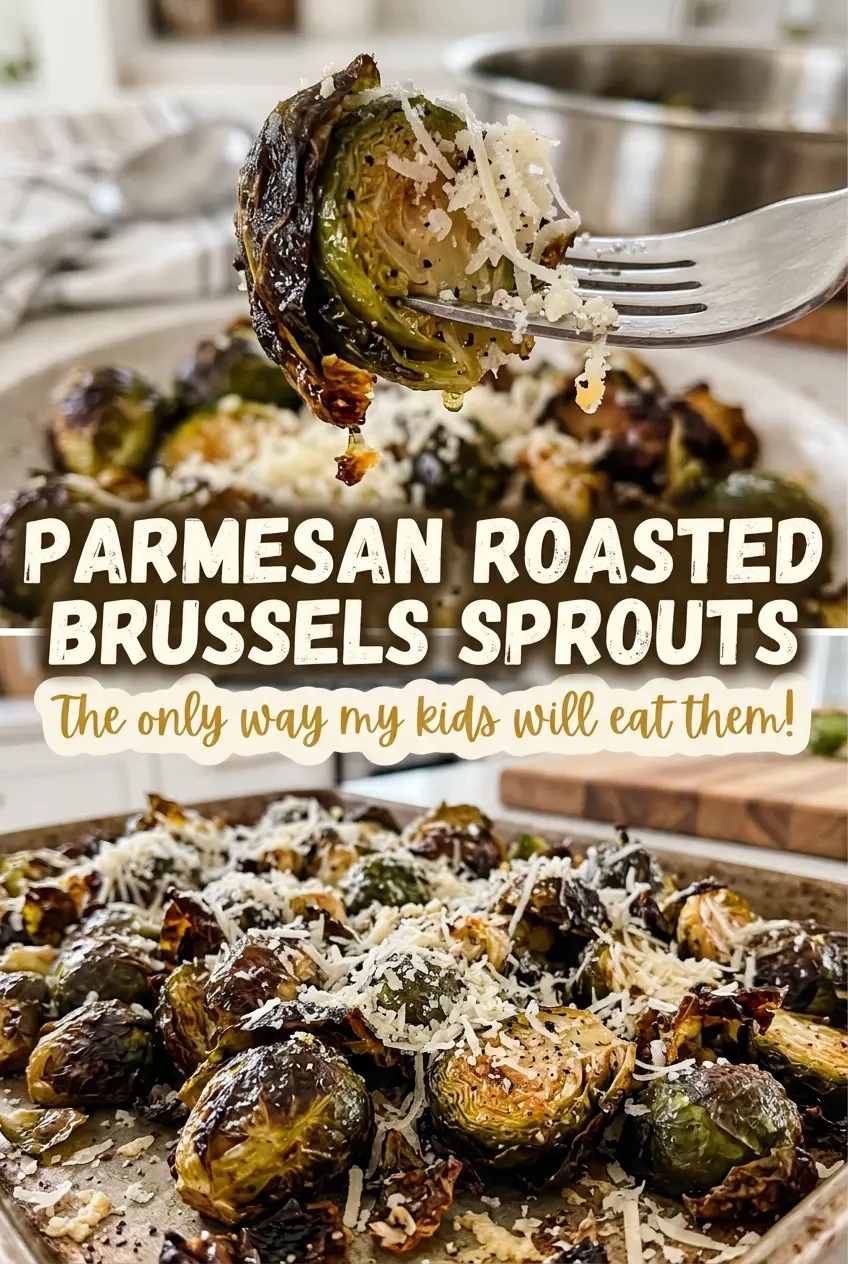
- Brussels sprouts — Choose firm sprouts with tightly packed leaves. The recipe works with trimmed, halved sprouts, so leave them in halves rather than cutting them into small pieces that could soften before the cut faces brown.
- Olive oil — It coats the sprouts so the salt and pepper cling and helps the surfaces roast rather than dry out. A basic olive oil is fine here; there’s no need to use a special finishing oil.
- Kosher salt and black pepper — The salt seasons the sprouts all the way through their leafy layers, while pepper gives the browned edges a little warmth. For a pepper-free batch, leave out the black pepper; the rest of the method stays the same.
- Finely grated Parmesan — Its fine texture lets it melt across the sprouts during the short finish in the oven. Grating Parmesan from a wedge gives you control over the texture, while packaged Parmesan is convenient if it’s finely grated. Coarse shreds won’t spread as evenly over the halved sprouts.
From a Flat Cut Side to a Melted Parmesan Finish
Heat the Oven Before the Sprouts Go In
Heat the oven to 425°F before arranging the vegetables. A fully heated oven gives the sprouts the roasting heat they need from the start, rather than warming them slowly while the oven comes up to temperature. While it heats, trim and halve the Brussels sprouts lengthwise. Keep the halves intact so each piece has a broad, flat side for the baking sheet.
Season and Arrange the Halves
Toss the sprouts with the olive oil, kosher salt, and black pepper until their surfaces are coated. Arrange them cut-side down in a single layer on an 18×13-inch rimmed baking sheet. Look across the pan before roasting: the flat sides should be against the metal, with no halves stacked on top of one another. If one is tipped onto its rounded side, turn it over now.
Roast Until Brown and Fork-Tender
Roast for 20 to 25 minutes, until the cut sides are deeply browned and the sprouts are fork-tender. The color on the cut faces is more useful than the tops, which won’t show the same direct contact with the pan. Check tenderness with a fork; the thicker parts should give rather than feel firm. If the sprouts still feel hard, they need more roasting time within that range.
Let the Parmesan Melt Over the Top
Sprinkle the finely grated Parmesan evenly over the sprouts, then return the pan to the oven for 2 to 3 minutes. Watch for the cheese to melt across the tops; it doesn’t need a long bake. If you leave it in too long, the cheese can brown more than you want, so take the pan out as soon as it has melted. Serve the sprouts while the cheese is soft and the cut sides are still browned.
Two Small Changes for Different Tables
Leave Out the Black Pepper
Skip the black pepper for a gentler, simpler finish that lets the roasted sprouts and Parmesan come through. Keep the olive oil, kosher salt, browning method, and Parmesan finish the same.
Make Two Finishes on One Pan
For a mix of cheesy and plain sprouts, sprinkle Parmesan over only part of the pan for the final roast. The cheese-covered portion gets a savory, melted topping, while the rest keeps the browned vegetable flavor front and center.
Storage and Reheating
- Refrigerator: Store leftovers in an airtight container for 3 to 4 days. The sprouts soften in storage, and the browned edges won’t stay crisp.
- Freezer: I don’t recommend freezing them. Thawed sprouts lose their browned texture and turn soft, so they’re best enjoyed from the refrigerator.
- Reheating: Spread the sprouts on a baking sheet and reheat uncovered in the oven until hot. The microwave is quicker, but it softens the sprouts and won’t bring back their browned edges.
Questions That Come Up With Parmesan Roasted Brussels Sprouts
Parmesan Roasted Brussels Sprouts
Ingredients
Equipment
Method
- Heat the oven to 425°F.
- Toss the Brussels sprouts with the olive oil, salt, and pepper, then arrange them cut-side down in a single layer on an 18x13-inch rimmed baking sheet.
- Roast for 20 to 25 minutes, until the cut sides are deeply browned and the sprouts are fork-tender.
- Sprinkle the Parmesan evenly over the sprouts and roast for 2 to 3 minutes, until the cheese is melted.