As soon as the first cubes of beef hit the Dutch oven, the pot fills with a deep, roasted smell. Browning them in batches takes a little patience, but it gives Jamaican beef stew the rich start that a crowded pot can’t deliver. I scrape up every browned bit when the onion goes in; those bits become part of the broth.
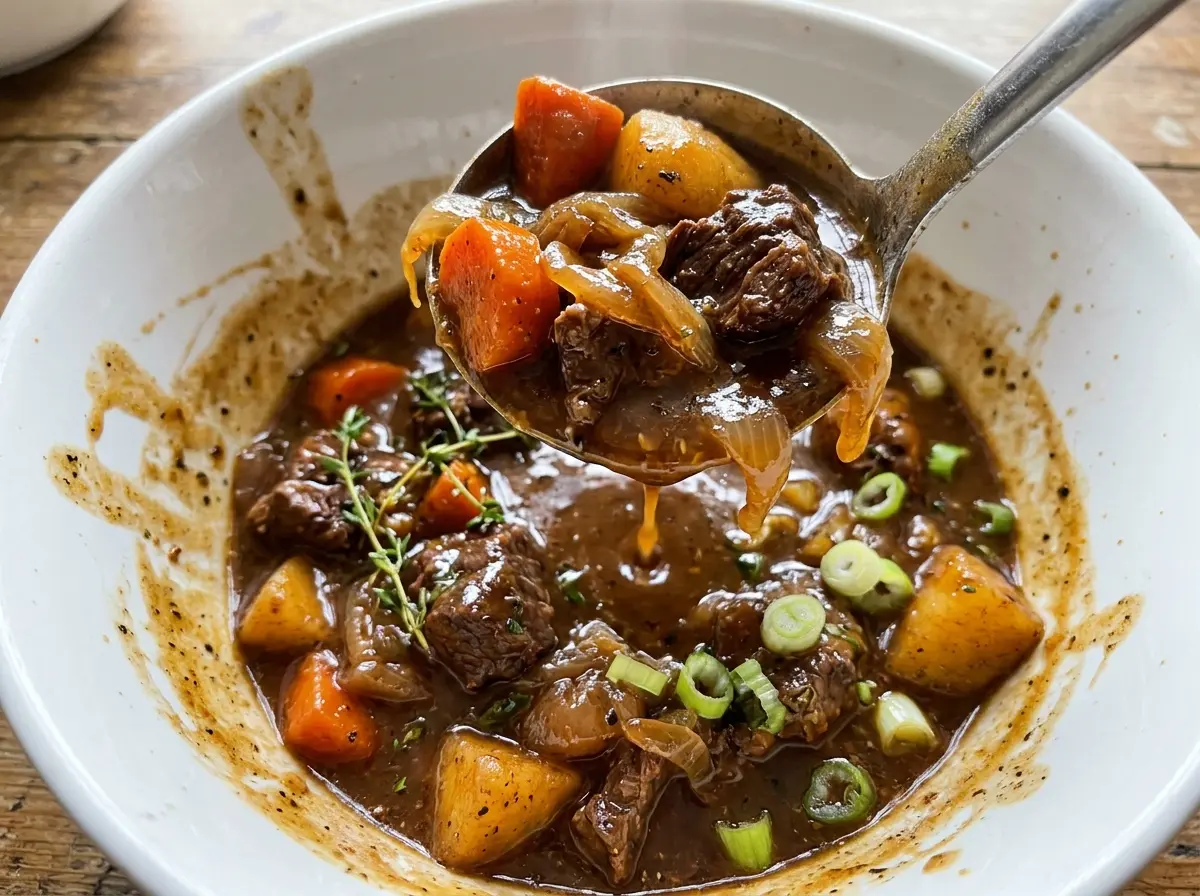
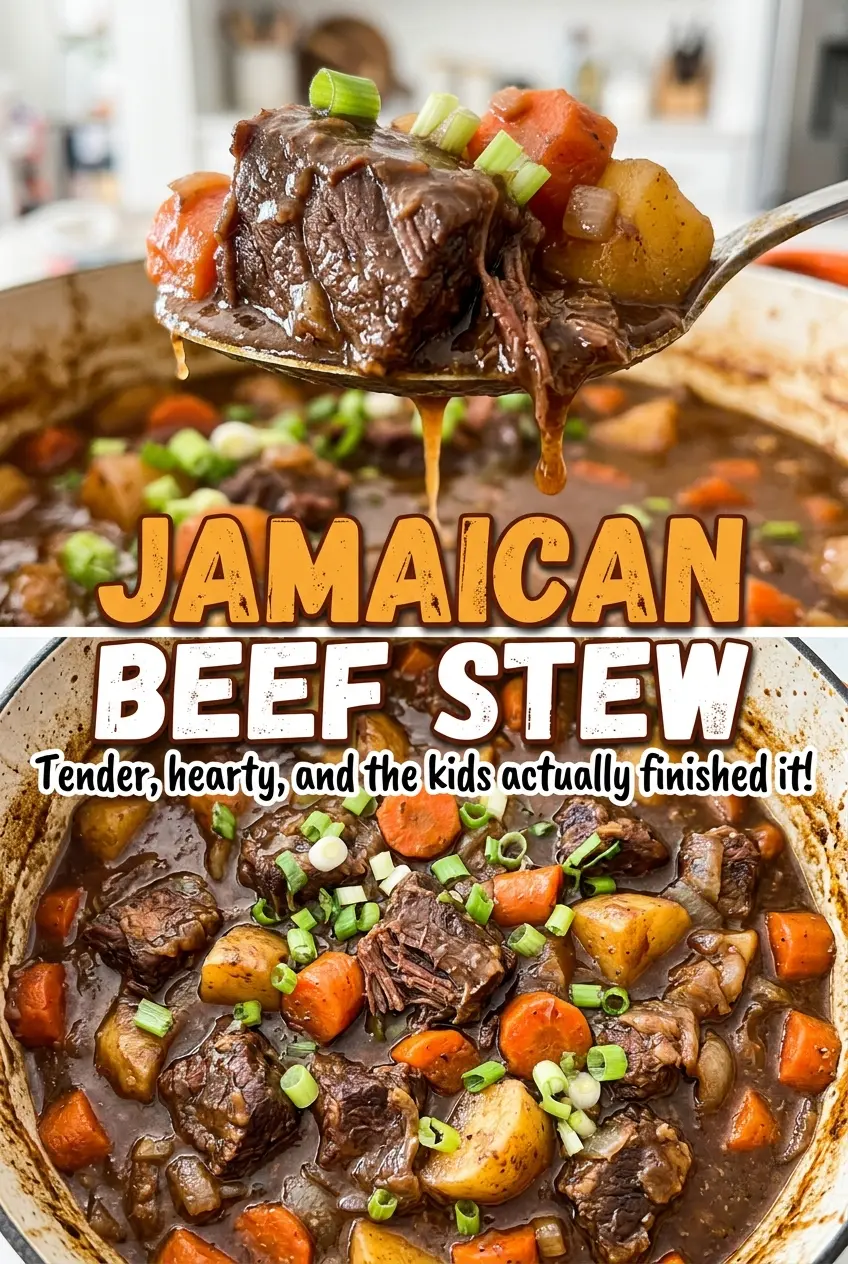
This stew builds flavor from a short list of ingredients: allspice, fresh thyme, tomato paste, browning sauce, and a Scotch bonnet with one slit down its side. The pepper seasons the broth while staying whole enough to lift out before serving. After the beef simmers until nearly tender, the carrots and Yukon Gold potatoes go in for the final stretch, so they soften without spending the whole afternoon in the pot. The finished stew is full of fork-tender beef and vegetables in a warmly spiced, deep-colored broth.
Kitchen Note
Keep the Scotch bonnet in one piece apart from its single slit, then lift it out whole before serving. That way, it seasons the broth without leaving pepper fragments in the bowls.
Save Jamaican beef stew for a slow-simmer day, when tender beef and a warmly spiced broth are worth the wait.
Why This Stew Gets Its Depth From a Few Jamaican Pantry Flavors
A dark broth doesn’t need a long list of spices behind it. Here, browning sauce and tomato paste give the base color and depth, while ground allspice, thyme, and garlic build a savory warmth that stays clear rather than crowded. The result is a stew with character, not a broth that tastes like one spice has taken over.
The balance depends on giving those flavors time to come together around the beef. The Scotch bonnet contributes its own distinct pepper note, but it isn’t chopped through the pot; you can remove it whole after simmering. That makes this a gently layered stew, not a dish where every bite has the same level of heat. Keep the pepper intact and don’t add extra spice ingredients that compete with the combination already in the pot.
There’s also a practical reason to let the beef simmer before the vegetables join in: the meat needs a longer cook to become tender, while carrots and potatoes need less time. Staggering them gives each part of the stew the time it needs without asking the potatoes to hold together through the full beef simmer.
What the Beef, Browning Sauce, and Allspice Bring to the Pot
- Beef chuck — Chuck has enough connective tissue to turn tender during the long, gentle simmer. Choose pieces with some marbling, and cut them into even cubes so they cook at a similar pace. A lean steak cut is a poor swap here; it won’t give you the same tender, stew-ready texture.
- Browning sauce — This ingredient is responsible for the stew’s deep color and adds a distinct savory note. It’s worth using the named ingredient rather than relying on tomato paste alone; tomato paste brings a different, brighter flavor.
- Ground allspice and fresh thyme — Allspice has a warm, aromatic character, while fresh thyme brings an herbal note to the broth. Use fresh thyme sprigs so you can lift out the stems at the end. The whole sprigs are easy to find and remove after simmering.
- Tomato paste and flour — Tomato paste gives the base a concentrated savory layer. Flour helps thicken the broth; cooking it with the onion mixture before adding liquid keeps it from tasting raw. Use all-purpose flour for the recipe’s standard version, or see the gluten-free adaptation below.
- Low-sodium beef broth — The lower sodium level gives you more control over the seasoning, since the beef is already seasoned with kosher salt. A basic store-brand broth works well; there’s no need for a specialty product.
- Scotch bonnet — One lengthwise slit lets the pepper season the stew while keeping it whole for easy removal. Handle it carefully, and don’t cut it into pieces if you want to keep it easy to fish out.
- Yukon Gold potatoes and carrots — Yukon Golds hold their shape well in a simmered stew, and their creamy texture suits the broth. Cut both vegetables into substantial pieces; very small pieces soften sooner and are more likely to break apart.
Building the Stew in the Right Order for Tender Beef and Intact Vegetables
Brown the Beef in Batches
Pat the beef dry, season it with kosher salt and black pepper, and heat the neutral oil in a 5-quart Dutch oven over medium-high heat. Brown the cubes in batches for 2 to 3 minutes per side, moving each browned batch to a plate. Leave room around the pieces; crowding makes it harder to brown them well. Don’t rush this stage by piling all the beef into the pot at once.
Cook the Aromatics and Build the Base
Add the chopped onion and cook over medium heat for 4 to 5 minutes, stirring and scraping up the browned bits. The onion should soften as it loosens those flavorful bits from the bottom of the pot. Stir in the minced garlic and cook for 30 seconds, then sprinkle in the flour and stir for 1 minute. Mix in the tomato paste, browning sauce, allspice, and thyme before returning the beef and any juices from the plate.
Simmer Until the Beef Is Nearly Tender
Pour in the low-sodium beef broth and add the Scotch bonnet. Bring the liquid to a gentle simmer, then cover the Dutch oven and cook over low heat for 1 1/2 to 2 hours. Keep the simmer gentle rather than letting the liquid boil hard. Before adding vegetables, check that the beef is nearly fork-tender; it should yield when pierced but still have a little way to go.
Add the Vegetables and Finish the Pot
Stir in the thick carrot rounds and Yukon Gold potato chunks, cover, and simmer for 30 to 40 minutes. The vegetables should be tender, and the beef should now be fork-tender. Lift out the Scotch bonnet and thyme stems before serving. Let the stew rest for 10 minutes so it settles in the pot before you ladle it out.
Two Practical Ways to Adapt Jamaican Beef Stew
Make the Stew Gluten-Free
Replace the all-purpose flour with the same amount of a 1:1 gluten-free all-purpose flour blend. Stir it into the onion mixture and cook it for the same minute before adding the tomato paste and other seasonings. The broth may thicken a little differently depending on the blend, but the stew keeps its savory base.
Leave Out the Scotch Bonnet for a Milder Pot
Omit the pepper if you want a stew without its chile heat. The beef, thyme, allspice, and browning sauce still make a full-bodied broth, though you’ll miss the Scotch bonnet’s distinctive pepper note.
Storage and Reheating
- Refrigerator: Cool and refrigerate leftovers within 2 hours, then keep them covered for 3 to 4 days. The potatoes may soften as they sit in the broth.
- Freezer: Freeze in airtight containers for up to 2 to 3 months. The beef freezes well, though the potatoes may be softer after thawing.
- Reheating: Warm the stew gently on the stovetop, stirring now and then, until it reaches 165°F throughout. Avoid a hard boil, which can break up the potatoes and make the beef less pleasant to eat.
Questions That Come Up When Making Jamaican Beef Stew
Jamaican Beef Stew
Ingredients
Equipment
Method
- Pat the beef dry and season it with the salt and black pepper.
- Heat the oil in a 5-quart Dutch oven over medium-high heat.
- Brown the beef in batches for 2 to 3 minutes per side, transferring it to a plate as it browns.
- Add the onion to the pot and cook over medium heat for 4 to 5 minutes, stirring and scraping up browned bits, until softened.
- Add the garlic and cook for 30 seconds.
- Sprinkle the flour over the onion mixture and cook for 1 minute, stirring.
- Stir in the tomato paste, browning sauce, allspice, and thyme.
- Return the beef and any accumulated juices to the pot.
- Pour in the beef broth and add the Scotch bonnet.
- Bring to a gentle simmer, cover, and cook over low heat for 1 1/2 to 2 hours, until the beef is nearly fork-tender.
- Stir in the carrots and potatoes, cover, and simmer for 30 to 40 minutes, until the vegetables are tender and the beef is fork-tender.
- Remove the Scotch bonnet and thyme stems.
- Let the stew rest for 10 minutes before serving.