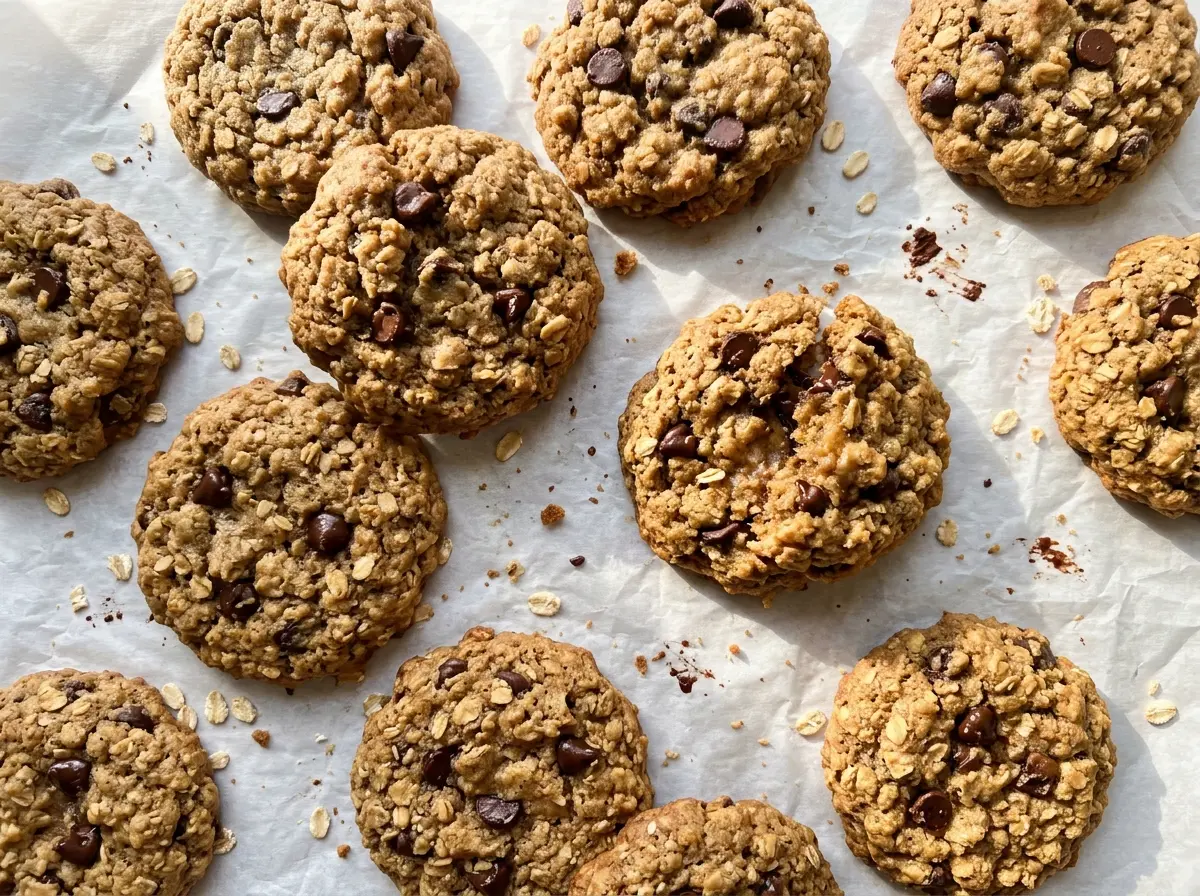
The dough looks thick once the oats and chocolate chips are folded in, but that’s exactly what I want for a cookie with a chewy middle and plenty of texture. These gluten free oatmeal chocolate chip cookies bake up with lightly browned edges while the centers stay soft, and the cinnamon gives the oats a gentle warmth without taking over.
I chill the dough before scooping because it firms up and becomes easier to portion neatly. That short rest also gives the oats time to take up some moisture, so the dough feels more cohesive when it goes onto the baking sheet. Use a gluten-free flour blend that already includes xanthan gum; it helps the cookies hold together instead of breaking apart. Once they’re baked, the chocolate stays soft for a few minutes, tucked between the oats in each tender cookie.
Kitchen Note
The centers should still look soft when the edges are lightly browned. Leave the cookies on the baking sheet for 5 minutes; that short rest lets them set enough to move without losing their tender middle.
Save these gluten free oatmeal chocolate chip cookies for chewy oat texture, soft centers, and chocolate in every bite.
Why a Short Chill Makes These Oatmeal Cookies Easier to Handle
Oat-heavy cookie dough can feel rough and loose right after mixing. The rolled oats haven’t had much time to absorb moisture, and the dough may be sticky enough to cling to the scoop. A 30-minute chill gives the mixture time to firm up, making each portion easier to shape and space evenly across the pan.
That pause is especially useful with gluten-free dough. Without the structure gluten provides, a warm, soft dough can be harder to handle cleanly. Chilling helps the portions keep their shape as you transfer them to the baking sheet, while the oats remain distinct instead of disappearing into a smooth, uniform dough. Cover the bowl while it chills so the surface doesn’t dry out. When you’re ready to portion, the dough should feel cool and firm but still scoop easily; if it’s sticky, give it a little more time in the refrigerator.
Keep the chill brief and purposeful. The goal isn’t a hard dough that needs to be wrestled into shape. It’s a scoopable mixture that lets you portion the cookies consistently, which helps them bake at the same pace.
The Gluten-Free Flour and Oats Have Different Jobs

- Gluten-free all-purpose flour blend — The blend provides the cookie’s base, while the xanthan gum helps bind the dough. Choose a baking blend that includes xanthan gum; blends vary, so a familiar brand is a good choice when you want a predictable texture.
- Certified gluten-free rolled oats — Old-fashioned oats bring the hearty chew and visible oat texture. Certified gluten-free oats matter for keeping the cookies suitable for a gluten-free table; ordinary oats aren’t necessarily processed to avoid gluten cross-contact.
- Softened unsalted butter — Softened butter creams smoothly with the sugars and helps create a cohesive dough. Let it soften until you can press a finger into it, but don’t use melted butter, which changes the consistency before the dough is chilled.
- Light brown and granulated sugars — Brown sugar brings a deeper, moist sweetness, while granulated sugar balances it and contributes to the cookie’s edges. Packed light brown sugar gives a mild molasses note; dark brown sugar would make that flavor stronger.
- Semisweet chocolate chips — Semisweet chocolate keeps the cookies from becoming overly sweet alongside the brown sugar. A good-quality gluten-free chip melts into familiar little pockets; you can use gluten-free dark chocolate chips for a more bittersweet finish.
- Cinnamon and baking soda — Cinnamon adds warmth that suits the oats, and baking soda helps the cookies rise and brown. Fresh baking soda is worth using here; an old, open container may not give the dough the same lift.
From Creamed Butter to Soft-Centered Cookies
Cream the Butter and Sugars Until Smooth
Heat the oven to 350°F and line an 18×13-inch baking sheet with parchment paper. Beat the softened butter with both sugars for about 2 minutes, until the mixture looks creamy and well combined. Scrape the bowl if you see butter sitting at the bottom; streaks left behind can make the mixture uneven. Beat in the eggs one at a time, then mix in the vanilla.
Whisk the Dry Ingredients Separately
In a medium bowl, whisk together the gluten-free flour blend, baking soda, cinnamon, and kosher salt. A thorough whisk spreads the baking soda and cinnamon through the flour, so you don’t end up with a concentrated bite of either. Add the dry mixture to the butter mixture and mix just until combined. Stop when the flour disappears rather than beating the dough smooth.
Fold in the Oats and Chill the Dough
Stir in the rolled oats and semisweet chocolate chips until they’re distributed throughout the dough. The mixture will be thick, and that’s normal; keep folding until you don’t see pockets of plain dough. Cover the bowl and chill for 30 minutes. If you skip the cover, the surface can dry while the dough rests.
Scoop, Bake, and Cool in Batches
Scoop the dough into 2-tablespoon portions and space them 2 inches apart on the prepared sheet. Bake in batches for 10–12 minutes, until the edges are lightly browned and set while the centers still look soft. Let the baking sheet cool completely between batches before adding more dough, or the next portions will start softening on contact. Cool each batch on the sheet for 5 minutes, then move the cookies to a wire rack to cool completely.
Three Easy Ways to Change the Chocolate or Make Them Dairy-Free
Make the Cookies Dairy-Free
Replace the butter with the same amount of softened dairy-free baking sticks, and use dairy-free semisweet chocolate chips. Choose baking sticks rather than tub-style spread, which contains more water and can make the dough too soft. The cookies may spread a little differently depending on the brand.
Trade Semisweet for Dark Chocolate
Use gluten-free dark chocolate chips in place of the semisweet chips. The finished cookies taste less sweet and more cocoa-forward, which pairs nicely with the brown sugar and cinnamon.
Turn Them into Oatmeal Raisin Cookies
Replace the chocolate chips with the same volume of raisins. You’ll get a fruitier cookie with chewy bursts of sweetness instead of melted chocolate; keep the cinnamon in place to complement the oats.
Storage and Reheating
- Room temperature: Keep cooled cookies in an airtight container for up to 4 days. They’ll soften a little as they sit.
- Freezer: Freeze fully cooled cookies in an airtight freezer-safe container for up to 3 months. Let them thaw at room temperature before serving.
- Reheating: Warm a cookie in a 300°F oven for 3–4 minutes if you’d like the chocolate soft again. Don’t leave it in until the center dries out.
Questions That Come Up When Baking These Gluten-Free Cookies
Gluten Free Oatmeal Chocolate Chip Cookies
Ingredients
Equipment
Method
- Heat the oven to 350°F.
- Line an 18x13-inch baking sheet with parchment paper.
- In a large bowl, beat the softened butter, packed light brown sugar, and granulated sugar until creamy and well combined, about 2 minutes.
- Beat in the eggs one at a time.
- Mix in the vanilla extract.
- In a medium bowl, whisk together the gluten-free all-purpose flour blend with xanthan gum, baking soda, ground cinnamon, and kosher salt.
- Mix the dry ingredients into the butter mixture just until combined.
- Stir in the certified gluten-free old-fashioned rolled oats and gluten-free semisweet chocolate chips.
- Cover and chill the dough for 30 minutes.
- Scoop the dough into 2-tablespoon portions, spacing them 2 inches apart on the prepared baking sheet.
- Bake in batches, letting the pan cool completely between batches.
- Bake each batch for 10–12 minutes, until the edges are lightly browned and set while the centers still look soft.
- Cool the cookies on the baking sheet for 5 minutes.
- Transfer the cookies to a wire rack to cool completely.