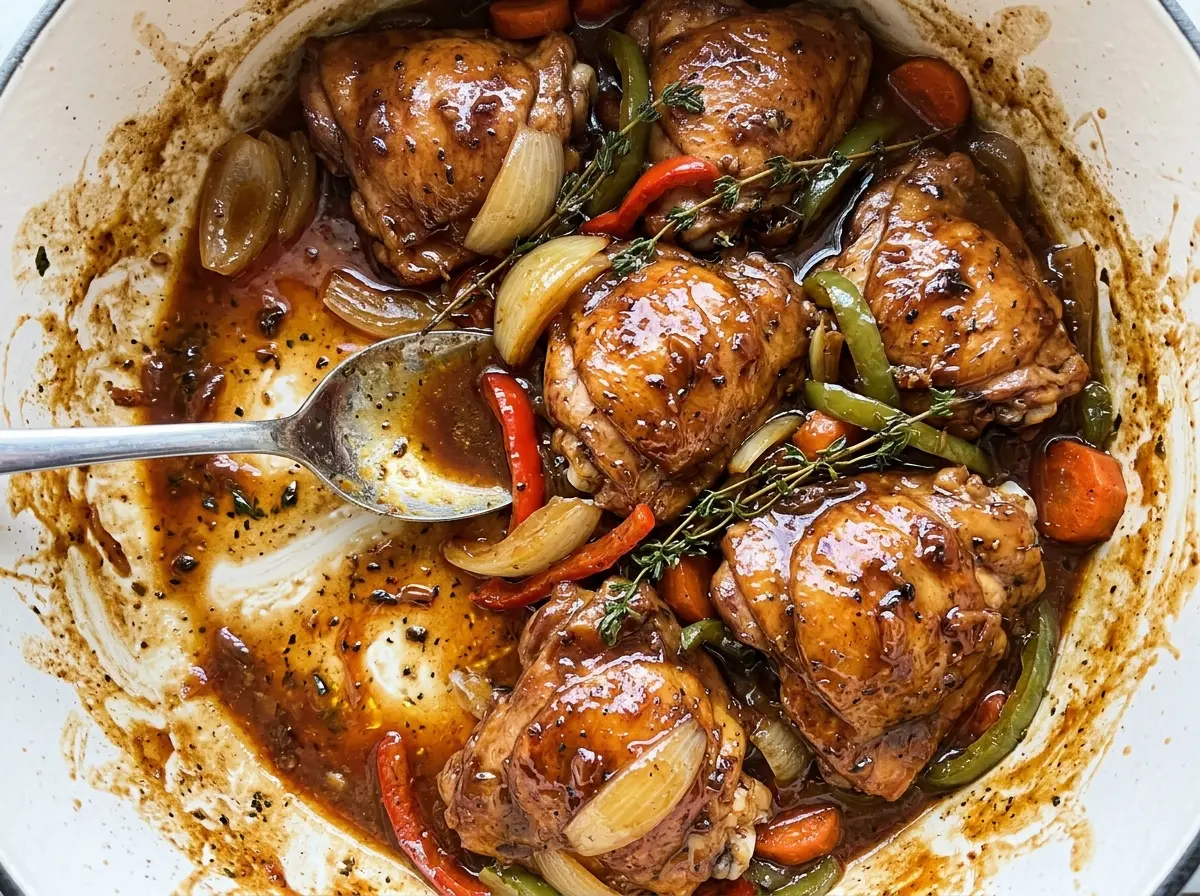
The chicken gives off a deep, savory smell as it browns, and the sliced vegetables turn sweet as they soften in the pot. Brown Stew Chicken gets its color from both the browning sauce in the marinade and a good sear on the chicken; skipping either one leaves the finished stew flatter in color and flavor.
I marinate the chicken with the onion, bell pepper, scallions, garlic, thyme, and spices, then lift the pieces out and pat them dry before browning. That small pause matters: wet chicken steams instead of sears, and vegetables stuck to the skin can scorch before the chicken has browned.
After the chicken goes back into the pot, it simmers gently with the reserved marinade, carrot, and water until tender. The sauce finishes glossy and savory, with the Scotch bonnet bringing warmth without taking over.
Kitchen Note
Leave the Scotch bonnet whole after removing its stem and making one slit. It brings a slow warmth to the stew, and you can lift it out before the final uncovered simmer.
Save this Brown Stew Chicken for a cozy dinner: bone-in chicken, sweet-softened vegetables, and a richly colored sauce all simmer together in one pot.
Why This Stew Starts With Less Liquid Than You Might Expect
Brown stew chicken is a covered braise, not a pot of soup. The chicken and vegetables release juices as they cook, so the water is there to get the pot simmering and help create a sauce—not to submerge every piece. Keeping the liquid modest lets the finished sauce cling to the chicken instead of washing over it like broth.
A tight-fitting lid does the work during the long, gentle simmer. If the pot seems a little sparse at the start, resist the urge to pour in extra water; the contents change as the chicken cooks. Once the chicken is tender, taking off the lid gives excess moisture a chance to escape and concentrates the sauce without a separate thickener. The result should still be spoonable, just a little more substantial than the liquid that went into the pot.
What Gives Brown Stew Chicken Its Color and Deep, Savory Base

- Bone-in, skin-on chicken — These pieces hold up well during a long simmer, and the skin helps the chicken brown in the pot. Choose thighs and drumsticks with skin intact; trimming excess fat keeps the sauce from feeling greasy. I wouldn’t swap in boneless breast meat here because it won’t suit the same simmering time.
- Browning sauce — This is what gives the stew its characteristic deep brown color. A standard grocery-store bottle works; the sear adds its own roasted notes, but soy sauce isn’t a color-for-color replacement. Keep the measured amount steady, since browning sauces vary in intensity.
- Soy sauce — It seasons the marinade with a savory, salty edge. A regular store-brand soy sauce is fine. For a gluten-free adaptation, use gluten-free tamari in its place; it keeps a similar savory quality.
- Scotch bonnet — A whole pepper with one slit contributes warmth while staying easy to remove before serving. Handle it carefully and avoid touching your eyes after handling it. Leaving it out makes a milder stew without changing the way it cooks.
- Onion, green bell pepper, scallions, and garlic — Together, these soften into the stew’s aromatic base. Fresh, firm vegetables are useful here, but there’s no need to seek out specialty produce; ordinary market vegetables work well. Slice the onion and bell pepper, chop the scallions, and mince the garlic so they soften evenly.
- Thyme and allspice — Fresh thyme sprigs are easy to lift out at the end, while ground allspice lends a warm, rounded note to the marinade. Use thyme sprigs that still smell fragrant; woody stems are fine because the sprigs come out before serving.
- Carrot — Sliced carrot softens in the simmer and adds a gentle sweetness to the savory sauce. Peel it and cut it into even slices so the pieces cook at the same pace.
From Marinade to Tender Chicken: The Stovetop Sequence
Let the Marinade Season the Chicken
Combine the chicken with the onion, green bell pepper, scallions, garlic, Scotch bonnet, browning sauce, soy sauce, salt, black pepper, allspice, and thyme in a large bowl. Cover and refrigerate for at least 2 hours and no more than 12 hours. Turn the pieces through the mixture so the seasonings reach all sides. Keep the bowl chilled while the chicken marinates.
Dry the Pieces Before They Hit the Pot
Lift the chicken out of the marinade, scrape away vegetables clinging to the pieces, and reserve the vegetables and marinade. Pat the chicken dry with paper towels. Heat the oil in a 5-quart Dutch oven over medium-high heat until shimmering, then brown the chicken in batches for 4–5 minutes per side. Move each browned batch to a plate; avoid crowding the pot, which makes it harder to get a good sear.
Soften the Vegetables in the Dutch Oven
Add the reserved vegetables and marinade along with the sliced carrot. Stir for 3–4 minutes, until the vegetables begin to soften. Keep them moving around the pot so they cook evenly. This quick sauté starts the sauce base before the chicken goes back in.
Simmer Gently, Then Uncover to Finish
Return the browned chicken to the pot and add the water. Bring it to a boil, then cover and simmer over low heat for 40–50 minutes, turning the chicken once, until tender and at least 165°F near the bone. Remove the Scotch bonnet and thyme sprigs. Simmer uncovered for 5–10 minutes, just until the sauce thickens slightly; it should coat the chicken without turning pasty.
Three Simple Ways to Adjust Brown Stew Chicken
Make It Gluten-Free With Tamari
Replace the soy sauce with the same amount of gluten-free tamari. The stew keeps its savory backbone, though tamari can taste a little rounder and less sharp than some soy sauces. Check that the browning sauce you choose is also labeled gluten-free.
Keep the Stew Mild
Leave out the Scotch bonnet for a gentler pot. The chicken still gets its savory seasoning from the marinade, but you lose the pepper’s distinct heat. This is the simplest adjustment for anyone sensitive to chile spice.
Swap in a Red Bell Pepper
Use one medium red bell pepper instead of the green bell pepper. It brings a sweeter, softer pepper flavor to the pot while keeping the same sliced-vegetable texture. The stew will taste a little less grassy, but the browning sauce and seasonings still anchor it.
Storage and Reheating
- Refrigerator: Refrigerate leftovers in a covered container for 3–4 days. The sauce may thicken as it chills.
- Freezer: Freeze cooled portions in airtight containers for up to 3 months for best quality. Thaw in the refrigerator before reheating; the vegetables may soften further after freezing.
- Reheating: Reheat gently in a covered saucepan over low heat, stirring the sauce occasionally, until the chicken reaches 165°F. Avoid a hard boil, which can make the chicken fibers tighten and the sauce reduce too far.
Questions That Come Up While Making Brown Stew Chicken
Brown Stew Chicken
Ingredients
Equipment
Method
- In a large bowl, combine the chicken, onion, bell pepper, scallions, garlic, Scotch bonnet, browning sauce, soy sauce, salt, black pepper, allspice, and thyme.
- Cover and refrigerate for at least 2 hours or up to 12 hours.
- Lift the chicken from the marinade, scrape off any clinging vegetables, and reserve the vegetables and marinade.
- Pat the chicken dry with paper towels.
- Heat the oil in a 5-quart Dutch oven over medium-high heat until shimmering.
- Brown the chicken in batches for 4–5 minutes per side, then transfer the browned pieces to a plate.
- Add the reserved vegetables and marinade and the carrot to the pot; cook for 3–4 minutes, stirring, until the vegetables begin to soften.
- Return the chicken to the pot and add the water.
- Bring to a boil, then cover and simmer over low heat for 40–50 minutes, turning the chicken once, until tender and at least 165°F near the bone.
- Remove the Scotch bonnet and thyme sprigs.
- Simmer uncovered for 5–10 minutes to thicken the sauce slightly.