The butter starts pale and quiet in the skillet, then turns golden and smells almost like toasted hazelnuts. That moment is what makes these brown butter garlic mashed potatoes more than a bowl of plain mash, but it’s easy to rush past it if you’re watching the potatoes at the same time. I keep the skillet close and swirl the butter as it cooks so I can catch that color change.
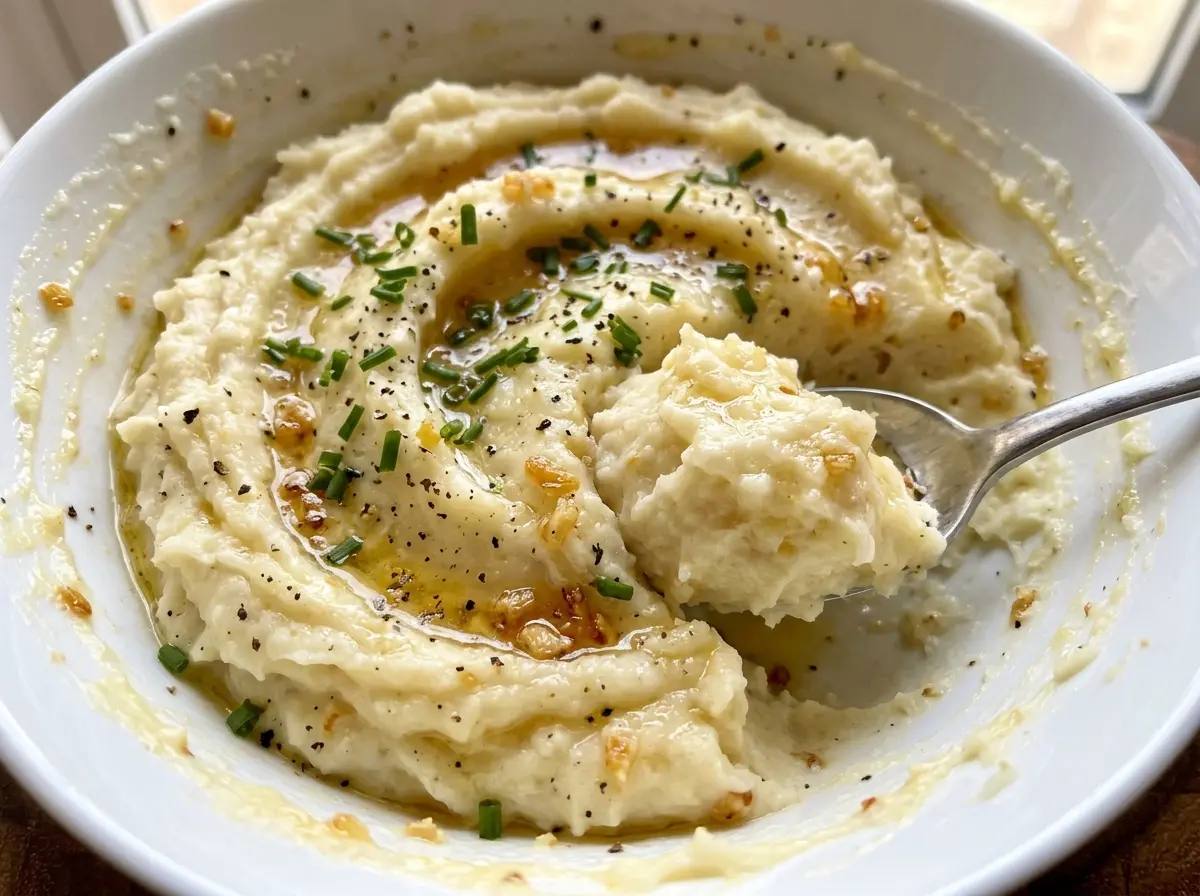
Yukon Gold potatoes give the mash a creamy, buttery texture without needing anything beyond the whole milk and butter in the pan. I cut them into even chunks, cook them until a fork slips in easily, and let them steam off briefly after draining. The warm garlic butter then stirs in without cooling the potatoes, leaving a soft mash with a nutty aroma and a gentle garlic bite.
Kitchen Note
Wait until the butter is golden and nutty-smelling before adding the garlic, then turn the heat down to low. Thirty seconds is enough for the garlic to become fragrant; letting it brown can make it taste bitter.
Save these brown butter garlic mashed potatoes for a holiday table or an ordinary dinner that needs a nutty, buttery side.
Why These Potatoes Start Cold Instead of Going Into Boiling Water
Starting the chunks in cold water gives the potatoes time to heat through as the water comes up to a boil. If you drop cold potato pieces straight into already-boiling water, their outsides can soften before the centers are ready. That leaves you choosing between firm centers and pieces that are beginning to break apart.
The even 1 1/2-inch chunks help, too: similar-sized pieces finish at roughly the same time, so you’re not fishing out the small ones while the big ones stay firm. Keep the fork test in mind rather than treating the 15–20 minutes as a timer you can’t adjust. A fork should go into the center easily, without meeting a hard spot. Tender potatoes mash readily, so you don’t have to press and stir them repeatedly to break down stubborn pieces.
What the Yukon Golds, Browned Butter, and Whole Milk Bring to the Mash

- Yukon Gold potatoes — Their naturally creamy texture suits a smooth mash. Russet potatoes are a workable substitute, but they’re starchier and make a fluffier, less buttery-feeling result; mash them gently. Peel and cut the potatoes evenly so the pieces cook at a similar pace.
- Unsalted butter — Browning gives the mash its toasted, nutty note, and unsalted butter lets you control the seasoning because salt goes into the cooking water and the finished potatoes. Salted butter can work; taste before adding the finishing salt so the mash doesn’t become too salty.
- Garlic — Fresh minced cloves bring a sharper, livelier garlic flavor. Jarred minced garlic can stand in if that’s what you have, though its flavor is usually less bright; add it to the browned butter at the same point.
- Whole milk — It loosens the mash while keeping it creamy. Two-percent milk works in the same amount, with a slightly lighter result. Warm it before it meets the potatoes so it doesn’t cool the mash.
- Black pepper — It adds a mild, earthy finish that keeps the butter from tasting one-dimensional. Freshly ground pepper has a more pronounced aroma, but ordinary ground black pepper works well here.
How to Brown the Butter and Finish the Potatoes Without Rushing
Simmer the Even Potato Chunks Until Fork-Tender
Put the peeled, 1 1/2-inch potato chunks in a 6-quart pot with 3 quarts of cold water and 1 tablespoon of the kosher salt. Bring the water to a boil over high heat, then lower it to a simmer. Cook for 15–20 minutes, checking a piece with a fork near the end. The center should be very tender; if it still feels firm, give the potatoes more time rather than mashing them early.
Swirl the Butter Until It Turns Golden
While the potatoes cook, melt the butter in a 10-inch skillet over medium heat. Swirl the skillet for 3–5 minutes, watching for the butter to turn golden brown and smelling for its nutty aroma. The color can deepen quickly near the end, so stay with the pan. Reduce the heat to low, stir in the minced garlic, and cook for 30 seconds, just until fragrant.
Warm the Milk in the Garlic Butter
Slowly stir the whole milk into the skillet. Keep the heat low for 1–2 minutes, until the mixture is steaming, then remove the skillet from the heat. Don’t let it boil; gentle warmth is all you need before the mixture goes into the potatoes. Set the skillet aside while you finish draining and mashing.
Let the Potatoes Steam Dry, Then Mash
Drain the potatoes and return them to the pot over low heat for 1 minute to evaporate excess moisture. Remove the pot from the heat and mash the potatoes. Pour the warm butter mixture over them, add the remaining 1 teaspoon of kosher salt and the black pepper, and stir until combined. Stop once the butter mixture is evenly worked through; continued stirring can make mashed potatoes heavy.
Two Small Changes for a Different Table
Make the Mash Dairy-Free
Replace the butter with unsalted plant-based butter and use unsweetened, unflavored oat milk in place of whole milk. The potatoes will still turn creamy, but the butter won’t develop the same toasted dairy aroma, and the oat milk brings a softer, less rich finish.
Let the Brown Butter Stand on Its Own
For a gentler, garlic-free version, leave out the minced garlic and continue with the browned butter and warm milk. You’ll still get the nutty butter flavor, without the sharper savory note from the garlic.
Storage and Reheating
- Refrigerator: Store in an airtight container for 3–4 days. Refrigerate within 2 hours; the mash will firm up as it chills.
- Freezer: Freeze in an airtight container for up to 1 month for the best texture. Thaw in the refrigerator; the potatoes may be slightly less smooth after freezing.
- Reheating: Warm gently in a covered saucepan over low heat, stirring often. High heat can scorch the dairy and dry the potatoes before the middle is warm.
The Questions That Come Up When Making Garlic Mashed Potatoes
Brown Butter Garlic Mashed Potatoes
Ingredients
Equipment
Method
- Place the potatoes in a 6-quart pot with the water and 1 tablespoon of the salt. Bring to a boil over high heat, then simmer for 15–20 minutes, until the potatoes are very tender when pierced with a fork.
- While the potatoes cook, melt the butter in a 10-inch skillet over medium heat, swirling for 3–5 minutes until golden brown and nutty-smelling. Reduce the heat to low, stir in the garlic, and cook for 30 seconds, until fragrant.
- Slowly stir the milk into the skillet and warm over low heat for 1–2 minutes, until steaming; remove from the heat.
- Drain the potatoes and return them to the pot over low heat for 1 minute to evaporate excess moisture, then remove from the heat and mash.
- Pour the warm butter mixture over the potatoes, add the remaining 1 teaspoon salt and the pepper, and stir until combined.