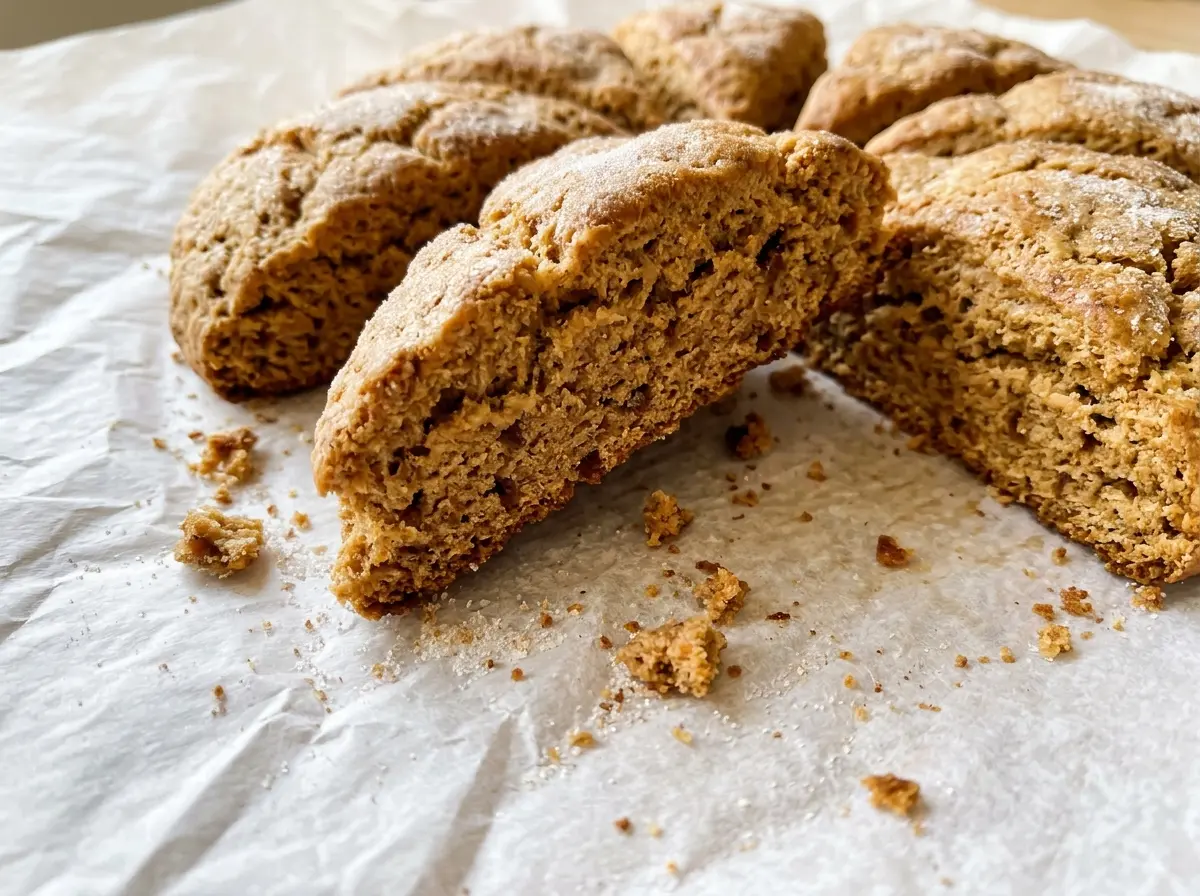
The first thing I notice when these come out of the oven is the warm ginger and molasses smell, followed by the lightly browned bottoms when I lift a wedge from the pan. Gingerbread scones can turn heavy if the dough gets worked too much, so I keep the mixing brief and handle it gently once it leaves the bowl. The result is a tender, sturdy scone with enough spice to taste like gingerbread without needing a glaze or topping.
Unsulphured molasses gives these scones their familiar deep sweetness, but blackstrap is too assertive here and can bring a bitter edge. I whisk the molasses with the egg and heavy cream before it meets the flour, which helps the wet ingredients spread through the dough instead of leaving sticky pockets. Cut into eight wedges, the scones bake up with set edges and lightly browned bottoms, while the centers stay soft.
Kitchen Note
Let the scones rest on the baking sheet for the full 5 minutes before moving them. They’re tender when hot, and that short pause helps the wedges hold together as you transfer them to the rack.
Save these gingerbread scones for a cozy bake: tender wedges with warm ginger, cinnamon, and unsulphured molasses.
Why Blackstrap Molasses Throws These Scones Off
Blackstrap molasses is darker and more intense than the unsulphured molasses used here. Its pronounced bitterness can take over the ginger, cinnamon, cloves, and nutmeg rather than letting the spices read as one warm blend. A stronger molasses flavor isn’t automatically better in a tender scone; the goal is a rounded gingerbread taste, not a sharp, bitter finish.
That distinction matters even more in a dough that isn’t heavily sweetened. The packed light brown sugar brings a mild caramel note, while the molasses adds its own deep character. Together, they give the scones a clear gingerbread flavor without burying the spices. Use unsulphured molasses, and don’t swap in blackstrap just because it’s already in the pantry. The right type keeps the flavor balanced from the first bite to the last.
The dough also needs to stay a little shaggy before shaping. It won’t look like a smooth bread dough, and it shouldn’t. A few rough edges are a better sign than a bowlful of dough that’s been stirred until uniform and sticky.
How the Molasses, Cream, and Spice Build Gingerbread Flavor

- Unsulphured molasses — It contributes the dark, unmistakable gingerbread note and helps make the dough cohesive. Use the unsulphured kind rather than blackstrap; another sweetener won’t give the same flavor.
- Heavy cream and egg — The cream adds richness, and the egg helps bind the flour and butter into wedges that hold their shape. Milk is thinner and has less fat, so it isn’t a direct swap here; keep both ingredients for the intended texture.
- Cold unsalted butter — Small cold pieces leave the flour mixture with a crumbly texture before the wet ingredients go in. Unsalted butter also lets the measured kosher salt do its job. Keep the butter cold while you work it in.
- Ground ginger and the supporting spices — Ginger gives the scones their main warm bite; cinnamon, cloves, and nutmeg add depth. Fresh, aromatic ground spices make a noticeable difference, while there’s no need to seek out a premium brand if the jars in your cupboard still smell lively.
- All-purpose flour and baking powder — Flour gives the wedges their structure, and baking powder provides the lift. All-purpose flour is the reliable choice for this dough; a different flour can absorb liquid differently and change how the wedges hold together.
- Light brown sugar — Packed brown sugar adds sweetness and a soft caramel note that works with the molasses. Its moisture is part of the dough’s balance, so granulated sugar won’t behave quite the same way.
From Cold Butter to Eight Even Gingerbread Wedges
Whisk the dry ingredients evenly
Heat the oven to 400°F and line a baking sheet with parchment paper. In a large bowl, whisk together the flour, packed light brown sugar, baking powder, ground ginger, cinnamon, cloves, nutmeg, and kosher salt. Take a moment to break up any brown sugar clumps and distribute the spices throughout the flour. An even mix means you won’t get one wedge that tastes mostly like clove and another with little spice.
Cut the butter in while it’s cold
Add the cold butter cubes to the flour mixture and work them in with a pastry cutter or your fingertips. Stop when the largest pieces are about the size of peas; a few smaller crumbs are fine. If the butter starts to feel soft or greasy, pause rather than continuing to rub it into the flour. Keeping distinct pieces in the mixture gives the dough a better texture than blending the butter in completely.
Bring the wet mixture into the flour
In a small bowl, whisk the egg, unsulphured molasses, and heavy cream until combined. Pour that mixture into the flour and stir just until a shaggy dough forms. If dry flour remains around the bottom of the bowl, keep folding gently until it’s incorporated, but don’t chase a perfectly smooth dough. Turn it onto a lightly floured surface and bring it together with a light touch.
Shape, cut, and bake the wedges
Pat the dough into a 7-inch round about 3/4 inch thick, then cut it into 8 wedges. Arrange the wedges on the prepared baking sheet with space between each one. Bake for 16 to 20 minutes, until the edges are set and the bottoms are lightly browned. The scones should lift cleanly from the parchment once they’ve had their short rest on the pan.
Small Changes to the Spice Blend, Without Losing the Gingerbread
Make the ginger stand out
Keep the ground ginger as written and slightly reduce the cloves and nutmeg for a cleaner, more ginger-forward bite. Leave the cinnamon in place so the scones still taste warmly spiced rather than sharp.
Lean into cinnamon
For a milder, cinnamon-led version, reduce the ground ginger and cloves a little while keeping the cinnamon and nutmeg. The scones will have a softer spice impression, though they won’t taste as distinctly gingery.
Storage and Reheating
- Refrigerator: Store cooled scones in an airtight container for up to 4 days. They’ll lose some of their freshly baked exterior texture as they sit.
- Freezer: Freeze cooled scones in an airtight freezer-safe container for up to 2 months. Thaw at room temperature before warming.
- Reheating: Warm in a 300°F oven for about 8 minutes, just until heated through. Avoid microwaving for too long, which can make the crumb tough.
Questions That Come Up When Baking Gingerbread Scones
Gingerbread Scones
Ingredients
Equipment
Method
- Heat the oven to 400°F.
- Line a baking sheet with parchment paper.
- In a large bowl, whisk together the flour, brown sugar, baking powder, ginger, cinnamon, cloves, nutmeg, and salt.
- Add the cold butter and cut it into the flour mixture with a pastry cutter or your fingertips until the largest pieces are pea-sized.
- In a small bowl, whisk the egg, molasses, and heavy cream until combined.
- Pour the wet mixture into the flour mixture and stir just until a shaggy dough forms.
- Turn the dough onto a lightly floured surface and gently bring it together.
- Pat the dough into a 7-inch round about 3/4 inch thick.
- Cut the dough into 8 wedges and arrange them on the prepared baking sheet with space between each wedge.
- Bake for 16 to 20 minutes, until the edges are set and the bottoms are lightly browned.
- Let the scones rest on the baking sheet for 5 minutes.
- Transfer the scones to a wire rack to cool.