The wet mixture looks glossy instead of fluffy when you whisk oil and sugar together, and that’s exactly what I expect from these cookies. Butterless chocolate chip cookies don’t start with creaming softened butter, so there’s no need to wait for the bowl to turn pale or airy. The dough comes together with pantry basics, then a short chill gives it time to firm up before baking.
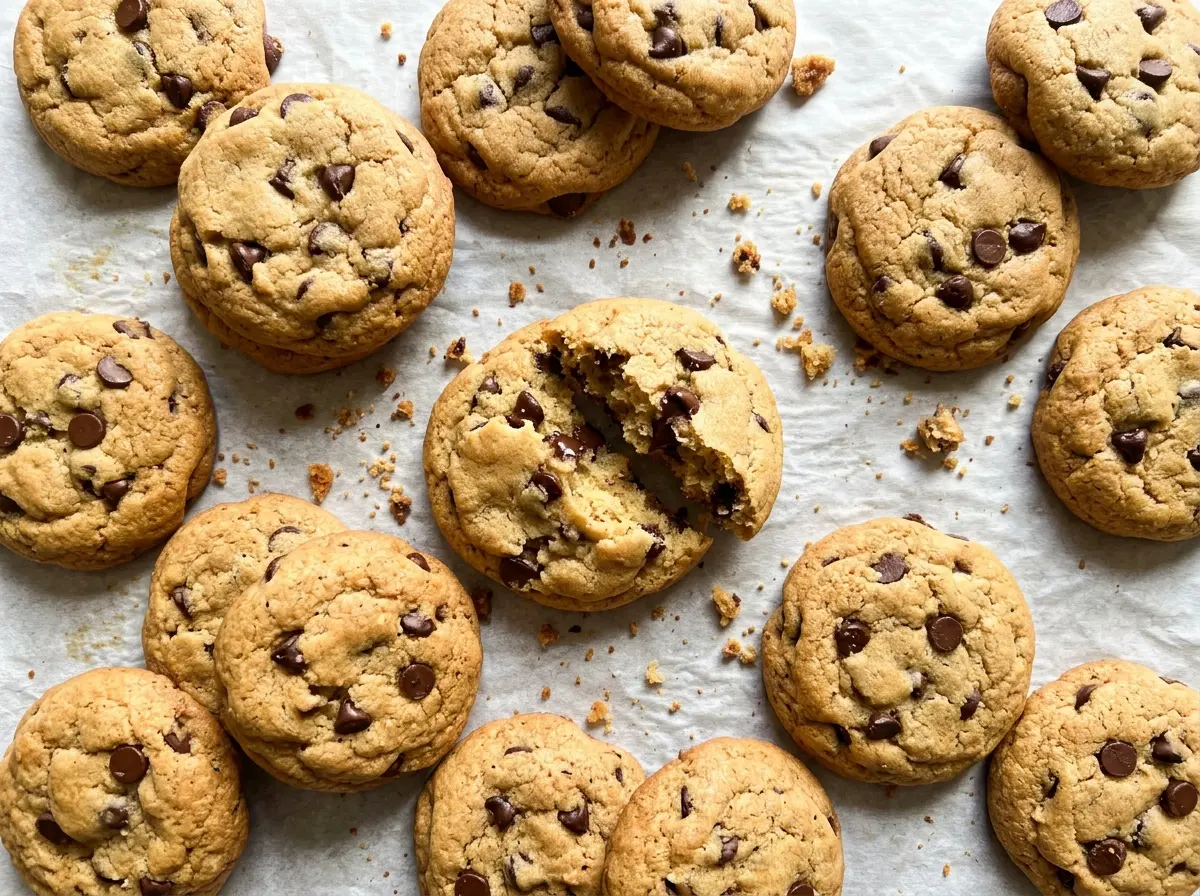
I like this version when I want chocolate chip cookies without butter but still want soft centers and edges that turn lightly golden. The brown sugar brings a deeper sweetness, while semisweet chips keep each bite familiar. Watch the cookies near the end of baking: the centers should still look soft when the edges are set. They finish settling as they cool, leaving you with tender cookies and melted chocolate in every bite.
Kitchen Note
Use a room-temperature egg, not one straight from the refrigerator. It blends into the oil mixture more smoothly, so the wet base stays even when you whisk in the egg and vanilla.
Save these butterless chocolate chip cookies for the next time you’re out of butter: the oil-based dough chills before baking, and the edges turn lightly golden around soft centers.
Oil Keeps the Dough Glossy—So Don’t Wait for It to Cream Like Butter
These cookies begin with oil whisked together with sugar, not softened butter beaten until fluffy. That difference matters when you’re judging the bowl: a smooth, glossy mixture is the right target, while a pale, airy texture isn’t part of this method. Once the egg and vanilla go in, the wet mixture should look cohesive before you bring in the flour.
The two sugars also have separate jobs. Light brown sugar contributes moisture and a rounded sweetness, while granulated sugar keeps the sweetness from leaning too heavily on molasses. The result isn’t a butter-cookie copy; it’s its own chocolate chip cookie, with a tender middle and edges that set during baking. If you keep expecting the dough to behave like a butter-based one, you’ll be tempted to keep whisking or adjust it unnecessarily. Follow the texture cues for this dough instead, and stop once everything is smooth and combined.
The Brown Sugar and Oil Set the Texture; Flour Keeps It in Check

- Neutral oil — Canola and vegetable oil both work here, and the less expensive bottle is fine. A neutral taste lets the chocolate and brown sugar come through without adding a distinct flavor of its own.
- Light brown sugar and granulated sugar — Brown sugar adds moisture and a fuller sweetness; granulated sugar balances it. Pack the brown sugar when measuring. Dark brown sugar is a workable swap, but its stronger molasses taste will come through more clearly.
- Large egg — The egg helps bind this oil-based dough. Use a large egg at room temperature; changing the size changes the amount of moisture and structure in the bowl.
- All-purpose flour — Spoon the flour into the measuring cup and level the top rather than scooping straight from the bag. Scooping packs in extra flour, which can leave the cookies dry or make the dough difficult to fold together. Standard all-purpose flour is the right choice here.
- Baking soda and fine salt — Baking soda helps the cookies spread and brown, while fine salt seasons the dough evenly. Ordinary store-brand versions work well.
- Semisweet chocolate chips — The chips provide familiar chocolate flavor and hold their shape through mixing. A standard bag is fine; choose a brand you like eating because the chocolate is a noticeable part of each cookie.
- Vanilla extract — It rounds out the sweetness rather than taking over. Use the extract you keep on hand; there’s no need for a specialty bottle for this dough.
From Glossy Wet Base to Soft-Centered Cookies
Whisk the Oil and Sugars Smooth
In a large bowl, whisk the oil with both sugars until the mixture looks smooth and glossy. It won’t become fluffy like butter and sugar, so don’t keep whisking in search of volume. Add the room-temperature egg and vanilla, then whisk again until the mixture looks even. If streaks of egg remain, continue whisking before moving on.
Fold the Flour in Gently
In a medium bowl, whisk the flour, baking soda, and salt together so the leavener and seasoning are distributed. Fold the dry mixture into the oil mixture just until no dry streaks remain. A few folds too many can make cookies firm, so stop once the flour disappears. Fold in the semisweet chocolate chips without pressing or stirring the dough more than needed.
Chill, Then Portion the Dough
Cover the bowl and chill the dough for 30 minutes. While it chills, heat the oven to 350°F and line a large baking sheet with parchment paper. Scoop the dough into 1 1/2-tablespoon portions and leave about 2 inches between them on the sheet. Keeping the portions evenly sized helps them bake at the same pace.
Bake to Set Edges, Then Let Them Settle
Bake for 10 to 12 minutes, watching for edges that look set and lightly golden while the centers still appear soft. Don’t wait for the centers to look firm in the oven; that can take the cookies past the tender texture you want. Leave them on the baking sheet for 5 minutes, then transfer them to a rack. Cool the baking sheet completely before baking the remaining dough.
Three Simple Ways to Change the Chocolate or Sugar
Use Dark Brown Sugar for a Deeper Cookie
Swap dark brown sugar for the light brown sugar in the same amount. The stronger molasses flavor makes the cookies taste deeper and a little less delicate, while keeping the same basic method.
Make Them Dairy-Free
Use dairy-free semisweet chocolate chips in place of the regular semisweet chips. The cookie dough itself uses oil rather than butter, so this swap keeps the chocolate-chip version intact while avoiding dairy in the chips.
Trade Chips for Chopped Semisweet Chocolate
Use chopped semisweet chocolate in place of the chips, measuring the same volume. The pieces melt into less uniform pockets, so expect a more varied chocolate-to-cookie ratio from one bite to the next.
Storage and Reheating
- Refrigerator: Refrigeration isn’t needed. Store cooled cookies in an airtight container at room temperature for up to 4 days; chilling them makes the texture firmer.
- Freezer: Freeze fully cooled cookies in an airtight container for up to 2 months. Thaw at room temperature so the centers soften again.
- Reheating: Warm one cookie in the microwave in 5-second bursts, stopping as soon as it feels warm. Longer heating can make the chocolate unexpectedly hot and the cookie tough.
Questions That Come Up When Baking These Without Butter
Butterless Chocolate Chip Cookies
Ingredients
Equipment
Method
- In a large bowl, whisk the oil, brown sugar, and granulated sugar until smooth and glossy.
- Whisk in the egg and vanilla until smooth.
- In a medium bowl, whisk together the flour, baking soda, and salt.
- Fold the dry ingredients into the oil mixture just until no dry streaks remain.
- Fold in the chocolate chips.
- Cover the bowl and chill the dough for 30 minutes.
- Heat the oven to 350°F.
- Line a large baking sheet with parchment paper.
- Scoop the dough into 1 1/2-tablespoon portions, spacing them about 2 inches apart.
- Bake for 10 to 12 minutes, until the edges are set and lightly golden while the centers still look soft.
- Let the cookies cool on the baking sheet for 5 minutes.
- Transfer the cookies to a rack.
- Cool the sheet completely before baking the remaining dough.