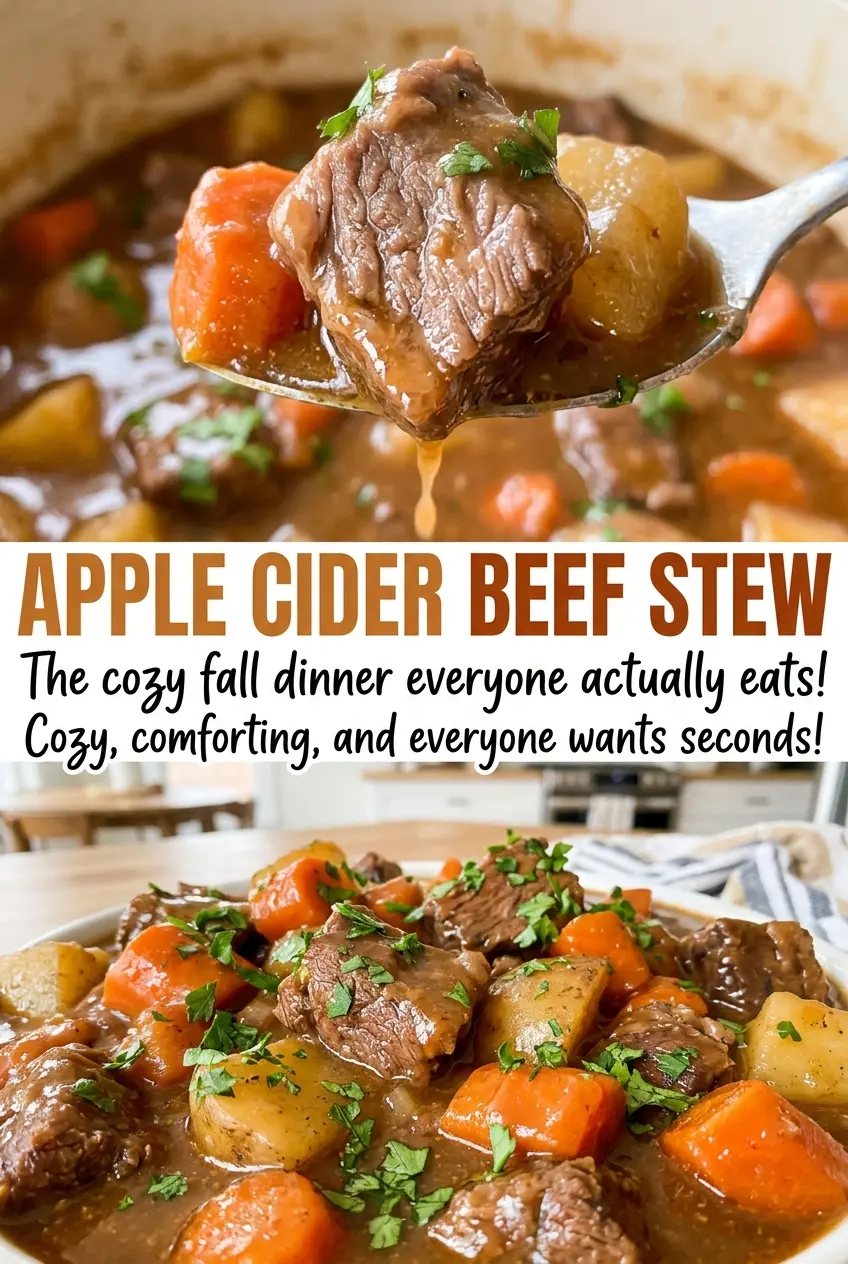
The first cubes of beef should give a clear, steady sizzle when they hit the Dutch oven; if the pot is crowded, they steam instead and leave you with pale meat and a dull broth. I brown them in batches, then let apple cider do more than add sweetness: it loosens the browned bits and gives this Apple Cider Beef Stew its mellow, savory-sweet base. The finished stew tastes like beef stew first, with apple in the background.
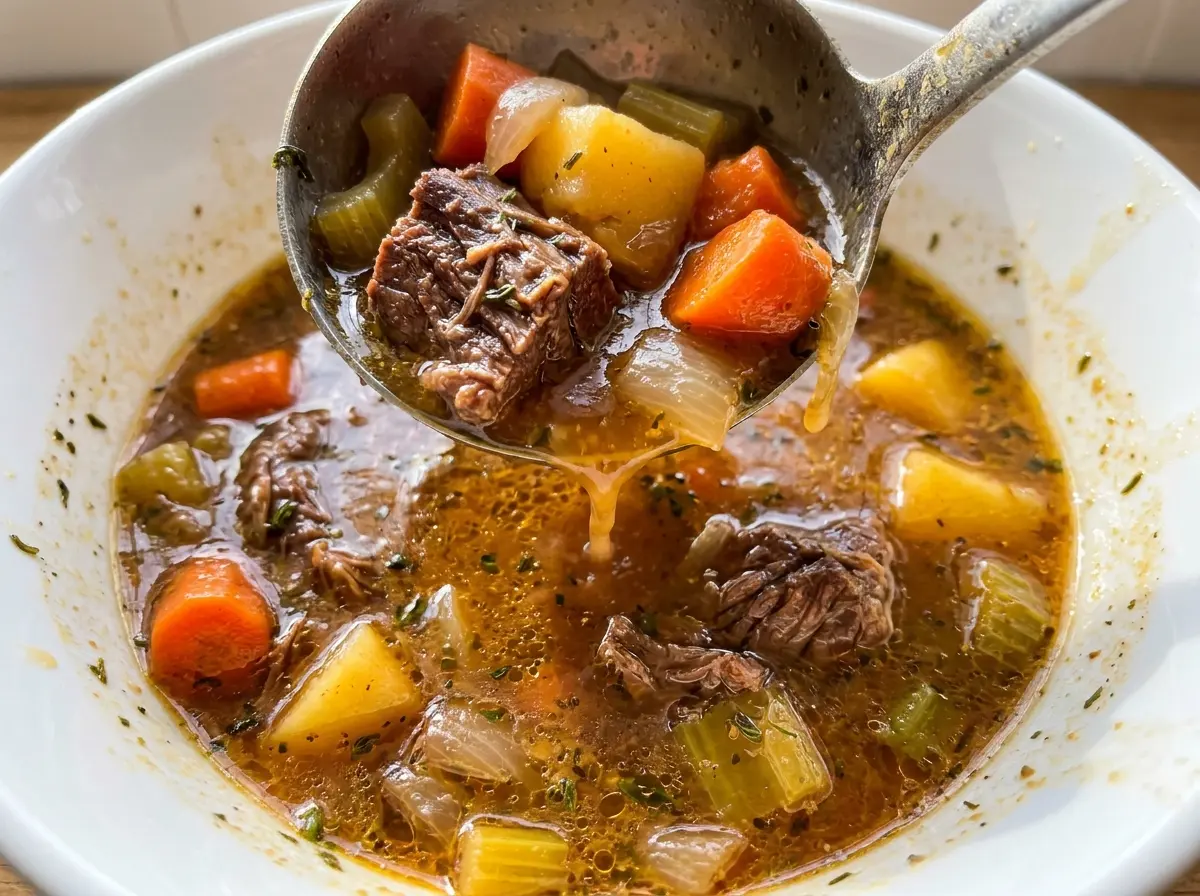
After the beef has had time to soften, the vegetables go in for a shorter simmer. That timing keeps the carrots and potatoes tender without asking them to sit in the pot for the full stretch it takes the chuck to become fork-tender. Yukon Gold potatoes turn creamy at the edges while holding their shape, and the broth thickens as everything comes together. Each spoonful has beef, vegetables, and a little cider warmth in a savory broth.
Kitchen Note
Give the finished stew its full 10-minute rest off the heat before serving. The broth settles and clings more evenly to the beef and vegetables instead of seeming thin straight from the pot.
Save this Apple Cider Beef Stew for a cold evening when you want fork-tender beef and a savory broth with just a hint of apple.
Why the Apple Cider Adds Depth, Not a Sugary Taste
Apple cider brings sweetness, but it isn’t the only flavor in this pot. There are four cups of beef broth for every two cups of cider, so the beef stays firmly in the lead. Tomato paste, Worcestershire sauce, thyme, and the browned bits scraped from the Dutch oven all add savory depth. Together, they keep the cider from making the broth taste like a sweet glaze.
The cider also earns its place as the liquid used to deglaze the pot. Pour it in after the onion, tomato paste, and garlic have cooked, then scrape along the bottom until the browned bits lift into the liquid. Those bits carry flavor from browning the beef into the whole stew. Use apple cider, not apple cider vinegar: vinegar is much sharper and would change the balance of the broth. Choose the nonalcoholic drink sold as apple cider, whether it comes refrigerated or shelf-stable.
What Gives the Beef and Cider Broth Their Staying Power
- Beef chuck — Chuck has the connective tissue that softens during the long simmer, giving you tender pieces and a fuller broth. Buy a roast and cut it into even 1 1/2-inch cubes; pre-cut beef stew meat works too if the pieces are close to that size, though a roast gives you more control.
- Apple cider — Fresh or shelf-stable nonalcoholic cider both work; choose the less expensive one if that is what you have, since its role is to bring a gentle apple note rather than stand alone. Unsweetened apple juice can replace it in the same amount, but the broth will taste sweeter and less rounded.
- All-purpose flour — The light coating helps the beef brown and gives the broth some body as the stew simmers. For a gluten-free version, use a cup-for-cup gluten-free flour blend in its place; some blends brown a little differently, but they work for coating the beef.
- Low-sodium beef broth — This is the main savory liquid, so a basic store brand is fine. Low-sodium broth gives you more control over the seasoning; regular broth will make the finished stew taste saltier.
- Yukon Gold potatoes — Their creamy texture suits the stew, and they hold together through the vegetable simmer. Red potatoes are a good swap if you prefer pieces that keep a firmer shape.
- Tomato paste and Worcestershire sauce — Both add savory depth that keeps the cider from tasting too sweet. Tomato paste in a tube is handy for a small amount; any standard Worcestershire sauce works well here.
Building the Stew in Stages for Tender Beef and Intact Vegetables
Coat and Brown the Beef
Season the beef with kosher salt and black pepper in a large bowl, then toss it with the flour until the cubes are evenly coated. Heat one tablespoon of vegetable oil in a 6-quart Dutch oven over medium-high heat. Brown the beef in batches, adding the remaining oil as needed, and transfer each batch to a plate. Give the pieces room in the pot; crowding them prevents proper browning.
Soften the Onion and Wake Up the Aromatics
Add the chopped onion to the pot and cook over medium heat for 4 to 5 minutes, stirring until it softens. The onion should lose its raw, firm look without taking on much color. Stir in the tomato paste and minced garlic and cook for 1 minute. Keep stirring during that minute so the garlic doesn’t scorch on the hot pot.
Deglaze and Start the Long Simmer
Pour in the apple cider and scrape the bottom of the pot to loosen the browned bits. Stir in the beef broth, Worcestershire sauce, dried thyme, bay leaves, and browned beef. Bring the liquid to a boil, then cover the Dutch oven and reduce the heat to low for a gentle simmer. Cook for 1 1/2 to 2 hours, until the beef is nearly tender.
Add the Vegetables After the Beef Has Softened
Stir in the celery, carrots, and Yukon Gold potatoes, then cover the pot again. Simmer for 35 to 45 minutes, until the vegetables are tender and the beef is fork-tender. Check a large piece of beef with a fork; it should yield without feeling tough in the center. Remove the bay leaves and let the stew rest off the heat for 10 minutes before serving.
Three Practical Ways to Adapt This Beef Stew
Make It Gluten-Free
Use a cup-for-cup gluten-free flour blend instead of the all-purpose flour, keeping the same amount and coating the beef the same way. Choose gluten-free beef broth and Worcestershire sauce as well. The stew keeps its thick, hearty character, though the coating may brown a little differently depending on the blend.
Use Red Potatoes for Firmer Pieces
Replace the Yukon Gold potatoes with the same amount of red potatoes, cut into the same 1 1/2-inch pieces. Red potatoes keep a slightly firmer bite, while Yukon Golds have a creamier texture. Keep the vegetable simmer and check for tenderness before serving.
Start with Pre-Cut Stew Meat
Use 2 1/2 pounds of beef stew meat in place of the chuck roast, choosing pieces close to 1 1/2 inches. The size matters more than the label, since evenly sized pieces cook at a similar pace. Very lean or uneven pieces may turn tender at different times, so check for fork tenderness before moving on to the vegetables.
Storage and Reheating
- Refrigerator: Refrigerate leftovers within 2 hours and keep them for 3 to 4 days. The potatoes soften a little as they sit in the broth.
- Freezer: Freeze cooled stew in airtight containers for up to 2 to 3 months. The potatoes may be softer after thawing, but the beef and broth freeze well.
- Reheating: Warm the stew gently on the stovetop, stirring occasionally, until it reaches 165°F. Avoid a hard boil, which can break up the potatoes and beef.
Questions That Come Up While Making Apple Cider Beef Stew
Apple Cider Beef Stew
Ingredients
Equipment
Method
- In a large bowl, season the beef with the salt and pepper.
- Toss the beef with the flour until evenly coated.
- Heat 1 tablespoon of the oil in a 6-quart Dutch oven over medium-high heat.
- Brown the beef in batches, adding the remaining oil as needed, then transfer the browned beef to a plate.
- Add the onion to the pot and cook over medium heat for 4 to 5 minutes, stirring, until softened.
- Stir in the tomato paste and garlic and cook for 1 minute.
- Pour in the apple cider and scrape up the browned bits from the bottom of the pot.
- Stir in the beef broth, Worcestershire sauce, thyme, bay leaves, and beef.
- Bring the stew to a boil.
- Cover and simmer over low heat for 1 1/2 to 2 hours, until the beef is nearly tender.
- Stir in the celery, carrots, and potatoes.
- Cover and simmer for 35 to 45 minutes, until the vegetables are tender and the beef is fork-tender.
- Remove the bay leaves.
- Let the stew rest off the heat for 10 minutes before serving.