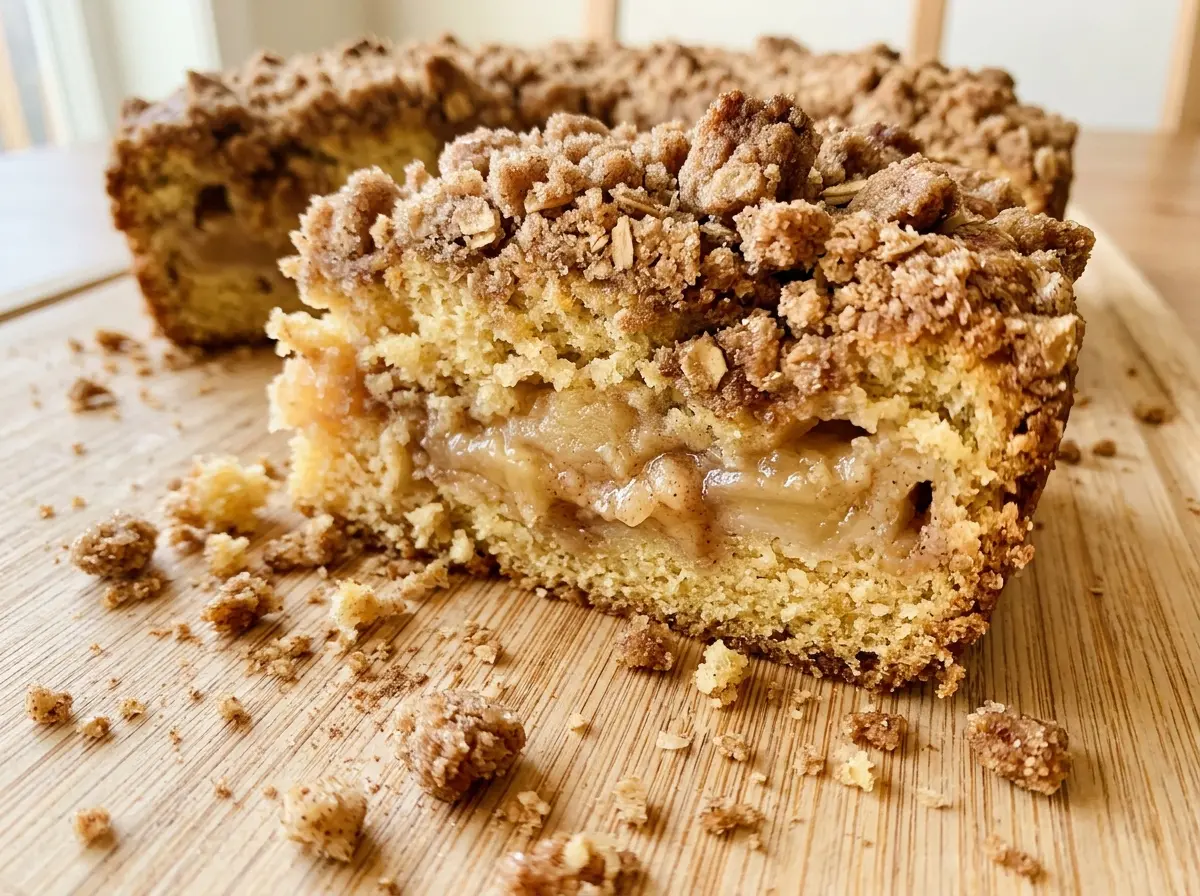
The first cut through this cake should meet a little resistance from the oat topping, then slide through soft apples and a tender cake layer underneath. That contrast is what I want from apple crisp coffee cake: a fruit-filled middle with the comfort of a coffee cake and the buttery crunch of an apple crisp.
Sour cream gives the cake a soft, moist crumb that stands up to the apples without turning heavy. The fruit gets its own coating of cinnamon, sugar, and lemon juice, while the oats and brown sugar stay in a separate topping. That layering keeps each bite distinct, rather than blending everything into one soft middle.
I like this cake for the way it brings two familiar textures together in a single pan. It’s generous enough to cut into squares, and the golden top gives you a useful visual cue while it bakes.
Kitchen Note
Cut the apples into even 1/2-inch pieces. Pieces that are close in size soften at about the same rate, so you won’t end up with some tender bites and a few stubbornly firm ones.
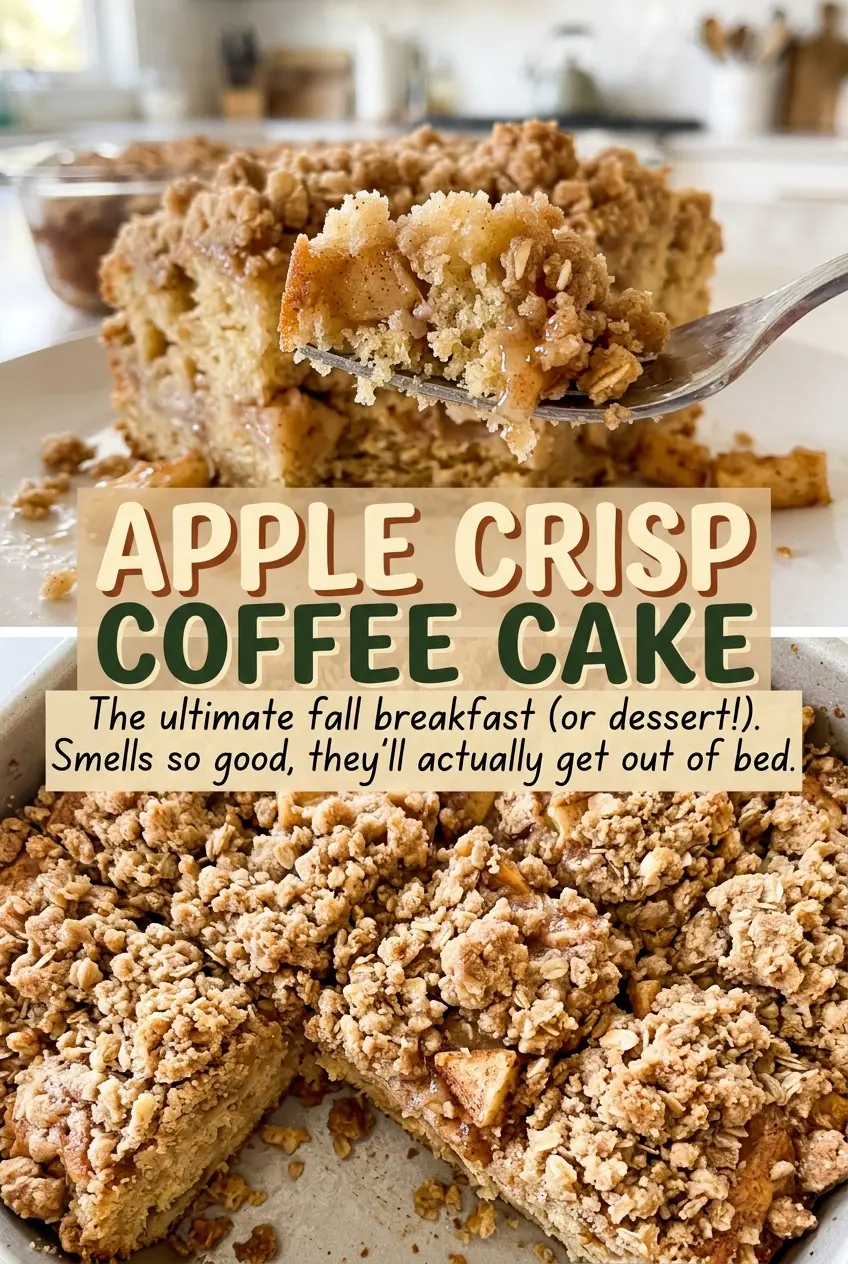
Save this apple crisp coffee cake for its tender cinnamon apples and golden oat topping, all baked over a soft sour cream cake.
Why This Coffee Cake Is Layered Instead of Swirled
The order of the layers gives this cake its crisp-meets-tender character. The batter makes a soft base, the apples sit in a defined fruit layer, and the oat topping rests above them. Each part has a different job, and keeping them separate lets you notice those textures in every slice.
Swirling the apples into the batter would spread their moisture through the cake and scatter the fruit instead of creating a clear apple layer. The topping belongs above the apples, too: it bakes directly over the fruit and turns golden while the apples soften underneath. A spoonful from the edge will have a slightly different balance than one from the center, but both should include cake, fruit, and crisp topping.
This arrangement also gives you a straightforward way to judge the bake. The surface and fruit can be checked on their own, while the cake portion gets its own toothpick test. That distinction matters with a fruit-topped cake, where a probe through an apple piece won’t tell you whether the crumb underneath is ready.
What the Apples, Sour Cream, and Oats Bring to This Cake
- All-purpose flour — It supports both the tender cake and the crumb topping, but those jobs need separate portions. Measure carefully rather than packing flour into the cup; too much can make the cake dense and the topping dry.
- Sour cream — Its thickness adds moisture and a gentle tang to the cake batter. Room-temperature sour cream blends in more evenly than cold, straight-from-the-refrigerator sour cream.
- Unsalted butter — Softened butter creams with the sugar to build air into the cake, while cold butter makes the topping’s coarse crumbs. Keep those two textures in mind as you portion it; the topping butter shouldn’t soften on the counter.
- Apples — Choose firm apples that hold their shape as they bake. A tart apple gives a sharper contrast to the sweet topping, while a sweeter baking apple makes the fruit layer mellow. Peeling lets the pieces soften evenly with the cake.
- Old-fashioned rolled oats — Their larger flakes give the topping a more substantial texture than finely processed oats. They’re worth choosing here because the crisp layer is meant to have visible oat pieces.
- Light brown sugar — The molasses notes give the oat topping a deeper sweetness than granulated sugar alone. Pack it into the measuring cup so the topping has the intended balance.
- Eggs and vanilla — Room-temperature eggs incorporate more readily into the creamed butter and sugar. Vanilla rounds out the cake’s sweetness without taking attention away from the apples and cinnamon.
Building the Cake, Apple Layer, and Crisp Topping
Start with an evenly mixed cake base
Heat the oven to 350°F and grease a 9×13-inch baking dish. Whisk the cake flour with the baking powder, baking soda, and kosher salt in a medium bowl so the leaveners are distributed throughout. In a large bowl, beat the softened butter with the granulated sugar for about 2 minutes, until the mixture looks light and fluffy. Add the eggs one at a time, then mix in the vanilla.
Alternate the flour and sour cream
Add the flour mixture in three additions, alternating with the sour cream in two additions. Begin and end with flour, as that order helps the batter come together without a large addition of liquid at the end. Mix only until the last streaks of flour disappear. A few extra seconds of beating after the flour goes in can make the finished cake less tender.
Coat the apples and make the oat crumbs
Toss the apples with the remaining granulated sugar, cinnamon, and lemon juice until they’re evenly coated. In a separate bowl, combine the topping flour, rolled oats, and brown sugar. Cut in the cold butter until the mixture forms coarse crumbs with some pieces about the size of peas. If the butter smears into a paste, the topping won’t have the same crumbly texture.
Layer and bake until each part is ready
Spread the batter evenly in the prepared dish, distribute the apples over the surface, and scatter the topping across the apples. Bake for 45 to 55 minutes. Look for a golden topping and apples that are tender when pierced with a knife; a toothpick inserted into the cake portion should come out with a few moist crumbs. Let the cake rest in the dish for at least 20 minutes before serving.
Three Thoughtful Ways to Adapt the Cake
Choose tart apples for a brighter fruit layer
Use a firm, tart baking apple such as Granny Smith in place of a sweeter variety, keeping the same amount of fruit. The cinnamon-sugar coating will taste livelier against the apple’s sharper flavor, while a sweet apple makes the finished cake taste rounder.
Use a gluten-free flour blend
For a gluten-free version, replace the all-purpose flour with a cup-for-cup gluten-free baking blend that includes xanthan gum, and choose certified gluten-free rolled oats. The crumb may be a little more delicate, so let the cake rest fully before cutting neat portions.
Swap in plain Greek yogurt
Full-fat plain Greek yogurt can replace the sour cream in the same amount. It keeps the batter’s tang and moisture, though the cake may have a slightly firmer crumb than the sour-cream version.
Storage and Reheating
- Refrigerator: Cover the cooled cake and refrigerate for up to 4 days. The topping softens over time as it sits against the apples.
- Freezer: Wrap individual portions tightly and freeze for up to 2 months. Thaw a portion overnight in the refrigerator for more even reheating.
- Reheating: Warm a piece in the microwave in short 10-second bursts until just warm. Longer heating can dry out the cake, and the topping will soften rather than stay crisp.
Questions That Come Up While Making Apple Crisp Coffee Cake
Apple Crisp Coffee Cake
Ingredients
Equipment
Method
- Heat the oven to 350°F.
- Grease a 9x13-inch baking dish.
- Whisk together 2 1/2 cups of the flour, the baking powder, baking soda, and salt in a medium bowl.
- Beat 3/4 cup of the softened butter with 1 cup of the granulated sugar in a large bowl until light and fluffy, about 2 minutes.
- Beat in the eggs one at a time, then mix in the vanilla.
- Add the flour mixture in 3 additions, alternating with the sour cream in 2 additions, beginning and ending with the flour mixture; mix just until combined.
- Toss the apples with the remaining 1/4 cup granulated sugar, the cinnamon, and lemon juice until evenly coated.
- Combine the remaining 3/4 cup flour, the oats, and brown sugar, then cut in the 6 tablespoons cold butter until the mixture forms coarse crumbs with some pea-size pieces.
- Spread the cake batter evenly in the prepared dish.
- Distribute the apples over the batter and sprinkle the crisp topping evenly over the apples.
- Bake for 45 to 55 minutes, until the topping is golden, the apples are tender when pierced with a knife, and a toothpick inserted into the cake portion comes out with a few moist crumbs.
- Let the coffee cake rest in the dish for at least 20 minutes before serving.