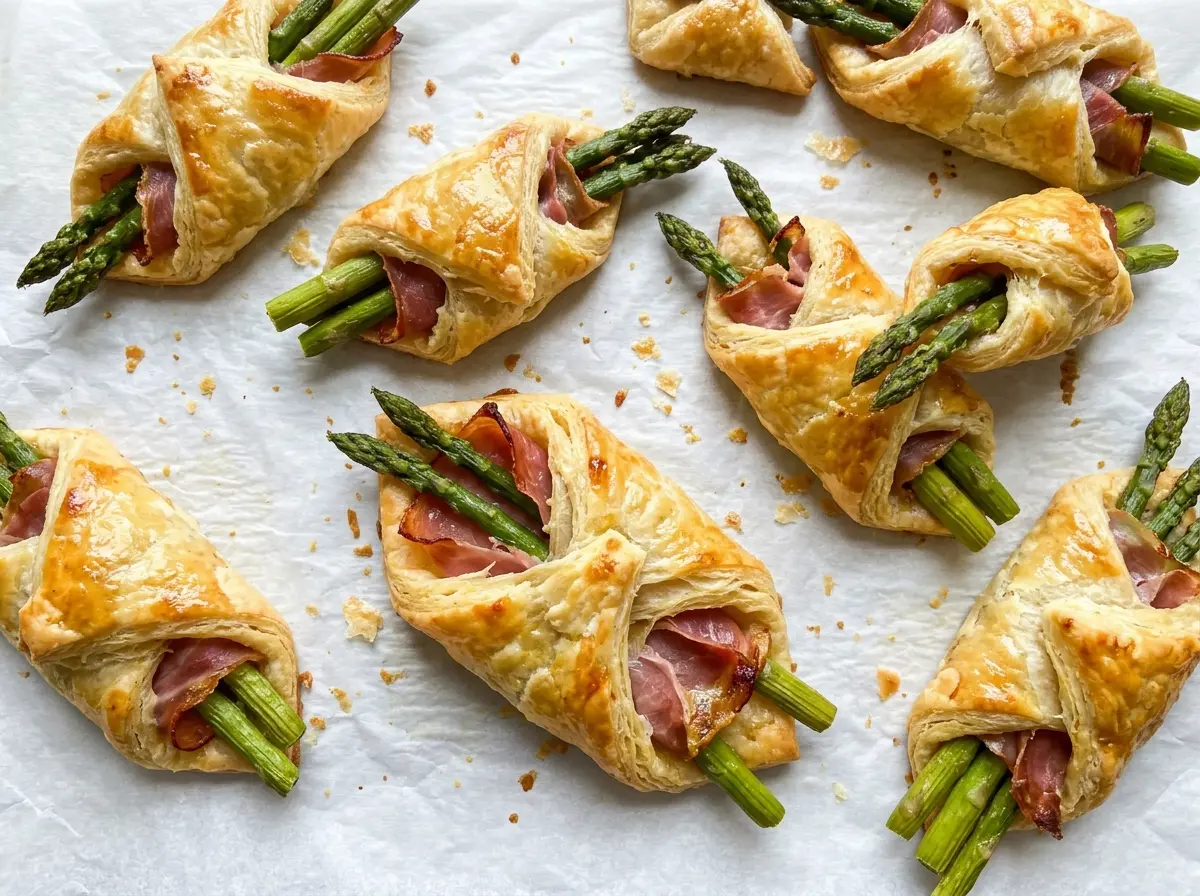
The pastry corners puff up first, turning deep gold while the asparagus tips peek through the middle. That little contrast is what makes these prosciutto asparagus puff pastry bundles feel special without asking you to fuss over a complicated filling. Each square gets a swipe of Dijon, a slice of prosciutto, tender asparagus, and a little Parmesan.
I like that the bundles are easy to portion before they go into the oven. Cutting each pastry sheet into four squares gives you eight generous servings, and folding just two corners over the filling keeps the center visible. You can see the asparagus as it bakes, which makes it easier to judge when it’s tender.
Use medium asparagus and give the pastry room on the pans. The edges turn crisp and flaky, the Parmesan melts into the filling, and the mustard brings a sharp little note to every bite.
Kitchen Note
Medium asparagus is a good match for the pastry’s bake time. The spears should turn tender as the pastry puffs and browns, without leaving the tips limp by the time the centers are ready.
Save these prosciutto asparagus puff pastry bundles for a brunch or easy appetizer — flaky corners, savory prosciutto, and a Dijon-Parmesan finish.
The Fold Is a Frame, Not a Seal
These bundles aren’t little pastry envelopes. Two opposite corners fold over the filling and overlap slightly, leaving the center open so the asparagus and Parmesan remain visible. That open shape also means you don’t have to stretch the pastry across the whole filling or pinch every edge shut. Let the corners meet naturally; forcing them farther can pull the pastry out of shape.
Think of each square as a base with a loose frame around the filling. Keep the asparagus gathered in the middle and the prosciutto beneath it, then bring the corners together without pressing hard. The egg wash goes on the exposed pastry, where it helps the edges bake to a glossy golden finish. If the corners only just overlap, that’s enough—the pastry will puff as it bakes.
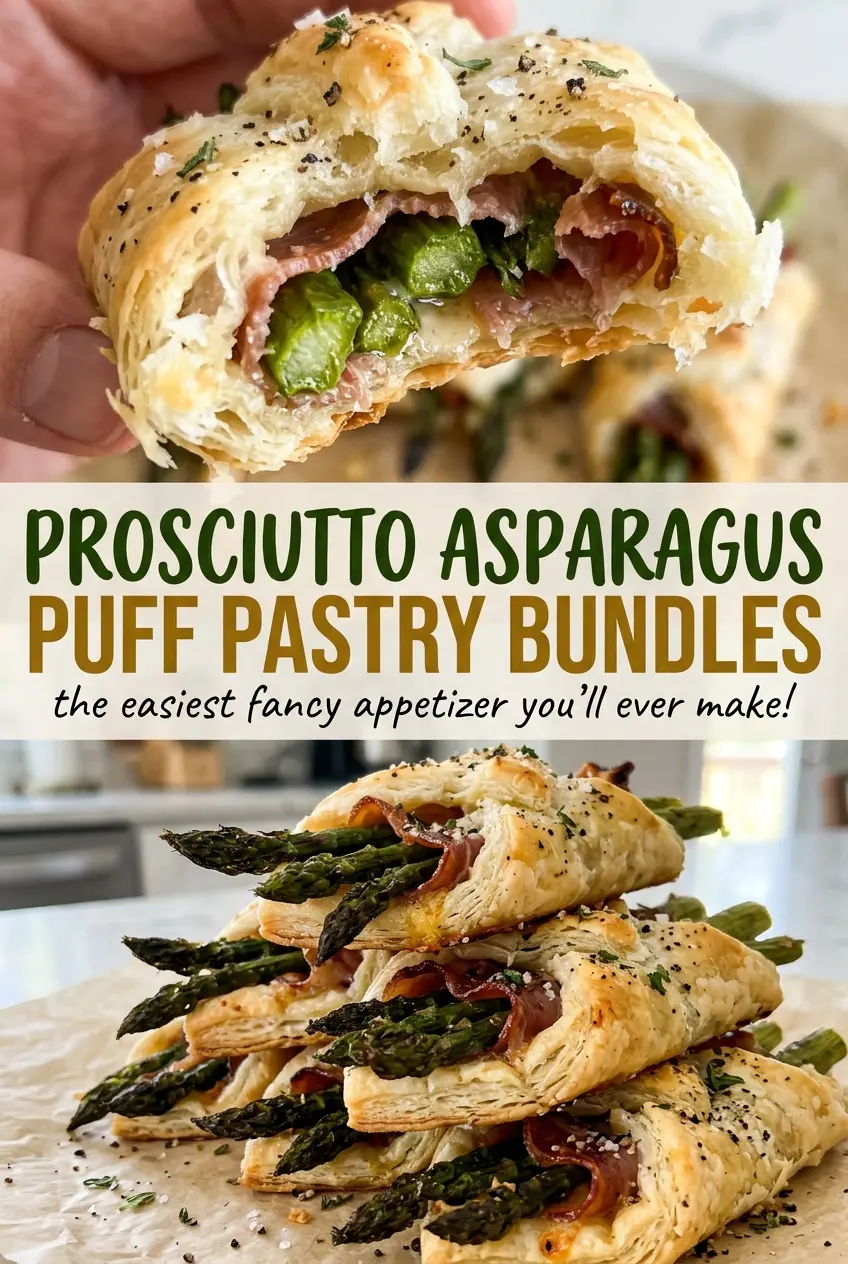
This layout is useful when you want a savory pastry that looks finished but doesn’t hide what’s inside. You can see the asparagus tips and the melted cheese, and the filling stays easy to portion across all eight squares. It’s a small shaping choice, but it keeps the bundles looking like bundles instead of sealed turnovers.
Why Dijon and Parmesan Give the Filling Its Savory Edge
- Puff pastry — Choose a package labeled puff pastry, not phyllo; the layered dough is what creates the tall, crisp edges around the filling. Frozen pastry is convenient, and thaw it before cutting so the sheets can be divided and folded without cracking. An all-butter version has a richer taste, while standard frozen puff pastry still gives you the flaky structure this dish needs.
- Asparagus — Medium spears give you a satisfying bite and fit neatly on the squares once the woody ends are trimmed. Fresh asparagus is the best choice here; frozen spears release more moisture and soften differently in the oven. Trim the spears to fit rather than letting them extend past the pastry.
- Prosciutto — Its thin slices add a salty, cured-meat note without making the filling bulky. Deli ham can stand in, one thin slice for each bundle, but it tastes milder and has a softer, less delicate texture. There’s no need to cook the prosciutto before layering it.
- Dijon mustard — Dijon adds a sharp, tangy layer that cuts through the pastry and cheese. Whole-grain mustard works in the same amount if you like its visible seeds and gentler bite. Avoid a sweet mustard here; it changes the balance of the savory filling.
- Parmesan — Finely grated Parmesan melts into the asparagus instead of sitting in thick shreds. A wedge grated just before baking gives a more pronounced nutty flavor, but pre-grated Parmesan is fine when convenience matters. Pecorino Romano can replace it for a saltier, sharper finish.
- Egg — Beating the egg with water makes a brushable wash that helps the exposed pastry brown. The egg is for the surface, not the filling, so coat the pastry rather than pouring any into the center.
How to Get Golden Pastry Around Tender Asparagus
Heat the Oven and Make Room
Heat the oven to 400°F and line two 18×13-inch rimmed baking sheets with parchment paper. Using both pans gives the eight squares room to puff without crowding. Set the pans up before you portion the pastry so the filled squares can go straight onto their baking surfaces.
Cut the Squares and Season the Asparagus
Cut each thawed pastry sheet into four equal squares, then arrange four squares on each prepared pan. Toss the trimmed asparagus with the olive oil, kosher salt, and black pepper. Divide the spears evenly among the squares, trimming them as needed so they fit on the pastry. Keep the portions balanced; a crowded center makes folding harder.
Layer the Filling and Bring the Corners Together
Spread Dijon over each square, then add a slice of prosciutto, the asparagus, and Parmesan. Keep the filling centered so it doesn’t spill over the edges. Fold two opposite pastry corners over the filling until they overlap slightly. If a spear is too long, trim it rather than pushing it against the pastry edge.
Brush the Pastry and Bake Until Deep Gold
Beat the egg with the water and brush the exposed pastry with the egg wash. Bake for 18 to 22 minutes, swapping the pans’ positions halfway through. Look for puffed pastry with a deep golden color, and pierce an asparagus spear to check that it’s tender. Pale pastry needs more oven time; don’t pull the pans just because the edges have started to rise.
Give the Bundles a Short Rest
Let the bundles rest on the pans for 5 minutes before serving. The pastry is fragile straight from the oven, and that brief pause makes each piece easier to lift without losing its shape. Serve them while the edges are crisp and the cheese is still warm.
Three Ways to Change These Asparagus Bundles
Make a vegetarian batch
Leave out the prosciutto and replace the Parmesan with the same amount of vegetarian hard cheese. Check that the cheese is made without animal rennet if you’re serving strict vegetarians. The bundles will be less salty and meaty, with the asparagus and mustard coming through more clearly.
Trade Parmesan for Pecorino
Use finely grated Pecorino Romano in place of the Parmesan. It brings a sharper, saltier taste, so the bundles will have a more assertive cheese note alongside the prosciutto. Keep the rest of the filling the same.
Use whole-grain mustard
Swap the Dijon for the same amount of whole-grain mustard on each square. The flavor stays savory, with a milder tang and little pops of mustard seed. It’s a simple change that gives the filling a more rustic look.
Storage and Reheating
- Refrigerator: Store leftover bundles covered in the refrigerator and eat within 3 days. The pastry will soften as it sits.
- Freezer: Freeze the baked bundles in a single layer, then transfer them to an airtight container. They keep best for about 1 month, though the pastry won’t be quite as crisp after freezing.
- Reheating: Reheat in a 400°F oven until hot throughout and crisp at the edges. The microwave warms them, but it softens the flaky pastry.
Questions That Come Up Before the Pastry Goes in the Oven
Prosciutto Asparagus Puff Pastry Bundles
Ingredients
Equipment
Method
- Heat the oven to 400°F.
- Line two 18x13-inch rimmed baking sheets with parchment paper.
- Cut each puff pastry sheet into 4 equal squares.
- Arrange 4 squares on each prepared baking sheet.
- Toss the asparagus with the olive oil, salt, and pepper.
- Divide the asparagus evenly among the pastry squares, trimming spears as needed to fit.
- Spread 1 teaspoon Dijon mustard on each square.
- Top each square with 1 slice prosciutto, the asparagus, and 1 tablespoon Parmesan.
- Fold two opposite corners of each pastry square over the filling so they overlap slightly.
- Beat the egg with the water.
- Brush the exposed pastry with the egg wash.
- Bake for 18 to 22 minutes, swapping the pans’ positions halfway through, until the pastry is puffed and deep golden and the asparagus is tender when pierced.
- Let the bundles rest on the pans for 5 minutes before serving.