The cider starts out thin and sharp, then turns dark and fragrant as it simmers down. That little saucepan is doing more than warming the kitchen: it concentrates the apple flavor before it ever touches the batter. I make this Apple Cider Donut Bread when I want the cinnamon-sugar feel of a cider donut in a loaf that slices neatly for breakfast or an afternoon snack.
The crumb stays tender because the reduced cider is paired with sour cream and oil, not just flour and eggs. I whisk the wet ingredients separately, then stir them into the dry ingredients only until the last floury streak disappears. That keeps the loaf soft instead of tough, and gives the apple spice room to come through.
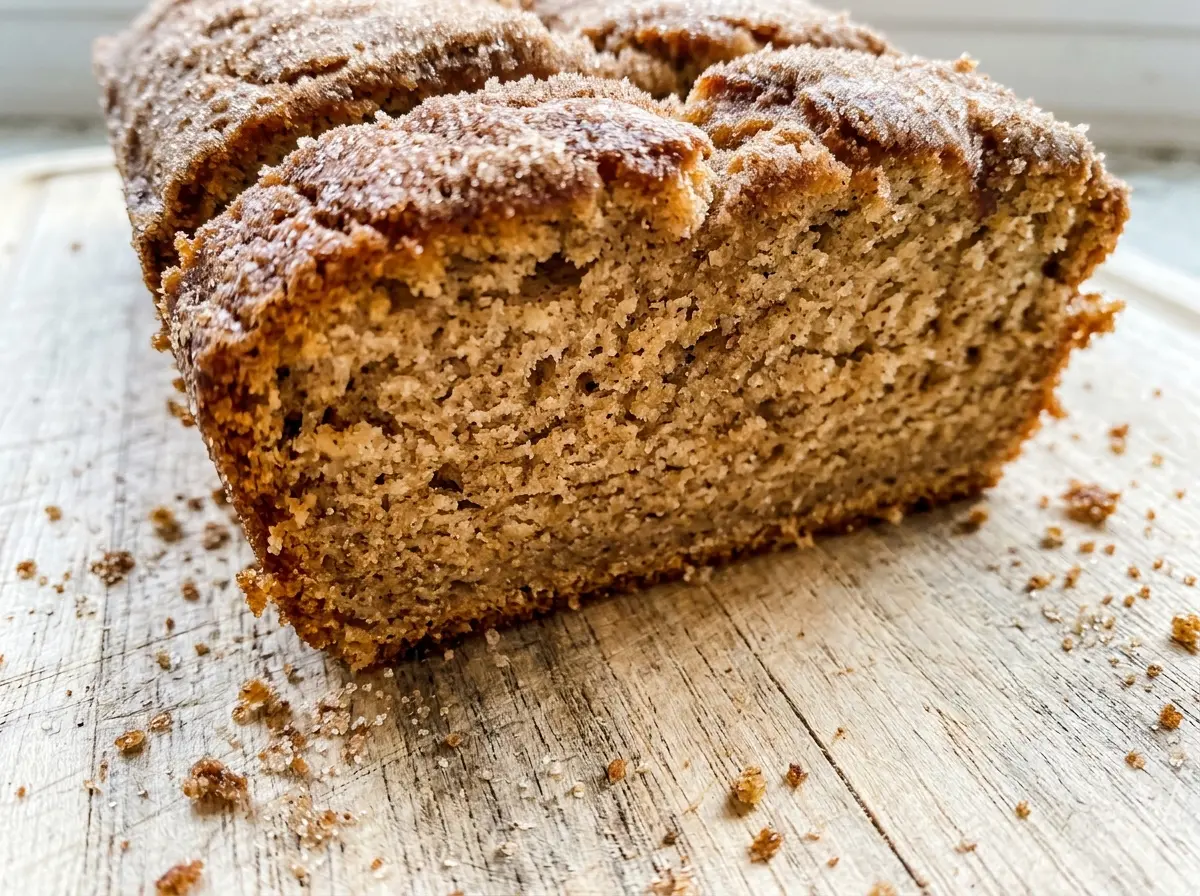
Once the warm top gets brushed with butter and dusted with cinnamon sugar, it has that familiar donut-shop finish: a fine, sweet crunch over a plush, apple-scented slice.
Kitchen Note
Give the loaf its full cooling time before you slice it. The crumb is delicate while warm, and cutting too soon can compress the center and drag the cinnamon-sugar finish across the slices.
Save Apple Cider Donut Bread for a cozy bake: tender apple-spice crumb, a buttery cinnamon-sugar top, and no donut pan required.
Why the Cider Has to Shrink Before It Goes Into the Batter
Adding the cider straight from the carton would bring in more liquid than this loaf needs. Simmering it from 1 1/2 cups down to 1/2 cup concentrates the apple flavor while keeping the batter from turning loose and heavy. The reduced cider should taste more like apple and less like a mild drink; that concentrated note is what holds its own beside brown sugar and spice.
There’s a useful distinction here: the cider reduction isn’t a syrup you’re making for the top. It goes into the wet ingredients, so it needs to cool completely before it meets the eggs and sour cream. Warm reduction can heat the mixture unevenly, while a fully cooled one blends in smoothly. I pour it into a measuring cup after simmering so I can check that it has reached the right volume instead of guessing from the saucepan.
If the reduction comes out short, the loaf can bake up drier than intended; if it’s still well above the target, extra liquid can leave the center heavy. That measured half cup gives the loaf its apple character without throwing off the balance of the batter.
What the Cider, Sour Cream, and Brown Sugar Bring to This Loaf

- Apple cider — Use fresh, nonalcoholic apple cider with a clean apple smell. Its flavor becomes more pronounced as it reduces, so this is the ingredient where freshness matters most. There isn’t a direct swap among the listed ingredients that gives the same concentrated apple taste.
- All-purpose flour — Spoon it into the measuring cup and level the top rather than scooping straight from the bag. A packed cup adds too much flour and can make the loaf dry or tight. Standard all-purpose flour is right for the soft, sliceable crumb here.
- Light brown sugar — Packing it into the cup gives the batter a reliable amount of sweetness and moisture, with a gentle molasses note that supports the cider. It also keeps the loaf from tasting like plain spiced cake.
- Sour cream — Its tang balances the brown sugar, and its thickness adds moisture without making the batter watery. There isn’t another ingredient in this list that can take its place while keeping the same balance, so I keep it in rather than trying to improvise a swap.
- Vegetable oil — Oil helps the crumb stay soft after the loaf cools. A neutral-tasting oil matters more than a premium bottle here; strongly flavored oil would compete with the cider and spice.
- Eggs — They hold the loaf together and help it rise into an even slice. Use large eggs, as written, so the wet-to-dry balance stays steady.
- Apple pie spice and cinnamon — Apple pie spice seasons the batter, while ground cinnamon gives the sugar topping its familiar donut-like taste. Keeping those jobs separate makes the spice noticeable in both the crumb and the finish.
From Cider Reduction to Cinnamon-Sugar Top: Four Stages That Matter
Reduce the cider until it measures half a cup
Simmer the apple cider in a small saucepan over medium heat for 15 to 20 minutes, until it has reduced to 1/2 cup. The surface should bubble steadily, not boil violently. Pour it into a measuring cup to check the volume, then let it cool completely. Don’t rush it into the batter while warm; the eggs and sour cream should stay cool as you mix.
Mix the wet and dry ingredients separately
Heat the oven to 350°F and grease a 9×5-inch metal loaf pan. Whisk the flour, brown sugar, baking powder, baking soda, salt, and apple pie spice in a large bowl, breaking up any brown-sugar lumps you see. In a medium bowl, whisk the eggs, oil, sour cream, cooled cider, and vanilla until combined. Add the wet mixture to the flour mixture and stir just until no dry streaks remain; a few small lumps are fine, but a smooth, overworked batter can bake up tough.
Bake until the center has moist crumbs, not wet batter
Scrape the batter into the greased pan and bake for 50 to 60 minutes. Start checking near the lower end of that range, since ovens and pans can vary. A toothpick inserted in the center should come out with a few moist crumbs and no wet batter; a completely clean toothpick can mean the loaf has gone farther than it needs to. Cool the loaf in the pan for 15 minutes, then turn it out onto a wire rack.
Brush the warm loaf and finish the cinnamon sugar
Melt the butter in a small microwave-safe bowl, then stir the granulated sugar and cinnamon together in a separate small bowl. Brush the warm loaf with the melted butter so the topping has something to cling to. Sprinkle the cinnamon sugar over the top while the butter is still fresh, aiming for an even coating rather than piling it in one spot. Let the loaf cool completely before slicing.
Two Ways to Shift the Cider Loaf Without Rebuilding It
Leave off the cinnamon-sugar finish
Skip the butter, granulated sugar, and cinnamon topping for a simpler apple-spice loaf. The crumb stays tender, but you’ll lose the sweet, lightly crisp finish that gives it its donut-inspired character. This is the cleanest choice if you want a less sweet top without changing the batter.
Move the apple pie spice to the topping
For a different spice balance, leave the apple pie spice out of the batter and use that teaspoon in place of the ground cinnamon in the sugar topping. The loaf itself will taste less spiced, while the top takes on a broader, warmer aroma. Keep the rest of the ingredients and method the same.
Storage and Reheating
- Room temperature: Once completely cool, store the loaf in an airtight container for up to 3 days. The cinnamon-sugar top softens a little as it sits.
- Refrigerator: Keep it airtight for up to 5 days; the cold can firm the crumb, so let slices come to room temperature before eating.
- Freezer: Freeze the fully cooled loaf whole or in slices, wrapped tightly, for up to 2 months. Separate slices with parchment so you can take out only what you need.
- Reheating: Warm an individual slice briefly in the microwave, just until it’s pleasant to eat. Long heating dries the crumb and can make the sugar topping sticky.
Questions That Come Up When Baking This Cider Loaf
Apple Cider Donut Bread
Ingredients
Equipment
Method
- Simmer the apple cider in a small saucepan over medium heat for 15 to 20 minutes, until reduced to 1/2 cup.
- Pour the reduced cider into a measuring cup and cool completely.
- Heat the oven to 350°F.
- Grease a 9x5-inch metal loaf pan.
- Whisk the flour, brown sugar, baking powder, baking soda, salt, and apple pie spice in a large bowl.
- In a medium bowl, whisk the eggs, vegetable oil, sour cream, cooled cider, and vanilla.
- Add the wet ingredients to the flour mixture and stir just until no dry streaks remain.
- Scrape the batter into the prepared pan.
- Bake for 50 to 60 minutes, until a toothpick inserted in the center comes out with a few moist crumbs and no wet batter.
- Cool the loaf in the pan for 15 minutes.
- Turn the loaf out onto a wire rack.
- Melt the butter in a small microwave-safe bowl.
- Stir the granulated sugar and cinnamon together in a small bowl.
- Brush the warm loaf with the melted butter.
- Sprinkle the cinnamon sugar over the top.
- Let the loaf cool completely.