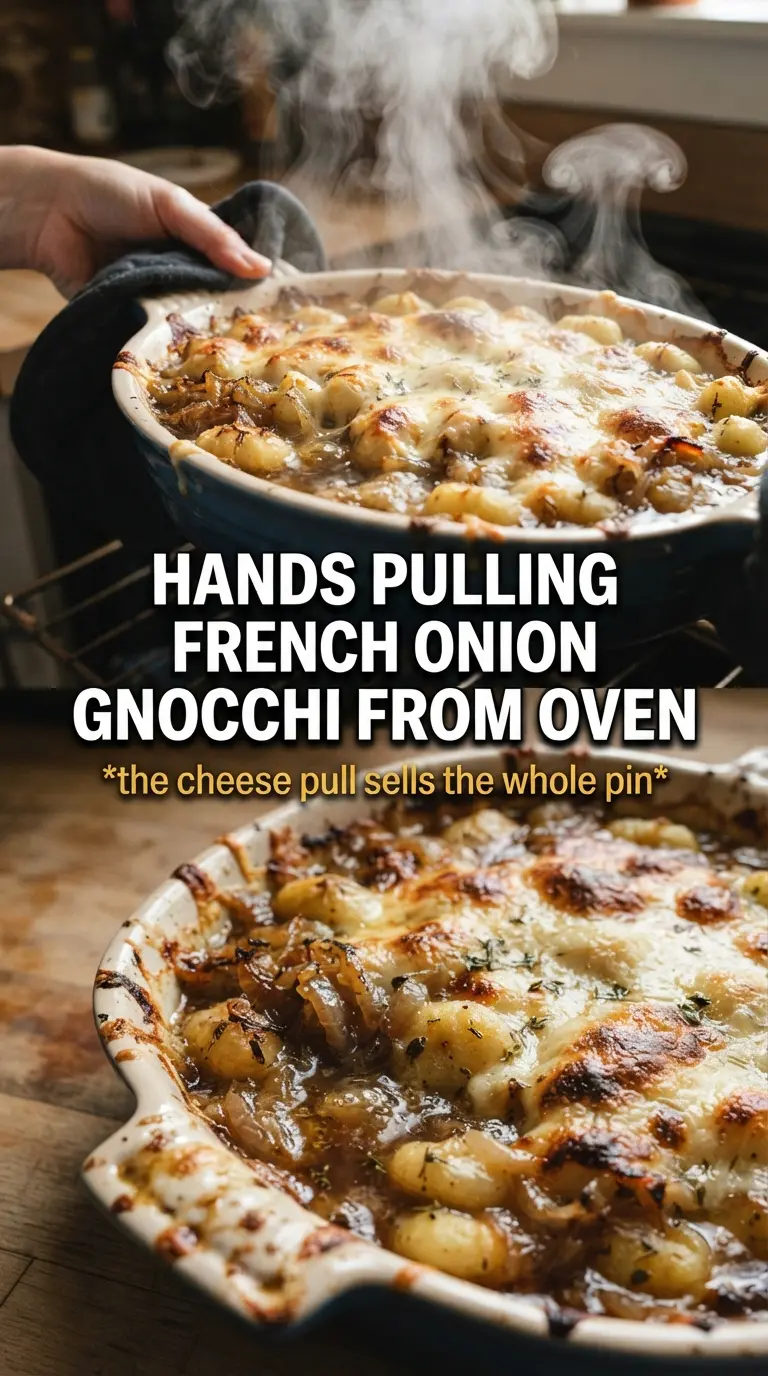
Deeply caramelized onions, a savory broth, and a bronzed layer of Gruyere turn humble gnocchi into something that eats like a full meal with a lot more effort than it actually takes. The gnocchi cook right in the sauce, so they soak up all that oniony, wine-kissed flavor instead of going in plain and getting lost under the cheese.
The part that makes this version work is patience at the stove. The onions need time to go from sharp and watery to soft, sweet, and jammy; that slow cook builds the backbone of the dish. After that, the wine lifts the browned bits from the pan, the broth keeps everything spoonable, and the cream rounds out the edges without turning the whole thing heavy.
Below, I’ve laid out the part that matters most: how to get the onions deep enough without rushing them, why the gnocchi should go in uncooked, and the small adjustments that keep the sauce from getting too salty or too thin.
The onions got that dark, sweet French onion flavor I was hoping for, and the gnocchi baked up tender without turning mushy. The Gruyere on top browned beautifully and the sauce thickened just enough after resting for a few minutes.
Love the rich onion broth and golden Gruyere crust? Save this Baked French Onion Gnocchi for a cozy main dish that feels special without extra fuss.
The Reason the Onions Have to Go Dark Before the Gnocchi Go In
This dish falls apart when the onions are only softened instead of fully caramelized. Pale onions taste sweet in a flat, one-note way. Deeply caramelized onions bring the savory backbone that makes the broth taste like French onion soup instead of onion-flavored cream sauce.
The other key move is adding the gnocchi directly to the sauce instead of boiling them first. Shelf-stable gnocchi can go straight in and finish in the oven, where they absorb flavor and stay tender. If you pre-cook them, they can go soft fast and the sauce has less chance to cling to them.
- Onions — Three large onions shrink down a lot during the long cook, so the quantity looks big at the start for a reason. Thin, even slices help them cook at the same pace instead of giving you a mix of browned and underdone pieces.
- Dry white wine or dry sherry — This deglazes the pan and pulls up the browned bits that carry most of the flavor. Use a wine you’d drink, or swap in extra broth with a teaspoon of white wine vinegar if you need to skip alcohol; the dish will still work, but it loses a little depth.
- Gruyere — This is the cheese that gives the top its nutty, stretchy finish. Pre-shredded cheese works in a pinch, but freshly shredded Gruyere melts more smoothly and browns more evenly.
- Beef broth — Beef broth gives the dish that classic French onion taste. If you want a lighter result, use low-sodium broth and season at the end so the sauce doesn’t turn overly salty once the cheese goes on.
- Gnocchi — Store-bought potato gnocchi are the right shortcut here. They hold their shape well in the oven and absorb the sauce without turning to paste, which is exactly what you want.
What Each Ingredient Is Actually Doing in This Recipe
- Primary ingredient (the star) — Quality matters most. Choose the best you can find.
- Cooking medium (oil, butter, or broth) — This carries flavors and prevents dryness.
- Seasonings (salt, pepper, spices, herbs) — Layer flavors so nothing overpowers. Build depth gradually.
- Aromatics (garlic, onion, herbs) — Cook with fat to bloom flavors. Become the foundation.
- Supporting ingredients — Complement the main ingredient without overpowering it.
- Sauce or liquid (if applicable) — Brings flavors together. Balance richness with acid.
- Acid (lemon, vinegar, wine, or other) — Brightens and prevents flat-tasting results.
- Final finish (garnish, glaze, or sauce) — Prevents one-dimensional taste and adds visual appeal.
How to Build the Broth So the Gnocchi Stays Tender
Caramelizing the onions slowly
Start the onions in butter and olive oil over medium-low heat and give them time. They should soften first, then turn translucent, then take on a deep golden brown before they start looking jammy. If the heat is too high, they’ll brown on the outside before the water cooks off, and the flavor will stay sharp instead of sweet.
Turning the pan drippings into the sauce
Pour in the wine and scrape the bottom of the skillet while it bubbles. Those browned bits are concentrated flavor, and they need liquid to dissolve into the sauce. Let the wine cook off for a couple of minutes so the sauce doesn’t taste raw or boozy.
Finishing in the oven
Once the broth, Worcestershire, and cream are in, bring the sauce to a gentle simmer before adding the gnocchi. They need hot liquid around them to start cooking properly, and the sauce should look loose enough to bubble around the edges. After the Gruyere goes on, bake or broil until the top is golden and the sauce is bubbling at the sides; if it still looks thin, it will thicken as it rests for a few minutes out of the oven.
How to Adapt This for a Few Different Kitchens
Dairy-Free Version
Use olive oil in place of the butter and swap the cream for full-fat coconut milk or an unsweetened oat cream. The flavor changes a bit, and you lose some of the classic richness, but the onions and Gruyere-style browning effect from the top still carry the dish.
Vegetarian Swap
Use vegetable broth instead of beef broth and replace the Worcestershire sauce with soy sauce or tamari plus a splash of balsamic vinegar. You’ll lose a little of the deep beefy note, but the caramelized onions still make the sauce taste layered and savory.
Gluten-Free Gnocchi Check
Use certified gluten-free gnocchi if you need the dish to stay gluten-free, and check the Worcestershire label since some brands contain gluten. The baking method stays the same, but gluten-free gnocchi can soften faster, so pull the dish as soon as the top is browned and the sauce is bubbling.
Make It a Little Lighter
Cut the cream in half and add a little extra broth. The sauce won’t be as plush, but it still clings to the gnocchi well and keeps the dish from feeling heavy.
Storage and Reheating
- Refrigerator: Store leftovers in an airtight container for up to 3 days. The sauce thickens as it chills, and the gnocchi will soften a bit more, but the flavor holds up well.
- Freezer: I don’t recommend freezing this dish. The cream sauce can separate and the gnocchi tend to go mealy after thawing.
- Reheating: Reheat gently in the oven at 350F with a splash of broth or cream to loosen the sauce. The common mistake is blasting it in the microwave until the cheese turns greasy and the gnocchi toughen at the edges.
Answers to the Questions Worth Asking
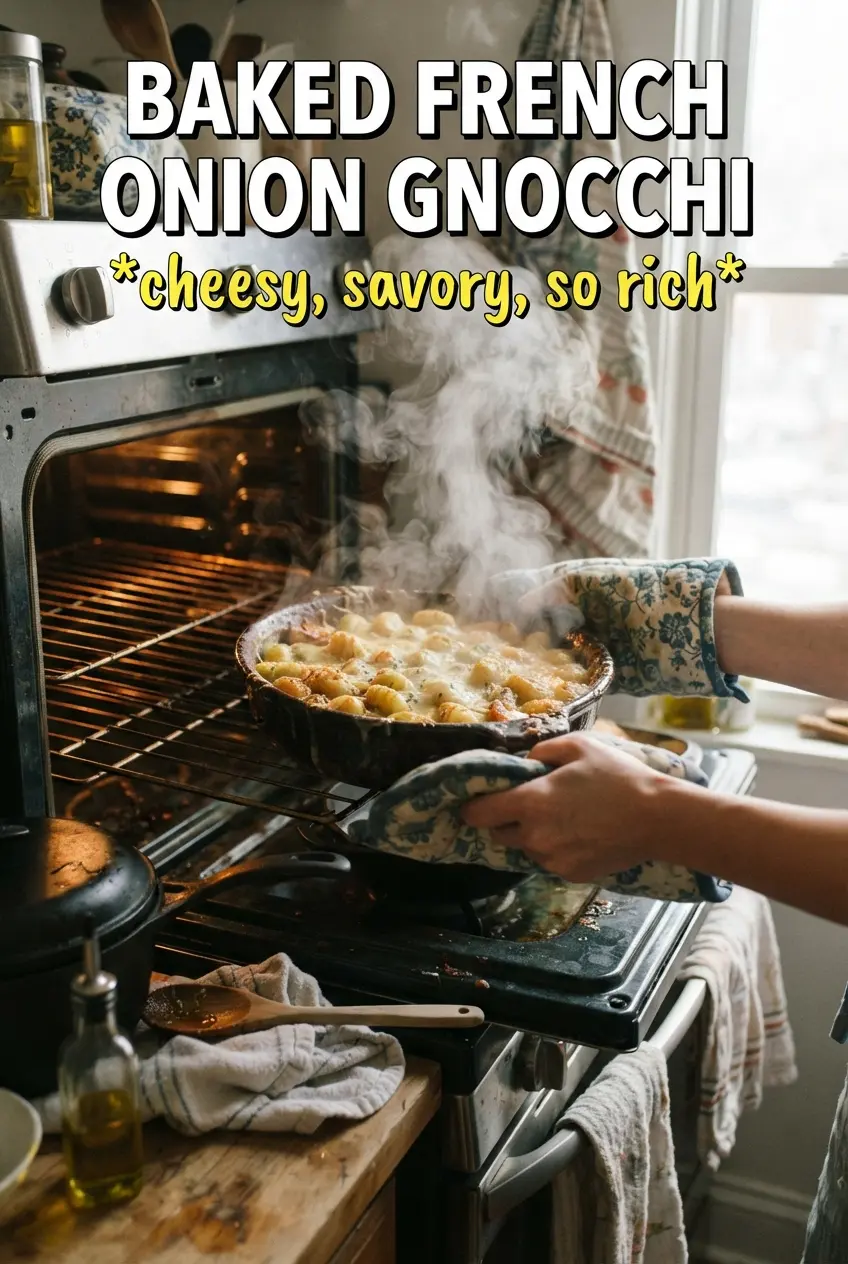
Baked French Onion Gnocchi
Ingredients
Equipment
Method
- Melt the butter with olive oil in a large oven-safe skillet, then add the sliced onions. Cook over medium-low heat for 35-40 minutes, stirring occasionally, until deeply caramelized and dark golden-brown.
- Pour in the white wine or sherry to deglaze the skillet, scraping up browned bits. Cook for 2 minutes until the liquid reduces slightly.
- Add the minced garlic and fresh thyme to the skillet. Cook for 1 minute until fragrant, without letting the garlic brown.
- Add beef broth, Worcestershire sauce, and heavy cream. Bring to a simmer, stirring until smooth and glossy.
- Add the uncooked gnocchi and stir to coat them in the simmering sauce. Continue simmering briefly just to distribute, then spread into an even layer.
- Scatter the shredded Gruyere over the top in an even blanket. Season lightly with salt and pepper as needed.
- Broil or bake at 425°F for 15-18 minutes until the gnocchi are cooked through, the sauce is bubbling at the edges, and the cheese is golden.