Caramelized sausage, bronzed edges on the squash, and Brussels sprouts that turn crisp at the leaves while staying tender in the center make this sheet pan dinner worth keeping on repeat. The apple softens just enough to catch the balsamic-maple glaze, and the whole pan comes out savory, sweet, and a little sharp in the best possible way.
What makes this version work is the balance of timing and cut size. The sausage gets sliced into rounds so it can brown on the edges instead of steaming in thick links, and the vegetables are cut into pieces that can finish together in about the same window. The glaze goes on before roasting, but it’s light enough that it clings without flooding the pan, which keeps everything roasting instead of braising.
Below, I’ll walk through the one roasting mistake that can leave you with soft vegetables instead of caramelized ones, plus a few swaps that keep this dinner flexible when your produce drawer looks a little different.
The sausage got those crisp edges I was hoping for, and the squash and Brussels sprouts roasted instead of steaming. The maple-balsamic glaze was perfect with the apple, and my pan was scraped clean.
Love the caramelized sausage and maple-balsamic glaze? Save this sheet pan dinner for a cozy, low-effort night when you want roasted fall veggies and easy cleanup.
The Real Reason Sheet Pan Dinners Turn Soggy
The problem usually isn’t the oven. It’s crowding. When the pan is packed too tightly, the vegetables trap steam and the sausage drips into that moisture instead of browning. You end up with soft squash, pale Brussels sprouts, and onions that never quite get sweet at the edges.
This recipe avoids that by keeping the pieces in a true single layer and using a hot oven from the start. The maple, balsamic, and Dijon mixture adds flavor, but it also helps the surface caramelize. If your pan is too small, split everything between two pans. That small change matters more than any extra seasoning you could add.
- Italian sausage links — Sliced sausage browns faster than whole links and gives you more crisp edges. Use mild or hot sausage depending on how much spice you want. If you only have bulk sausage, break it into rough chunks before roasting so it still picks up color.
- Butternut squash — This is the longest-cooking vegetable here, so keep the cubes fairly even. Too small and they collapse; too large and they stay firm while the sausage finishes. Pre-cut squash works fine if the pieces are not wet or inconsistent in size.
- Brussels sprouts — Halving them exposes the cut sides, which is where the best caramelization happens. If the outer leaves fall off, keep them in the pan; those frilly bits turn crisp fast. Frozen Brussels sprouts won’t roast the same way, so use fresh here.
- Balsamic vinegar, maple syrup, and Dijon — This is the glaze that keeps the pan from tasting flat. The Dijon helps the oil and vinegar emulsify a little, so it coats instead of sliding off. Honey can replace maple syrup, but the flavor will be less deep.
- Apple — The apple gives the pan a little sweetness and a soft bite that plays nicely with the sausage. Use a firm apple like Honeycrisp or Fuji so it holds its shape. A mealy apple disappears into the pan and won’t give you much texture.
What Each Ingredient Is Actually Doing in This Recipe
- Primary ingredient (the star) — Quality matters most. Choose the best you can find.
- Cooking medium (oil, butter, or broth) — This carries flavors and prevents dryness.
- Seasonings (salt, pepper, spices, herbs) — Layer flavors so nothing overpowers. Build depth gradually.
- Aromatics (garlic, onion, herbs) — Cook with fat to bloom flavors. Become the foundation.
- Supporting ingredients — Complement the main ingredient without overpowering it.
- Sauce or liquid (if applicable) — Brings flavors together. Balance richness with acid.
- Acid (lemon, vinegar, wine, or other) — Brightens and prevents flat-tasting results.
- Final finish (garnish, glaze, or sauce) — Prevents one-dimensional taste and adds visual appeal.
How to Roast Everything So It Browns Instead of Steams
Start With a Hot, Lined Pan
Heat the oven to 425°F before anything goes on the tray. A fully hot oven helps the vegetables start browning right away instead of slowly leaking moisture. Line the pan with parchment for easy cleanup, but don’t use so much oil that the vegetables are swimming. The goal is a glossy coating, not a puddle.
Coat, Then Spread in a True Single Layer
Whisk the glaze first, then toss everything together so the seasoning is distributed before it hits the pan. Spread the sausage and vegetables out with a little breathing room between pieces. If the tray looks crowded, use a second one. That extra space is what lets the squash caramelize and the Brussels sprouts turn dark at the edges.
Roast, Stir Once, and Watch the Edges
Roast for about 30 minutes, then stir once so the pieces on the outside move toward the center. Don’t keep opening the oven door. You’re looking for browned spots on the squash, a deep golden color on the onions, and sausage that’s cooked through with crisped sides. If the vegetables are tender but pale, they need more heat, not more time in a crowded pan.
Broil for the Last Bit of Color
The broiler finishes what the roast started. Two to three minutes is usually enough to deepen the color and give you those little charred edges that make the pan taste finished. Stay close, because balsamic and maple can go from caramelized to burned fast. Pull the pan as soon as the vegetables look bronzed and glossy.
What to Change When Your Produce Drawer Looks Different
Make It Dairy-Free and Naturally Gluten-Free
This recipe already lands in that lane as long as your sausage is gluten-free. The only thing to check is the seasoning on the sausage itself, since some brands use fillers or wheat-based binders. The rest of the pan gets its structure from the vegetables and glaze, so nothing else needs adjusting.
Swap the Apple for Pear
A firm pear works if that’s what you have, though it will soften a little faster than apple. Keep the pieces larger so they don’t break down before the pan is done. The flavor turns a touch softer and more floral, which still works with rosemary and balsamic.
Use Sweet Potato Instead of Butternut Squash
Sweet potato cubes roast on a similar timeline and bring the same caramelized edges. Cut them about the same size as the squash so everything finishes together. The flavor is a little earthier and less silky, but it still fits the sausage and maple glaze beautifully.
Storage and Reheating
- Refrigerator: Store in an airtight container for up to 4 days. The vegetables soften a bit, but the flavor gets even deeper after a day.
- Freezer: Freezes fairly well for up to 2 months, though the Brussels sprouts and apple will be softer after thawing. Cool completely before freezing, then pack in a flat layer for faster reheating.
- Reheating: Reheat on a sheet pan at 400°F until hot, about 10 to 15 minutes. The oven brings the edges back to life; the microwave will warm it, but it turns the vegetables limp.
Answers to the Questions Worth Asking
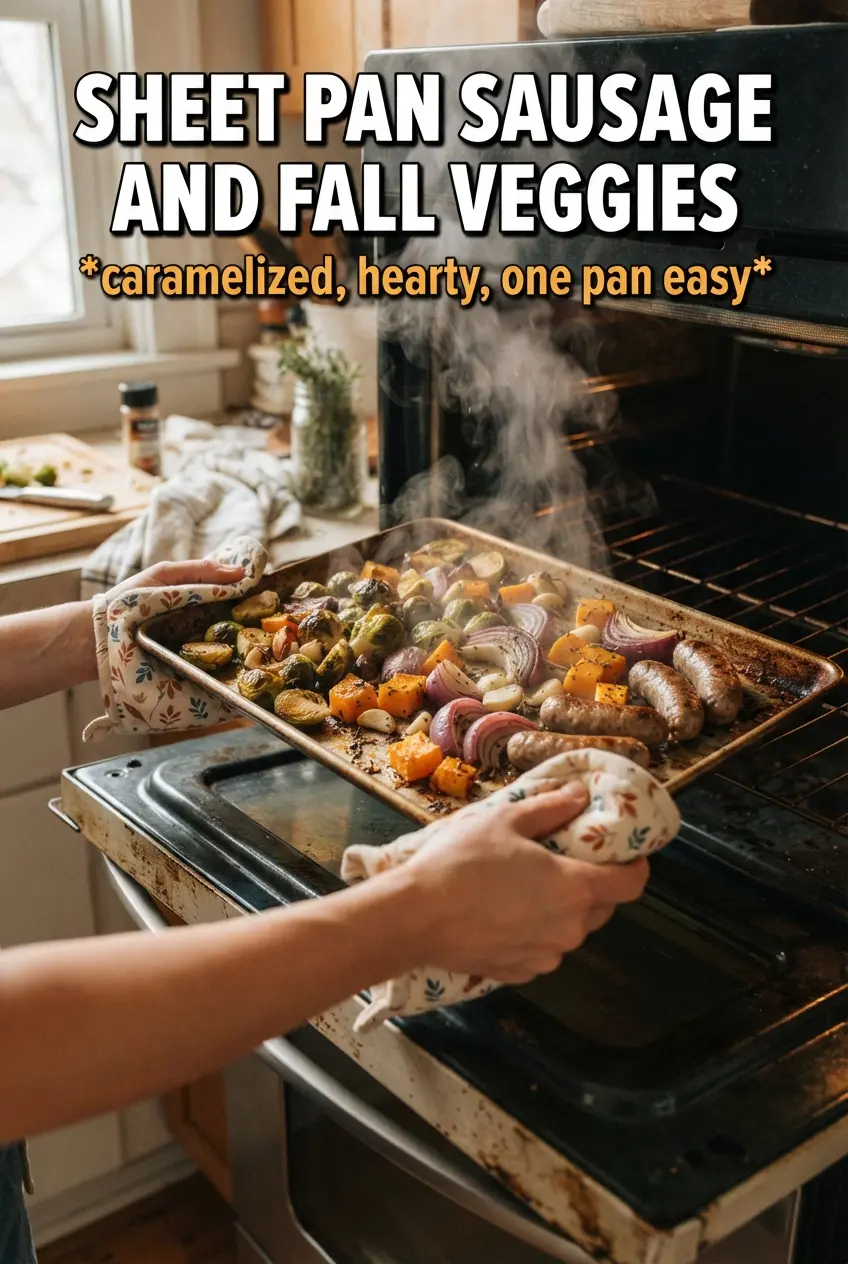
Sheet Pan Sausage And Fall Veggies
Ingredients
Equipment
Method
- Preheat the oven to 425°F, and line a large rimmed baking sheet with parchment for easy release.
- Whisk olive oil, balsamic vinegar, maple syrup, Dijon mustard, garlic, fresh rosemary, Italian seasoning, salt, and pepper until the glaze looks evenly combined and glossy.
- Arrange the sliced sausage, butternut squash, Brussels sprouts, red onion, bell peppers, and apple in an even layer so they roast instead of steam.
- Drizzle the glaze over everything, then toss gently just until each piece is coated and lightly shiny.
- Roast at 425°F for 30-35 minutes, stirring once halfway, until the vegetables are caramelized and the sausage is cooked through.
- Broil for 2-3 minutes to deepen browning, watching closely until the edges look caramelized and browned.