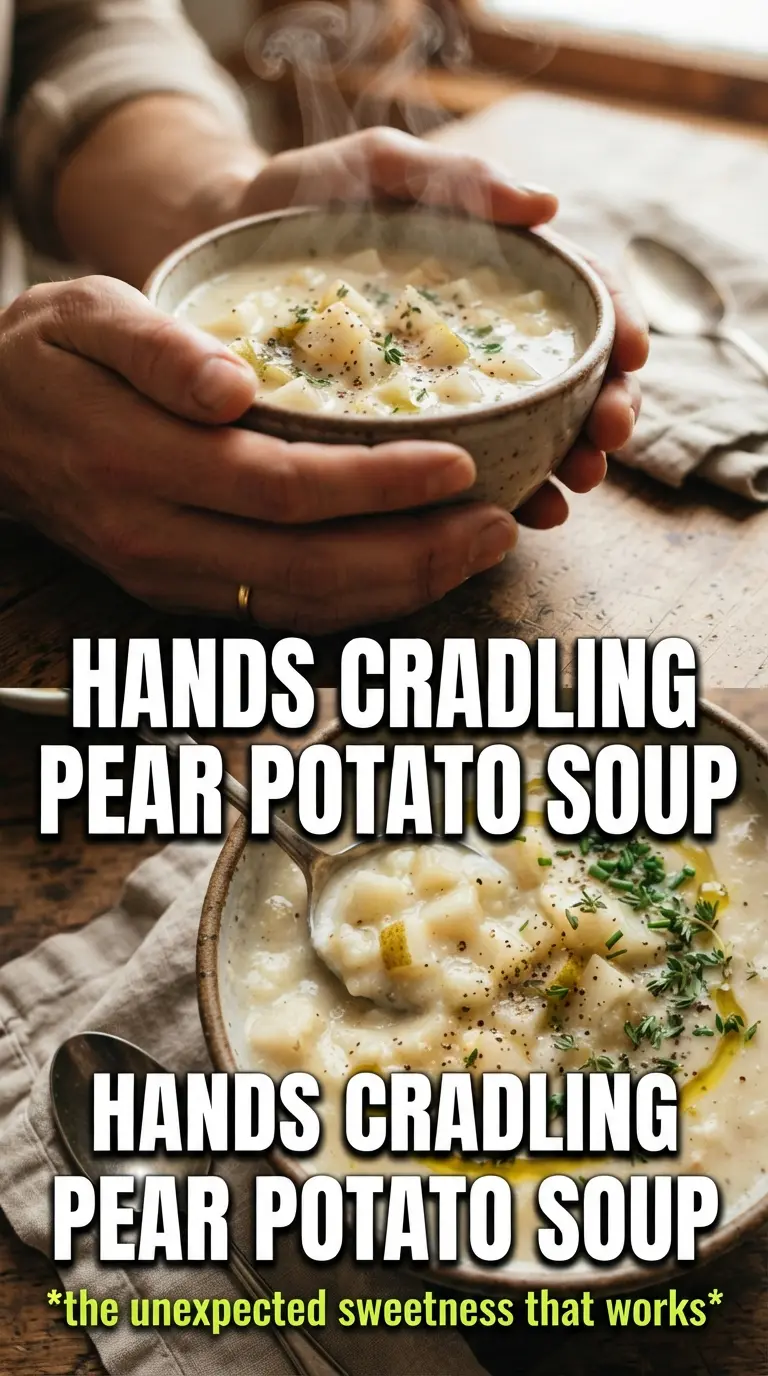
Pear potato soup lands in that lovely middle ground between comforting and elegant. The potatoes give it body and a velvety finish, while the pears add a soft sweetness that doesn’t read as dessert at all. With a little thyme, nutmeg, and white pepper, the whole pot turns silky and balanced, then the toppings bring it into focus with salt, crunch, and a drizzle of honey.
What makes this version work is the way the pears cook down with the potatoes instead of being added as a garnish or stirred in at the end. That means the fruit disappears into the base and rounds out the soup without turning it sugary. Yukon gold potatoes are the right choice here because they break down into a naturally creamy texture, and the cream goes in after blending so the soup stays smooth instead of getting grainy.
If you’ve never paired pears with a savory soup before, this is the kind of recipe that makes sense after one spoonful. The topping combination matters, too, and I’ve included a few practical notes below so you can keep the texture silky and the flavor clean.
The soup blended out so smooth, and the pears gave it a gentle sweetness that worked perfectly with the gorgonzola. I also loved the candied walnuts on top because they kept every bite from feeling too soft.
Save this pear potato soup for the night you want something silky, a little unexpected, and finished with gorgonzola, honey, and crunchy walnuts.
The Pears Need to Be Fully Tender Before You Blend
The biggest mistake with pear potato soup is rushing the simmer. If the potatoes are soft but the pears still taste a little firm or grainy, the final soup won’t have that seamless, silky texture you want. Pears need the full simmer time so they melt into the potatoes and stop reading as a separate flavor.
That same rule applies to the blending stage. An immersion blender will give you the smoothest result, but it only works well if the vegetables have cooked all the way through. If you stop too early, you’ll chase lumps around the pot and end up overworking the soup while it is still not smooth enough.
- Yukon gold potatoes — These are the backbone of the soup. They go creamy instead of gluey, which is why the texture feels rich without needing a roux.
- Ripe pears — Use pears that are fragrant and ripe, but not mushy. They should be sweet enough to soften the savory edges of the broth without turning the soup into something sugary.
- Heavy cream — Stir it in after blending. If you add cream before blending, the soup still works, but you lose some control over the final texture and you’re more likely to dull the fresh pear flavor.
- Gorgonzola or blue cheese — This topping is what keeps the soup from tasting flat. The salt and tang cut through the sweetness and make every spoonful more interesting.
- Candied walnuts — They bring crunch and a little caramel note. If you skip them, the soup still tastes good, but it loses the contrast that makes the bowl feel finished.
What Each Ingredient Is Actually Doing in This Recipe
- Primary ingredient (the star) — Quality matters most. Choose the best you can find.
- Cooking medium (oil, butter, or broth) — This carries flavors and prevents dryness.
- Seasonings (salt, pepper, spices, herbs) — Layer flavors so nothing overpowers. Build depth gradually.
- Aromatics (garlic, onion, herbs) — Cook with fat to bloom flavors. Become the foundation.
- Supporting ingredients — Complement the main ingredient without overpowering it.
- Sauce or liquid (if applicable) — Brings flavors together. Balance richness with acid.
- Acid (lemon, vinegar, wine, or other) — Brightens and prevents flat-tasting results.
- Final finish (garnish, glaze, or sauce) — Prevents one-dimensional taste and adds visual appeal.
Building the Soup Base Without Losing the Pear Flavor
Softening the Onion First
Start by cooking the onion in butter until it turns soft and golden at the edges. That step builds sweetness right away and gives the soup a deeper base than if you threw everything into the pot at once. If the onion stays pale, the finished soup can taste thin and a little harsh.
Simmering the Potatoes and Pears Together
Add the broth, potatoes, pears, and thyme, then bring the pot to a boil before dropping it to a steady simmer. You want the pears and potatoes to finish at the same time, with both collapsing easily when pressed against the side of the pot. If the pot boils too hard, the liquid can reduce too quickly before the vegetables soften.
Blending Until the Texture Turns Velvety
Blend the soup until it looks completely smooth and pale gold. Stop and scrape down any stubborn bits near the top of the pot, because even a few chunks will stand out in a soup this refined. If you’re using a countertop blender, work in batches and vent the lid carefully so the steam doesn’t push hot soup out.
Finishing With Cream and Seasoning
Stir in the cream only after the soup is smooth, then season with nutmeg, white pepper, and salt. White pepper keeps the soup looking clean and gives it a gentle heat without black flecks. If the flavor tastes soft but not fully awake, it usually needs more salt before it needs more spice.
How to Adapt This for Different Tables and Tastes
Dairy-Free Version
Swap the butter for olive oil or a plant-based butter and use full-fat coconut milk or unsweetened oat cream instead of heavy cream. Coconut milk makes the soup richer and slightly sweeter, while oat cream stays closer to the original flavor. Skip the cheese topping or use a dairy-free salty crumble to keep the same contrast.
Make It Vegetarian
Use vegetable broth instead of chicken broth. That keeps the flavor gentle and lets the pear stay front and center. The soup will taste a little cleaner and lighter, which works especially well with the blue cheese topping.
Skip the Blue Cheese
If blue cheese feels too sharp, use crumbled feta or goat cheese instead. Feta keeps the salty bite, while goat cheese gives you tang with a softer finish. The soup stays elegant, just a little less bold.
For a Thicker, More Filling Bowl
Hold back about 1/2 cup of broth until after blending, then add it only if the soup feels too thick. Pears and Yukon golds already give you a naturally thick texture, so adding too much liquid up front can make the soup feel less luxurious. This is the best adjustment if you want it to eat like a main dish.
Storage and Reheating
- Refrigerator: Store in an airtight container for up to 4 days. The soup thickens as it chills, so it may look a little denser the next day.
- Freezer: It freezes well for up to 2 months, but the texture can soften slightly after thawing because of the cream. Freeze before adding the cream if you want the best result.
- Reheating: Warm it gently on the stove over low heat and stir often. High heat can make the cream separate or scorch the bottom of the pot, especially if the soup has thickened in the fridge.
Answers to the Questions Worth Asking

Pear Potato Soup
Ingredients
Equipment
Method
- Melt the butter in a large pot over medium heat, then add the diced onion. Sauté for 5 minutes until soft and golden, stirring occasionally so it doesn’t brown too fast.
- Add the minced garlic and cook for 1 minute. Stir constantly until fragrant but not browned.
- Add the broth, cubed potatoes, and chopped pears to the pot. Stir well to combine, scraping up any browned bits from the bottom.
- Add the fresh thyme leaves, then bring the mixture to a boil. Once boiling, immediately reduce to a simmer and cook for 25 minutes until both potatoes and pears are completely tender.
- Blend the soup completely smooth with an immersion blender. Blend until no chunks remain and the texture looks silky.
- Stir in the heavy cream, then season with nutmeg, white pepper, and salt. Cook for 2 minutes on low just to warm through, then taste and adjust salt as needed.
- Ladle the soup into bowls and top each serving with crumbled gorgonzola or blue cheese. Add candied walnuts, a drizzle of honey, and a pinch of fresh thyme for an elegant finish.