Glossy black pepper chicken hits the pan with that takeout-style smell that gets everyone to the table fast. The sauce clings to the chicken instead of pooling underneath it, and the peppers stay just crisp enough to give each bite some snap. When it’s cooked right, you get savory, peppery, slightly sweet sauce on tender chicken and soft onions, all built in one skillet.
The trick here is balance and heat. Thinly sliced chicken cooks quickly and stays juicy, but only if you give it enough room to brown instead of steaming. The sauce also needs a good amount of freshly cracked black pepper, not the dusty stuff from the back of the cabinet, because that sharp bite is what makes this dish taste bold instead of flat. Dark soy sauce deepens the color and adds that rich, almost molasses-like edge you notice right away.
Below, I’ll walk through the part that matters most: getting the sauce thick enough to coat every piece without turning gummy. I also included a few smart swaps and the reheating method that keeps the chicken from drying out.
The sauce thickened up fast and coated the chicken just like the takeout version. I used the extra black pepper at the end and it gave it that punchy finish my husband kept talking about.
Pin this black pepper chicken for the nights when you want a glossy, peppery stir-fry that tastes like it came from your favorite takeout spot.
The Fastest Way to Keep the Chicken Juicy While the Sauce Turns Glossy
Black pepper chicken fails most often in two places: the chicken turns dry, or the sauce never quite gets that shiny takeout finish. Both problems come from crowding the pan and rushing the last minute of cooking. High heat is useful here, but only if the chicken sears instead of steaming and the sauce reduces long enough to coat the meat.
Cooking the chicken in batches matters more than people think. If the pieces sit piled up, they release liquid and turn pale before they ever brown. The same goes for the vegetables. You want the bell pepper and onion to soften at the edges while still keeping some structure, because mushy vegetables make the whole dish feel heavy.
The final toss only needs a couple of minutes. That’s enough time for the cornstarch slurry to thicken and turn the sauce glossy. If it goes too long, the sauce tightens up and starts to look sticky instead of silky.
What Each Ingredient Is Actually Doing in This Dish

- Chicken breast — Thin slices cook quickly and stay tender as long as you don’t overcook them in the final toss. If you want a little more forgiveness, boneless chicken thighs work too and stay juicier, though the finished dish will be slightly richer.
- Freshly cracked black pepper — This is the backbone of the dish. Pre-ground pepper tastes dull here, while freshly cracked pepper gives the sauce its sharp bite and that finish people expect from black pepper chicken.
- Dark soy sauce — This is what gives the sauce its deeper color and rounder flavor. If you don’t have it, use regular soy sauce plus a tiny splash more brown sugar, but the color won’t be as dark and the sauce will taste a little lighter.
- Oyster sauce — It brings body and savory depth that soy sauce alone can’t match. There isn’t a perfect substitute, but hoisin can work in a pinch; it will taste sweeter and less briny.
- Cornstarch slurry — This is what turns the sauce from thin and salty into something that clings. Stir it again right before adding it if it sits for a minute, because the starch settles fast.
- Bell pepper and onion — These add sweetness and texture, and they also catch the sauce well. Slice them evenly so they cook at the same rate; thick chunks stay too crisp while thin slices collapse.
Building the Stir-Fry So the Sauce Clings Instead of Souping Out
Mix the sauce before the pan gets hot
Whisk the soy sauce, oyster sauce, dark soy sauce, brown sugar, black pepper, and cornstarch slurry together before you start cooking. Once the wok is hot, things move fast, and you don’t want to be measuring while the chicken is already browning. The cornstarch should be fully dissolved so it thickens evenly instead of turning lumpy in the pan.
Brown the chicken in batches
Heat the oil until it shimmers, then cook the chicken in a single layer. You want edges that pick up a little color and meat that’s just cooked through, not steamed and pale. If the pan looks crowded, split the chicken into two rounds so the heat can do its job.
Cook the vegetables just long enough
Add the onion and bell pepper to the same pan and stir-fry until the onion softens and the pepper loses its raw edge, about three minutes. Garlic and ginger only need about a minute; if they sit too long, they’ll burn and turn bitter. Once the garlic smells fragrant, move straight to the sauce.
Finish with heat and movement
Return the chicken to the pan, pour in the sauce, and toss constantly as it bubbles and thickens. In a minute or two, it should turn shiny and coat the back of a spoon. If it gets too thick before the chicken is coated, splash in a tablespoon of water to loosen it back up.
Three Ways to Make This Black Pepper Chicken Work in Your Kitchen
Use chicken thighs for a richer result
Boneless thighs stay juicy a little longer than breast meat, so they’re a good swap if you’re worried about overcooking. The sauce still clings the same way, but the finished dish tastes a bit deeper and softer. Cut them into even pieces so they brown at the same speed.
Make it gluten-free without losing the stir-fry texture
Use gluten-free soy sauce or tamari and check that your oyster sauce is labeled gluten-free. The sauce will still thicken the same way because the cornstarch is doing that work. The flavor stays savory and peppery, just a little less salty depending on the brand you choose.
Swap the vegetables based on what’s in the crisper
Broccoli florets, snap peas, or sliced mushrooms all work here if you keep the pieces small enough to cook quickly. Broccoli gives more crunch, mushrooms add extra savoriness, and snap peas keep things bright. Don’t use watery vegetables that release a lot of liquid unless you’re ready to simmer the sauce a little longer.
Make the pepper heat gentler or bolder
Two teaspoons of cracked black pepper gives a sharp, pepper-forward sauce. If you want it milder, cut that back slightly and add a pinch at the end after tasting. If you want a real bite, add another crack or two right before serving so the aroma stays strong.
Storage and Reheating
- Refrigerator: Store leftovers in an airtight container for up to 4 days. The sauce will thicken a bit more as it chills.
- Freezer: It freezes well for up to 2 months, though the peppers soften after thawing. Cool it fully first and freeze in a flat container for faster reheating.
- Reheating: Warm it in a skillet over medium-low heat with a splash of water until the sauce loosens and the chicken is heated through. The common mistake is blasting it on high heat, which dries out the chicken and makes the sauce separate.
Questions I Get Asked About This Recipe
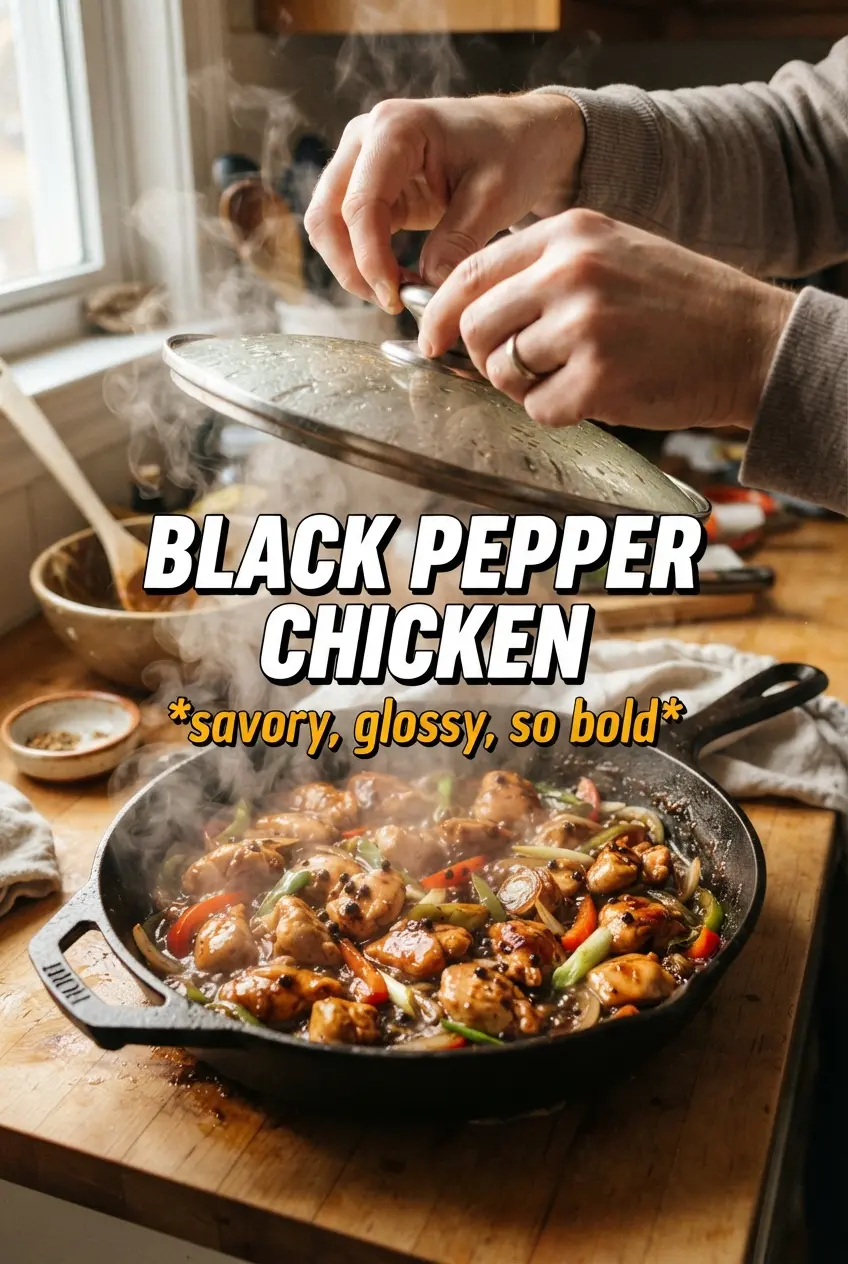
Black Pepper Chicken
Ingredients
Equipment
Method
- Whisk together soy sauce, oyster sauce, dark soy sauce, brown sugar, and freshly cracked black pepper until smooth, then set aside.
- Whisk cornstarch with 1/4 cup water to form a slurry, then stir it into the sauce mixture.
- Heat vegetable oil in a wok or large skillet over high heat until shimmering.
- Stir-fry the sliced chicken in batches until golden, then remove to a plate.
- Stir-fry bell pepper and onion for 3 minutes, stirring to keep them crisp-tender.
- Add garlic and grated ginger and cook for 1 minute, until fragrant.
- Return the chicken to the pan, pour the sauce over, and toss until everything is coated.
- Cook for 2-3 minutes until the sauce thickens and clings to the chicken and vegetables, then season with extra cracked black pepper.
- Serve the black pepper chicken over steamed rice.