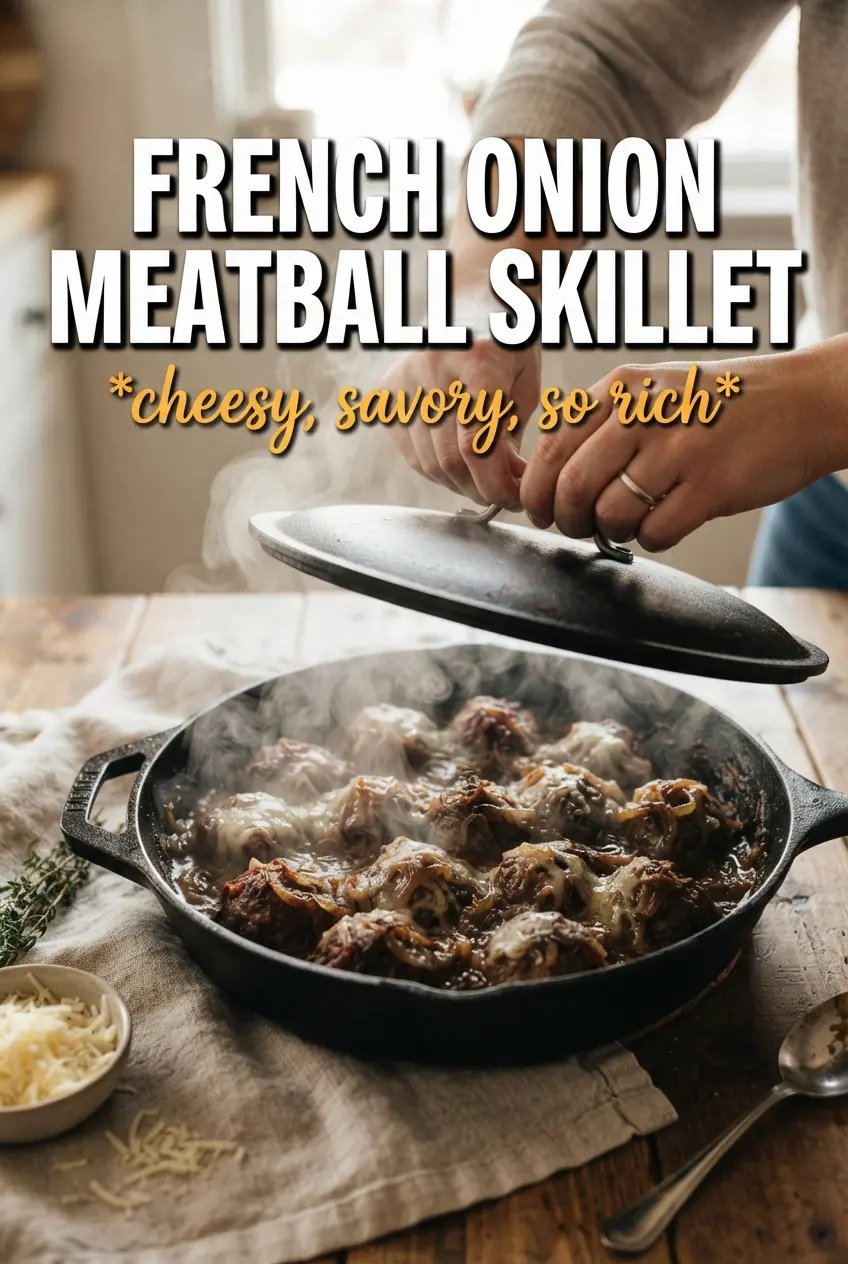
Deeply caramelized onions turn this French onion meatball skillet into something far more comforting than the sum of its parts. The broth gets glossy and savory, the meatballs stay tender, and the Gruyere melts into a browned, bubbly lid that pulls everything together in one pan. It eats like a cross between French onion soup and a meatball supper, which is exactly why it disappears fast.
The trick is giving the onions enough time to go from pale and sharp to dark gold and jammy. That slow cook builds the base, and the wine does the work of lifting every browned bit from the skillet before the broth goes in. Browning the meatballs first adds another layer of flavor, but you don’t need to cook them through at that stage since they finish right in the onion sauce.
Below, you’ll find the point where most people rush the onions, the best way to keep the sauce from tasting flat, and a few smart swaps if you need to work with what’s already in your kitchen.
The onions turned jammy instead of burnt, and the broth got so rich after the wine went in. I served it with crusty bread and my husband said it tasted like French onion soup and meatballs had a perfect little dinner together.
This French onion meatball skillet is all about those slow-cooked onions and that bubbly Gruyere top—save it for the night you want one pan, rich gravy, and dinner that feels special without extra fuss.
The Onion-Slowing Step Most People Rush
The onions are the backbone here, and they need time to cross the line from soft and pale to deeply browned and sweet. If you cook them over heat that’s too high, they’ll pick up color on the outside before they’ve had a chance to lose their raw edge, and the final sauce will taste sharp instead of round. Medium-low heat gives the onions time to collapse, concentrate, and release enough moisture to keep from scorching.
That long cook also changes how the broth tastes. Once the wine and beef broth go in, all those browned onion bits dissolve into the liquid and turn it into something close to a quick French onion gravy. If you stop early, you’ll still have onions, but you won’t have the deep, savory base that makes this skillet worth making.
What the Beef, Butter, and Gruyere Are Each Doing

- Ground beef — A mix with enough fat to stay juicy works best. Lean beef can still work, but the meatballs will be firmer and less forgiving. If you use a leaner grind, don’t overmix and don’t overcook.
- Breadcrumbs and egg — These hold the meatballs together and keep the texture tender. The breadcrumbs catch the meat juices so the meatballs don’t tighten up in the skillet. If you need a gluten-free swap, use crushed gluten-free crackers or breadcrumbs in the same amount.
- Worcestershire — This is one of the quiet power players here. It adds the salty, savory depth you’d normally get from a much longer simmer. Don’t skip it unless you’re replacing it with another similarly punchy condiment.
- Dry white wine — The wine brightens the onion base and scrapes the pan clean. Choose something dry, not sweet, because sweetness stacks up fast once the onions are caramelized. If you don’t cook with wine, use extra beef broth plus a teaspoon of white wine vinegar for a little lift.
- Gruyere — This melts smoothly and browns in a way that feels right for French onion flavors. It has enough nuttiness to stand up to the broth without turning greasy. Swiss cheese can work in a pinch, but the flavor will be milder and less complex.
Building the Skillet in the Right Order
Browning the Meatballs First
Roll the meatballs evenly so they cook at the same pace, then brown them in butter in an oven-safe skillet until they’ve got good color on the outside. They don’t need to be cooked through here. You’re after the fond left behind in the pan, because that’s what gives the onion base its first layer of flavor.
Letting the Onions Go Deep
Use the same skillet and cook the onions over medium-low heat for 30 to 35 minutes, stirring often enough to keep the edges from burning. At first they’ll seem like too much volume, then they’ll soften and shrink, then they’ll finally turn glossy and brown. If the pan starts looking dry or the onions catch, lower the heat and add a small splash of water to loosen the bottom.
Pulling the Sauce Together
Once the onions are deeply caramelized, stir in the garlic and thyme and cook just until fragrant. Add the wine and scrape firmly across the bottom of the pan, then pour in the broth and Worcestershire. Nestle the meatballs back in and simmer until they finish cooking through; the sauce should taste savory and balanced, not thin or salty.
Finishing Under the Broiler
Scatter the Gruyere over the top and broil just until it melts, bubbles, and spots with gold. Stay close to the oven at this point, because cheese can go from perfect to dark fast. The skillet is done when the top looks burnished and the sauce around the edges is bubbling hard.
Ways to Adapt This Without Losing the Point
Make it gluten-free without losing structure
Swap the breadcrumbs for gluten-free breadcrumbs or crushed gluten-free crackers in the same amount. The meatballs will still bind well, and the onion sauce doesn’t need any flour at all, so the rest of the skillet stays naturally gluten-free.
Use ground turkey for a lighter version
Ground turkey works, but it needs the extra moisture from the egg and breadcrumbs, and it benefits from careful browning so it doesn’t dry out. The final skillet will taste a little lighter and less beefy, so don’t skip the Worcestershire or the Gruyere.
Skip the wine and keep the brightness
If you don’t want to cook with wine, add extra beef broth and finish with a teaspoon of white wine vinegar or sherry vinegar. That little hit of acid keeps the onions from tasting flat and replaces the lift the wine would have given the sauce.
Turn it into a more filling dinner
Serve the skillet over mashed potatoes, buttered noodles, or toasted bread if you want more of a stretch-for-four meal. The sauce is rich enough to coat starch cleanly, and the bread or potatoes catch all the onion broth that would otherwise stay in the pan.
Storage and Reheating
- Refrigerator: Store leftovers in an airtight container for up to 4 days. The onions will thicken the sauce as they sit, so expect it to be a little less brothy the next day.
- Freezer: Freeze the meatballs and onion sauce without the cheese topping for up to 2 months. Thaw overnight in the refrigerator, then add fresh Gruyere before broiling.
- Reheating: Warm gently on the stove over low heat or in a covered oven-safe dish at 325°F until hot. If you blast it in the microwave, the meatballs can tighten and the sauce can separate, so low and slow is the better move.
Answers to the Questions Worth Asking
French Onion Meatball Skillet
Ingredients
Equipment
Method
- In a bowl, mix ground beef, breadcrumbs, egg, Worcestershire, garlic powder, salt, and pepper until evenly combined, then roll into meatballs. Brown the meatballs in butter in an oven-safe skillet over medium-high heat until golden on all sides, then remove to a plate.
- Reduce heat to medium-low and add the sliced onions to the same skillet. Cook for 30-35 minutes, stirring occasionally, until deeply caramelized, then stir in garlic and fresh thyme for 30 seconds to 1 minute.
- Deglaze the skillet with dry white wine, scraping up any browned bits from the bottom. Add beef broth and Worcestershire, bring to a simmer, and cook for 2 minutes.
- Nestle the browned meatballs back into the caramelized onion sauce, turning to coat. Simmer for 10 minutes at a steady simmer until the sauce thickens slightly and the meatballs are cooked through.
- Scatter Gruyere over everything in an even layer. Broil for 3-5 minutes until golden and bubbly, then rest 2 minutes before serving.