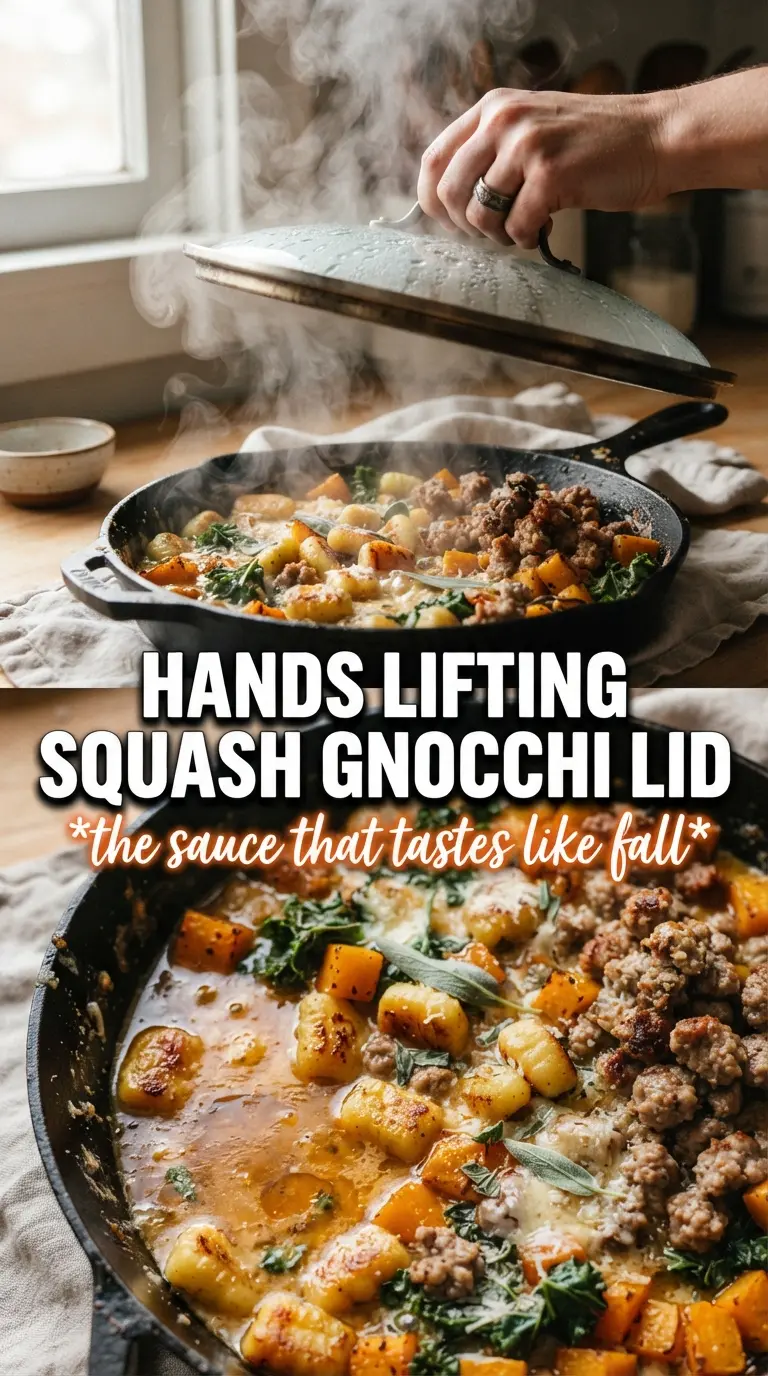
Creamy butternut squash gnocchi gets its best texture from contrast: pillowy dumplings, savory sausage, and a sauce that coats everything in a smooth orange glaze without turning heavy. The sage does more than garnish here. Fried in butter, it turns crisp and aromatic, and that little hit of crunch keeps each bite from feeling one-note.
The key is building the sauce in stages. First the sausage browns deeply so the skillet has flavor to carry into the sauce. Then the same butter that crisps the sage picks up garlic and squash puree before the cream and parmesan go in. That order matters because it gives the sauce a head start on richness and keeps the dairy from going grainy or flat.
The sauce turned out silky and clung to the gnocchi instead of pooling at the bottom of the bowl, and the crispy sage made it taste restaurant-level. My husband asked if I could put this on the weekly menu.
Creamy butternut squash gnocchi with sausage and sage is the kind of skillet dinner worth keeping close for busy nights and cozy appetites.
The Sauce Only Works If You Build It in the Right Order
With a dish like this, the common mistake is treating the sauce and the gnocchi as separate jobs. They need to meet at the right moment, when the sauce is smooth and lightly thickened and the gnocchi are just cooked. If the gnocchi sits too long after boiling, it gets gummy. If the sauce goes too hot after the cream and parmesan are added, it can turn grainy instead of silky.
Browned sausage brings fat and seasoning into the pan, but the real payoff is the browned bits left behind. Those bits dissolve into the squash and cream and give the sauce depth. The fried sage matters too. It adds a sharp herbal note and a crisp texture that breaks up the richness, which is why skipping it makes the whole bowl feel flatter.
What Each Ingredient Is Doing in This Dish
- Potato gnocchi — Shelf-stable gnocchi works well here because it cooks quickly and holds onto the sauce. Fresh gnocchi is fine too, but it needs less time in the water and can go soft fast once it hits the pan.
- Italian sausage — This is the savory backbone of the dish. Mild sausage gives the cleanest balance with the squash, while hot sausage adds a little bite. If you use turkey sausage, add an extra pinch of salt and a little more butter to keep the sauce rounded out.
- Butternut squash puree — Roasted puree has the deepest flavor because the squash has already caramelized. Canned puree can work in a pinch, but check that it’s plain squash and not pie filling. If the puree seems loose, simmer it a minute longer before adding the cream.
- Heavy cream and parmesan — These give the sauce its body and its cling. Half-and-half will make a thinner sauce, and pre-grated parmesan won’t melt as smoothly as freshly grated cheese.
- Sage and nutmeg — Sage cuts through the sweetness of the squash, and nutmeg quietly ties the cream and cheese together. Don’t overdo either one. You want background warmth, not a sauce that tastes spiced.
How to Keep the Gnocchi Tender and the Sauce Silky
Brown the sausage until it has real color
Cook the sausage in a large skillet over medium-high heat until it loses its pink color and starts to take on browned edges. That color is flavor, and it gives the whole dish a stronger base. Drain off excess fat if the pan looks greasy, but leave behind enough to carry the butter and garlic. If the sausage is crowded, it will steam instead of brown, so break it up and give it some room.
Crisp the sage in the butter first
Melt the butter and fry the sage leaves just until they darken slightly and turn crisp, then pull them out right away. They go from fragrant to burnt fast, especially in browned butter. The butter left in the pan will smell like sage and carry that flavor into the sauce. If the leaves stay in too long, they get bitter and lose the clean herbal note you want.
Let the squash and cream simmer before the cheese goes in
Stir the garlic into the butter for about a minute, then add the squash puree and cream. Let that mixture come together over medium-low heat until it looks smooth and hot around the edges, not boiling hard. Parmesan goes in after that, along with the nutmeg and red pepper flakes. If you dump the cheese into a bubbling sauce, it can clump or turn sandy.
Toss the gnocchi in while the sauce is still loose
Cook the gnocchi according to the package instructions, then add it straight to the skillet. The gnocchi should be tender and slightly puffy, not falling apart. Stir in the sausage and toss until every piece is coated. If the sauce seems tight, loosen it with a splash of the gnocchi cooking water instead of more cream, which can make the dish too heavy.
Ways to Adjust This Without Losing the Balance
Make it dairy-free without losing the creamy feel
Use full-fat coconut cream or an unsweetened oat-based cooking cream in place of the heavy cream, then skip the parmesan or swap in a dairy-free hard cheese. The sauce won’t taste exactly the same, but it will still coat the gnocchi well if you keep the heat gentle. Coconut cream adds a faint sweetness, so lean a little harder on the sage and pepper.
Use turkey sausage for a lighter skillet dinner
Turkey sausage works well, but it needs help because it won’t leave as much fat or deep browned flavor in the pan. Add an extra tablespoon of butter after browning and don’t skip the garlic stage. The result is a little leaner and less rich, but still satisfying.
Swap in spinach for a little more green
A handful or two of baby spinach can go in at the very end and will wilt into the sauce in less than a minute. It lightens the bowl visually and adds a fresh note without changing the flavor structure. Add it after the gnocchi is coated so it doesn’t disappear into the sauce and overcook.
Use gluten-free gnocchi if that’s what you need
Gluten-free gnocchi works here as long as you cook it gently and don’t over-stir once it’s in the sauce. Some brands are softer than regular potato gnocchi, so handle it with a light hand. The sauce doesn’t need changing, which makes this an easy adaptation.
Storage and Reheating
- Refrigerator: Store leftovers in an airtight container for up to 3 days. The sauce will thicken as it chills and the gnocchi will soften a little.
- Freezer: I don’t recommend freezing this one. The cream sauce can separate and the gnocchi tends to turn mushy after thawing.
- Reheating: Warm it gently in a skillet over low heat with a splash of cream or milk to loosen the sauce. High heat is the mistake here — it can make the dairy split and the gnocchi break down.
Answers to the Questions Worth Asking

Creamy Butternut Squash Gnocchi With Sausage And Sage
Ingredients
Equipment
Method
- Heat a large skillet over medium-high heat, then add the Italian sausage (casings removed) and brown until fully cooked, about 6–8 minutes. Drain off excess fat and set the sausage aside.
- In the same skillet, melt the unsalted butter and fry the fresh sage leaves until crisp and fragrant, about 1–2 minutes. Remove the sage to a plate with a slotted method and keep it nearby for topping.
- Reduce heat to medium and sauté the minced garlic in the butter for 1 minute, stirring to prevent browning. Stir in the butternut squash puree and heavy cream, then cook until hot.
- Add the grated parmesan, nutmeg, and red pepper flakes, then simmer for 5 minutes, stirring until smooth and thickened. Taste and adjust with salt and pepper to taste.
- Cook the potato gnocchi according to package instructions, then add the hot gnocchi directly to the sauce. Return the browned sausage to the skillet and toss everything together until the gnocchi is coated.
- Season once more with salt and pepper, then top with the crispy fried sage leaves and extra parmesan for serving. Serve immediately while the sauce is creamy.