Flaky white fish, juicy tomatoes, briny olives, and capers all roast together in one pan until the juices turn into a savory sauce that clings to every bite. The fish stays tender because it never has to cook alone or dry out under direct heat, and the tomatoes collapse just enough to sweeten the whole dish without losing their shape. It’s the kind of dinner that looks polished when it hits the table but asks very little of you in the kitchen.
What makes this version work is the two-stage roasting. The vegetables get a head start, which softens the garlic, wakes up the oregano, and gives the pan sauce a little body before the fish goes in. Then the fillets finish gently in that hot, seasoned mixture instead of in a dry dish, which is the difference between fish that flakes cleanly and fish that turns chalky.
Below, you’ll find the timing that keeps the fish from overcooking, plus a few smart swaps for the ingredients you may already have on hand. The pan does most of the work here, but a couple of details matter more than you’d think.
The fish came out perfectly flaky, and the tomatoes and olives made their own sauce right in the baking dish. I was worried the capers would be too salty, but everything balanced out beautifully with the lemon at the end.
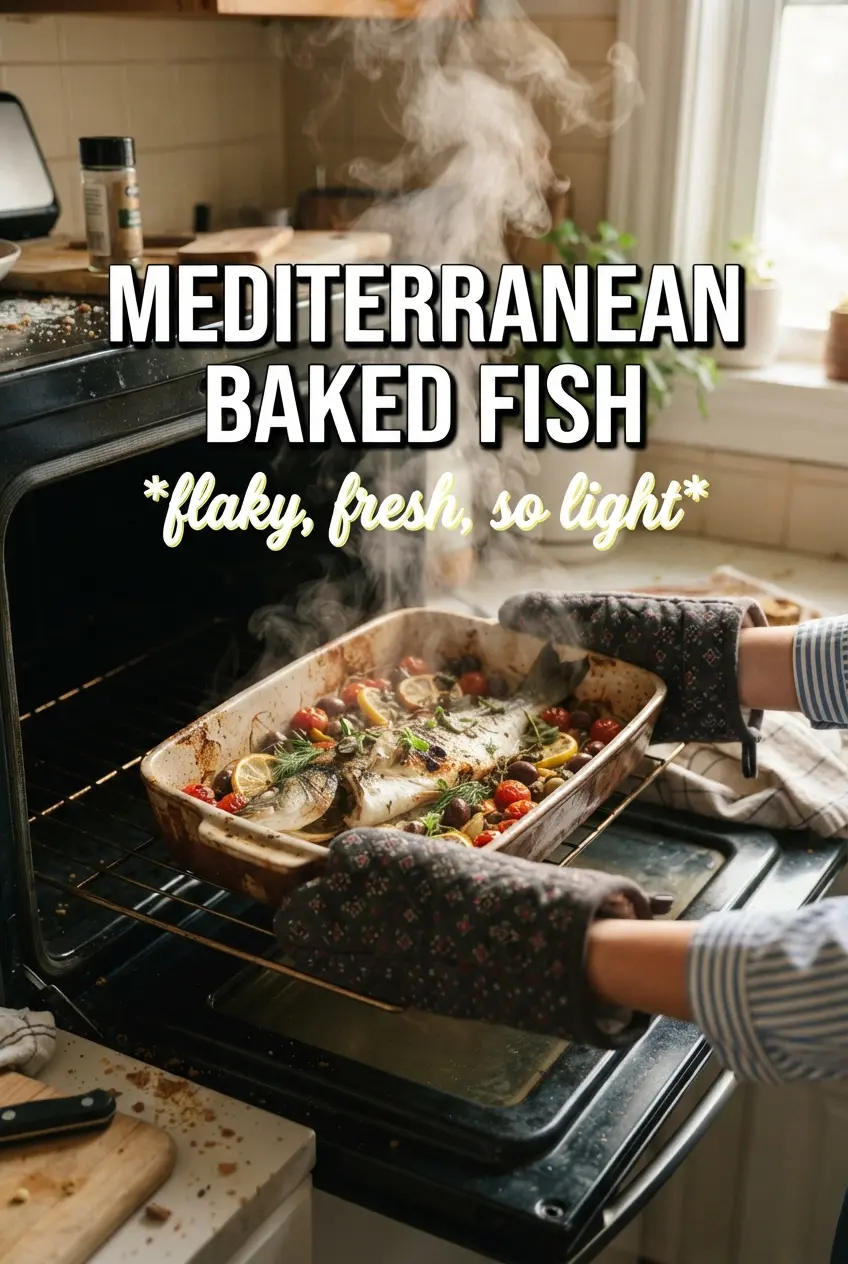
This Mediterranean baked fish brings together flaky fillets, briny olives, and roasted tomatoes for a one-pan dinner worth keeping close.
The Secret to Fish That Stays Tender in a Hot Oven
The biggest mistake with baked fish is treating it like a casserole and leaving it in too long. Fish keeps cooking after it leaves the oven, and thin fillets can go from moist to dry in a minute or two. The head start on the vegetables matters because it builds a hot, savory base before the fish goes in, so the fillets can cook quickly in steam and sauce instead of sitting in a dry pan.
Another detail that matters is the size and thickness of the fillets. Cod, halibut, and sea bass all work, but they need to be fairly even so they finish at the same time. If one fillet is much thinner than the rest, tuck it toward the center of the dish where the heat is slightly gentler.
What Each Ingredient Is Doing in This Dish
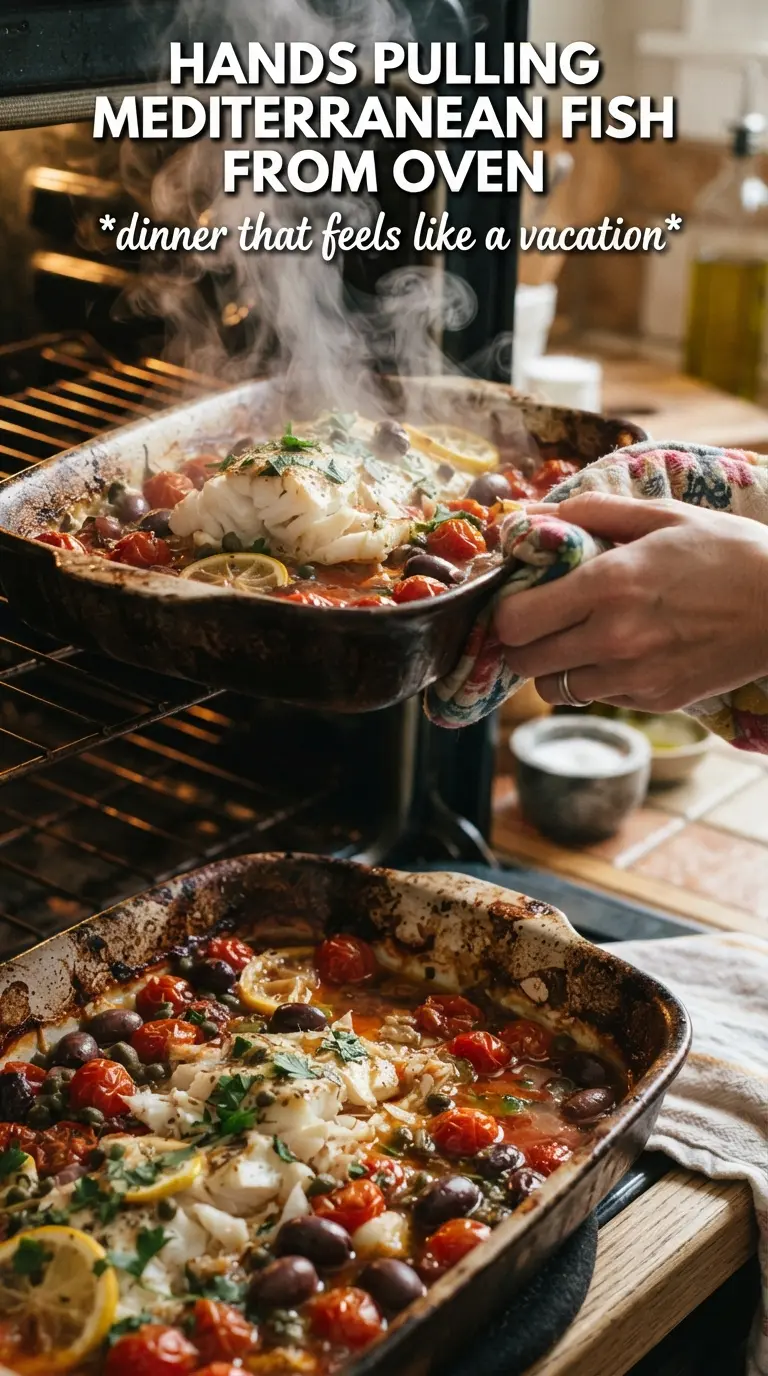
- White fish fillets — Cod gives you a mild, sturdy flake; halibut is meatier; sea bass brings a little more richness. Use the freshest fish you can get, and pat it dry before seasoning so it doesn’t water down the pan sauce.
- Cherry tomatoes — These burst in the oven and create the juicy base that carries everything else. Larger tomatoes release too much liquid too quickly, so halve cherry tomatoes and keep them in a single layer if you can.
- Kalamata olives and capers — This is where the salty, Mediterranean edge comes from. Don’t rinse them unless they taste aggressively briny, because that salt is part of what seasons the fish and the vegetables together.
- Jarred roasted red peppers — They add sweetness and softness without needing any extra cooking time. Drain them well so the dish doesn’t turn watery.
- Dry white wine or broth — Wine gives the sauce a brighter finish, while broth keeps it family-friendly and still flavorful. Either one helps loosen the pan juices just enough to spoon over the fish at the table.
- Olive oil, oregano, and garlic — These are the backbone of the dish. Slice the garlic thinly instead of mincing it so it softens in the oven without burning.
The 20 Minutes That Matter Most
Building the Roasting Base
Start by combining the tomatoes, olives, capers, roasted red peppers, garlic, wine or broth, olive oil, oregano, and red pepper flakes in the baking dish. The mixture should look glossy and loose, not dry or crowded. Roast it for 10 minutes first, until the tomatoes begin to blister and the garlic smells sweet instead of sharp. If you skip this head start, the fish finishes before the vegetables have time to become a sauce.
Nestling in the Fish
Season the fillets with salt and pepper, then set them into the hot vegetable mixture so they sit partly surrounded, not buried. You want the fish in contact with the juices, because that’s what keeps the top from drying out while the bottom cooks. Thin fillets need the lower end of the timing, while thicker pieces may need the full 15 minutes. Pull the pan when the fish flakes easily with a fork and still looks moist in the center.
Finishing With Lemon and Parsley
Let the dish sit for a minute or two before serving so the juices settle. Scatter on the parsley and serve with lemon wedges right at the end. The lemon brightens the olives and capers, which can taste heavy without that fresh acid. If the pan looks a little saucy, that’s the point — spoon the liquid over the fish.
Three Smart Ways to Adapt This Pan Dinner
Make it dairy-free and gluten-free without changing a thing
This recipe already fits both needs as written. The sauce gets its body from the tomatoes, wine or broth, and olive oil, so you don’t need cream, butter, or flour to make it feel complete.
Swap in a different fish without changing the method
Cod, halibut, and sea bass are all good choices, but salmon also works if you want a richer result. Use fillets of similar thickness so they cook evenly, and keep an eye on lean fish because it dries out faster than salmon does.
Turn it into a bigger dinner by adding potatoes or chickpeas
For a heartier pan, add pre-cooked baby potatoes or drained chickpeas to the vegetable mixture before the first roast. Chickpeas soak up the sauce and keep the meal protein-rich, while potatoes make it feel more like a full sheet-pan supper.
Use broth instead of wine for a softer finish
Broth gives you a slightly rounder, less sharp sauce, which is useful if you want the tomatoes and herbs to lead. The dish still tastes bright once the lemon goes on at the end, so you won’t miss the wine.
Storage and Reheating
- Refrigerator: Store leftovers in a covered container for up to 2 days. The fish will firm up a bit, but the sauce keeps it from drying out too badly.
- Freezer: I don’t recommend freezing the finished dish. Fish and tomatoes both lose their best texture after thawing, and the sauce turns softer and less fresh.
- Reheating: Warm gently in a covered skillet over low heat or in a 300F oven until just heated through. High heat is what turns leftover fish chalky, so keep the temperature low and stop as soon as it’s warm.
The Questions People Usually Ask Before They Bake This
Mediterranean Baked Fish
Ingredients
Equipment
Method
- Preheat oven to 400°F and grease a 9x13 baking dish with a light coating of olive oil.
- Add cherry tomatoes, Kalamata olives, capers, roasted red peppers, garlic, white wine or broth, olive oil, oregano, and red pepper flakes to the baking dish and gently toss to combine.
- Roast the vegetable mixture at 400°F for 10 minutes until the garlic is fragrant and the tomatoes begin to soften.
- Season the fish fillets with salt and pepper, then nestle them into the roasted vegetable mixture so they sit in the juices.
- Bake at 400°F for 12-15 minutes more, until the fish flakes easily with a fork and turns opaque throughout.
- Garnish with fresh parsley and serve with lemon wedges.