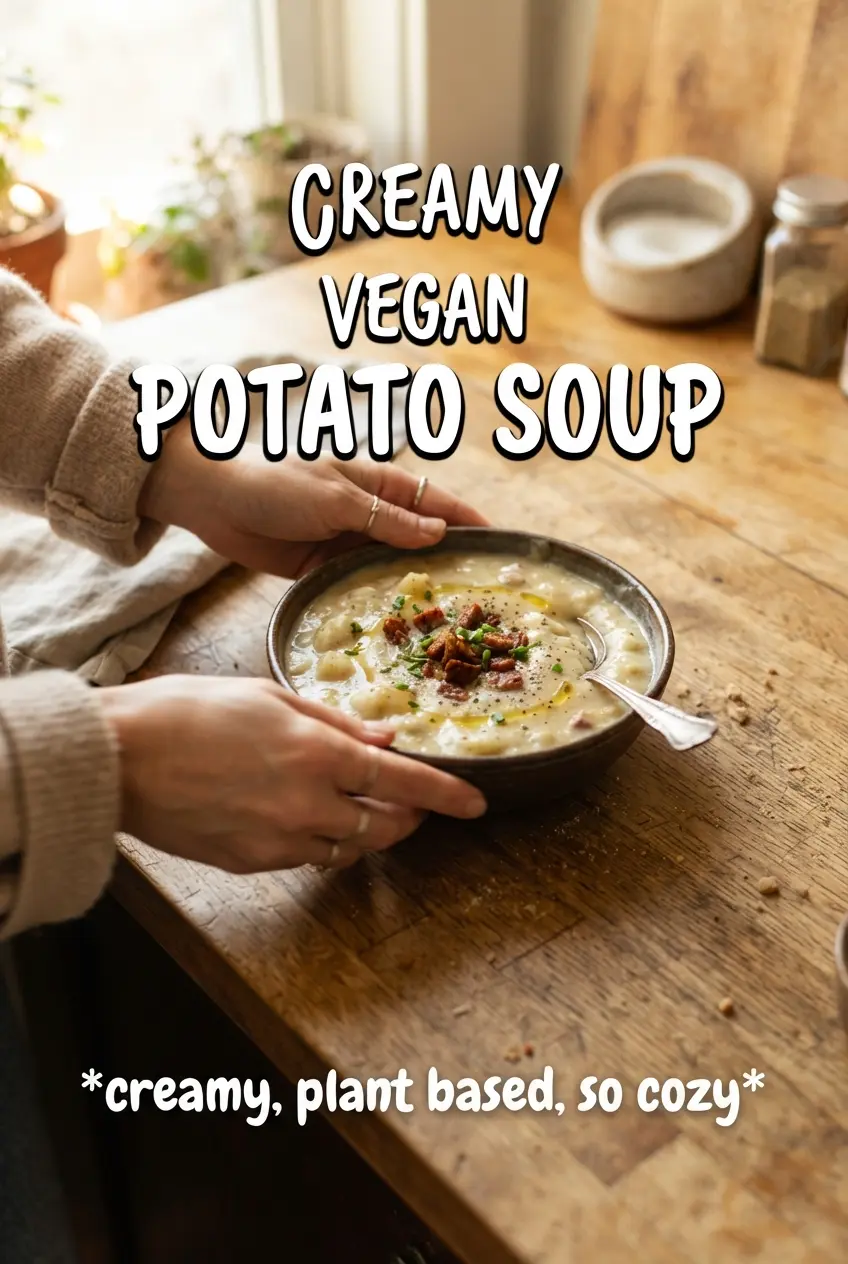
Creamy vegan potato soup lands with a soft, velvety spoonful that feels rich without needing dairy. The potatoes break down into a naturally thick base, and the coconut milk gives it that silky finish that clings to the spoon instead of sitting thin in the bowl. Finished with crispy chickpeas and chives, it eats like a full meal, not just a starter.
Yukon gold potatoes are the right choice here because they blend into a smooth, almost buttery texture without turning gluey. I like building the flavor with onion, celery, garlic, and a small mix of garlic powder, onion powder, smoked paprika, and turmeric before the broth goes in. That little spice layer keeps the soup tasting layered instead of flat, which is the problem with a lot of potato soups that lean too hard on cream alone.
The lemon at the end matters more than it looks like it should. It wakes up the coconut milk and keeps the soup from tasting heavy. Below, I walk through the part that matters most for getting it smooth, plus a few useful swaps if you need to work with what you have.
The soup turned out incredibly smooth, and the coconut milk gave it that rich, creamy finish without tasting coconutty. I loved how the lemon at the end kept it bright, and the crispy chickpeas on top made it feel like a full dinner.
Save this creamy vegan potato soup for the nights when you want a smooth, cozy bowl topped with crispy chickpeas and almost no cleanup.
The Step That Keeps Vegan Potato Soup Thick Instead of Watery
The potatoes need to cook until they’re falling apart at the edges and completely tender in the center. If you pull them too early, the soup turns grainy or thin because the starch hasn’t fully released. Yukon golds give you a naturally creamy texture, but they still need that full simmer to do the heavy lifting.
Blending is where the texture turns from ordinary to silky. An immersion blender works best because you can stop the moment the soup is smooth but still thick, which is harder to control in a countertop blender. If the soup seems too thick before blending, that’s fine; the coconut milk goes in after, and the finished bowl should coat the spoon without feeling paste-like.
What Each Ingredient Is Actually Doing in This Soup

The potatoes are the base and the thickener. Yukon golds are worth using here because they blend smoother than russets and taste naturally buttery. Russets can work in a pinch, but the soup will come out a little fluffier and less velvety.
Coconut milk is what gives the soup its rich finish without dairy. Use full-fat coconut milk, not the light version, or the soup will taste lean and a bit broken around the edges. Nutritional yeast adds the savory note that makes the bowl taste finished instead of just mashed potatoes loosened with broth.
- Onion, celery, and garlic — This is the base flavor, and it matters that the onion softens before the broth goes in. If you rush this part, the soup tastes like potatoes plus liquid instead of a real soup.
- Garlic powder, onion powder, smoked paprika, and turmeric — These seasonings build depth and color. The turmeric is subtle, but it gives the soup that warm golden color that makes the bowl look as creamy as it tastes.
- Lemon juice — Add it at the end, not during the simmer. Acid brightens the coconut milk and keeps the soup from tasting heavy.
- Crispy chickpeas and chives — These are the contrast that keeps every bite interesting. The chickpeas bring crunch, and the chives cut through the richness with a fresh onion note.
The 20 Minutes That Turn Potatoes Into Soup
Softening the Aromatics
Start with olive oil, onion, and celery in a large pot and cook until the onion turns translucent and the celery loses its raw edge. You want the vegetables soft, not browned. If the heat is too high, the garlic burns later and the whole pot picks up a harsh taste.
Waking Up the Spices
Stir in the garlic powder, onion powder, smoked paprika, and turmeric for about a minute. They should smell toasty and fragrant, not scorched. This tiny step keeps the spices from tasting dusty in the finished soup.
Simmering Until the Potatoes Collapse
Add the broth and potatoes, then simmer until the potato cubes break cleanly with a spoon and start to fall apart at the edges. That usually takes 20 to 25 minutes. If the potatoes still resist in the center, keep going; undercooked potatoes blend into tiny grains instead of a smooth base.
Blending and Finishing the Bowl
Blend the soup until completely smooth, then stir in the coconut milk and nutritional yeast. Add the lemon juice only after the heat is low enough that the soup isn’t bubbling hard. Finish with salt and pepper in a generous hand, because potatoes need more seasoning than most people think.
How to Adapt This for Different Kitchens and Different Needs
Make It Extra Thick and Spoonable
Use the full amount of potatoes and blend until smooth without adding extra broth. If you want a chowder-like texture, hold back about 1/2 cup of broth until after blending and add only if the soup needs loosening. That gives you a bowl that sits thick instead of pouring like a puree.
Dairy-Free and Fully Vegan
The recipe already leans vegan, so there’s nothing to replace. Just keep the coconut milk full-fat and use a vegetable broth you like enough to sip on its own, because the broth flavor shows up more once everything is blended.
Swap the Coconut Milk if You Don’t Want Coconut Flavor
Use unsweetened oat cream or cashew cream instead of coconut milk if you want a more neutral finish. The soup will still be rich, but it won’t have the faint coconut note that some people notice. Cashew cream gives the closest body; oat cream is a little lighter.
Storage and Reheating
- Refrigerator: Store in an airtight container for up to 4 days. It thickens as it sits, so expect a denser texture the next day.
- Freezer: It freezes well for about 2 months. Leave a little room at the top of the container and thaw it overnight in the fridge before reheating.
- Reheating: Warm it slowly over low heat and add a splash of broth if needed. High heat can make the coconut milk separate a bit and can make the soup feel too thick before it loosens again.
Answers to the Questions Worth Asking
Creamy Vegan Potato Soup
Ingredients
Equipment
Method
- Heat the olive oil in a large pot over medium heat, then sauté the onion and celery for 5 minutes until softened, stirring occasionally. The mixture should smell fragrant and look slightly glossy.
- Add the garlic and cook for 1 minute, stirring constantly to prevent browning. You should see tiny bubbles around the garlic and a sharp, fragrant aroma.
- Stir in the garlic powder, onion powder, smoked paprika, and turmeric, then cook for 1 minute. The spices should darken slightly and become aromatic.
- Pour in the vegetable broth and add the cubed Yukon gold potatoes, stirring to combine. Bring the pot back to a gentle simmer.
- Simmer for 20-25 minutes until the potatoes are very tender and easily pierced with a fork. Keep the surface at a steady, gentle bubble.
- Blend the soup completely smooth using an immersion blender. Stop when the texture looks silky with no visible potato chunks.
- Stir in the coconut milk and nutritional yeast until fully incorporated and creamy. The soup should turn a lighter golden color and look uniformly thick.
- Add the lemon juice and season generously with salt and pepper. Taste and adjust so the flavor is bright and well-seasoned.
- Ladle the soup into bowls and top with crispy chickpeas and chives. Finish with the toppings just before serving for the best crunch.