Deep, mahogany broth and beef that breaks apart with a spoon are what make this Crock Pot beef stew worth keeping in regular rotation. The potatoes soak up the savory juices, the carrots turn sweet at the edges, and the whole pot tastes like it simmered all day because, well, it did. This is the kind of slow cooker meal that lands on the table looking humble and eating like a payoff.
The trick is building enough flavor before the lid goes on. Browning the beef would add even more depth, but this version leans on tomato paste, Worcestershire sauce, red wine, and a long, low cook to give the broth that rich, rounded taste without extra steps. Putting the vegetables on the bottom helps them soften in the juices, while the cornstarch slurry at the end keeps the broth silky instead of watery.
Below you’ll find the timing that keeps the beef tender instead of stringy, plus the small finishing move that turns a thin broth into a proper stew. If you’ve ever had a slow cooker stew come out bland or muddy, this version fixes both problems.
The broth got rich and glossy after the slurry, and the beef was so tender it fell apart when I stirred in the potatoes. I usually worry about slow cooker stew tasting flat, but this one had deep flavor all the way through.
Like this beef stew? Save it to Pinterest for the nights when you want tender slow-cooked beef, thick broth, and almost no hands-on work.
The Reason This Stew Starts With the Vegetables
Most slow cooker stews fail because the meat and vegetables get tossed together without any thought about where the heat and liquid are going. Here, the potatoes, carrots, celery, and onion sit at the bottom where they can stew gently in the broth, while the beef stays perched higher up and slowly braises instead of boiling hard. That gives you soft vegetables that still hold their shape and beef that turns tender without shredding into strings.
The other thing that matters is restraint with the liquid. A crock pot doesn’t evaporate much, so if you pour in too much broth at the start, you end up with beef soup and no chance of fixing it until the end. The tomato paste, wine, and Worcestershire deepen the broth without making it heavy, which is why this tastes rounded instead of flat.
What Each Ingredient Is Actually Doing in This Stew
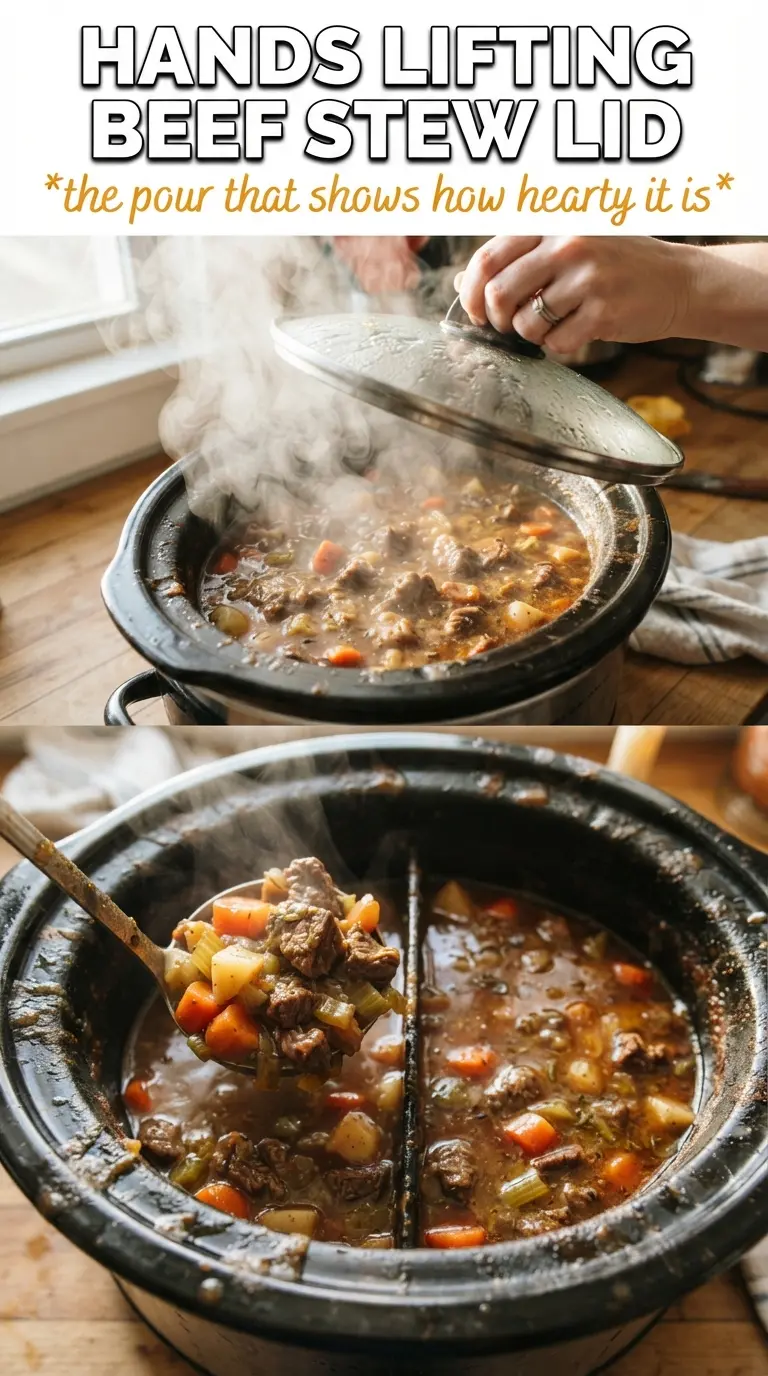
- Beef chuck — This is the cut that gets tender in a slow cooker. Chuck has enough fat and connective tissue to soften during the long cook, which is what gives you that fall-apart texture. Lean stew meat can work, but it often dries out before it gets silky.
- Baby potatoes — These hold their shape better than russets and don’t dissolve into the broth. Halving them helps them cook through at the same pace as the beef. If you only have larger potatoes, cut them into 1.5-inch chunks so they finish evenly.
- Tomato paste and diced tomatoes — The paste brings concentrated body and color, while the diced tomatoes add acidity that keeps the stew from tasting one-note. Don’t skip the paste; it’s doing more than the tomatoes alone can do. If you want a slightly smoother broth, use fire-roasted diced tomatoes for a deeper finish.
- Red wine or extra broth — Wine adds a darker, more complex base, especially after hours in the slow cooker. If you leave it out, the stew still works with extra broth, but it will taste a little cleaner and less rounded. Use a dry red, not anything sweet.
- Worcestershire sauce, thyme, rosemary, and bay leaves — These are the backbone of the seasoning. Worcestershire adds savory depth, thyme gives the stew its classic herbal note, and rosemary brings a piney edge that stands up to the beef. Pull the bay leaves out before thickening; they’ve already done their job.
The Slow Cooker Steps That Keep the Beef Tender
Season and Layer With Purpose
Season the beef generously before it goes into the pot. That first layer of salt matters because the meat spends hours cooking in the same liquid, and underseasoning at the start leaves the whole stew dull. Put the vegetables in the bottom first, then nestle the beef on top so it braises as the broth rises around it instead of sitting in a boiling bath.
Build the Broth Before the Lid Goes On
Add the garlic, broth, wine, tomatoes, tomato paste, Worcestershire, thyme, rosemary, and bay leaves over the top. The tomato paste needs enough liquid and time to disperse, so don’t leave it in a clump on one spot. Once the lid is on, resist lifting it unless you have to; every peek steals heat and stretches the cook time.
Let the Long Cook Do the Work
Cook on Low for 8 to 10 hours, or on High for 4 to 5 hours if you’re short on time. Low is better here because chuck needs steady heat to relax into tenderness. If the beef still feels tight when you poke it with a fork, it isn’t done yet — keep cooking until the meat pulls apart without resistance.
Thicken at the End, Not the Beginning
Remove the bay leaves, then stir in the cornstarch slurry and cook on High for 20 to 30 minutes until the broth thickens. Adding the slurry early can dull the texture and leave the stew gummy after hours of cooking. The finished broth should coat a spoon and cling lightly to the beef and vegetables instead of pooling thinly at the bottom.
How to Adapt This Crock Pot Beef Stew Without Losing the Good Part
Make It Gluten-Free Without Changing the Texture
This recipe is already naturally gluten-free as written, which is one of the reasons it works so well for a crowd. Just check the Worcestershire sauce and broth labels, since some brands sneak in gluten. The cornstarch slurry keeps the finished stew thick without any flour.
Skip the Wine and Still Get Deep Flavor
Use extra beef broth in place of the wine if you want to keep it alcohol-free. You’ll lose a little of the sharpness that wine brings, so a splash more Worcestershire helps keep the broth from tasting flat. The stew will still be rich and savory, just a little less layered.
Use Carrots and Potatoes That Hold Their Shape
Cut the carrots thick and keep the potato pieces on the larger side if you want distinct chunks in the finished stew. Smaller pieces break down faster and turn the broth cloudy. If you prefer a softer, more rustic stew, dice them smaller and let them melt into the sauce a bit more.
Storage and Reheating
- Refrigerator: Store for up to 4 days. The broth thickens a bit as it chills, which is normal.
- Freezer: Freezes well for up to 3 months. Cool it completely first, then portion it into airtight containers so the potatoes don’t get crushed when you reheat.
- Reheating: Warm it gently on the stove over medium-low heat or in the microwave at half power, stirring now and then. If it looks too thick, add a splash of broth before heating so the potatoes and beef don’t dry out.
Answers to the Questions Worth Asking
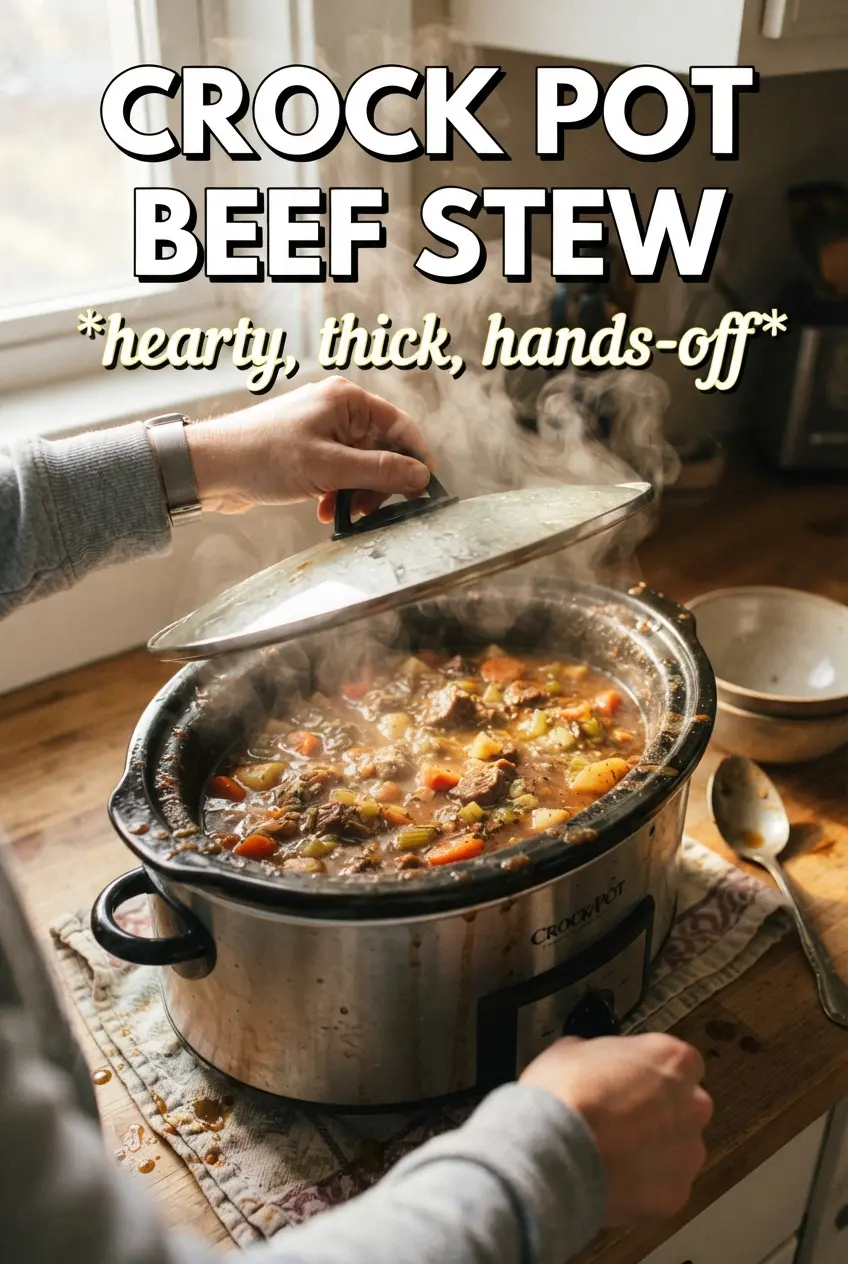
Crock Pot Beef Stew
Ingredients
Equipment
Method
- Season the beef generously with salt and pepper so every bite has flavor.
- Place the potatoes, carrots, celery, and onion in the bottom of the Crockpot, then nestle the beef on top.
- Add the garlic, beef broth, wine or extra broth, diced tomatoes, tomato paste, Worcestershire sauce, dried thyme, dried rosemary, and bay leaves.
- Cook on Low for 8-10 hours, or on High for 4-5 hours, until the beef is fall-apart tender and the vegetables are soft.
- Remove the bay leaves, then stir in the cornstarch slurry (cornstarch whisked with water) to thicken the broth.
- Cook on High for 20-30 minutes, until the broth visibly thickens and clings to the stew.
- Season with salt and pepper to taste, then serve while hot.