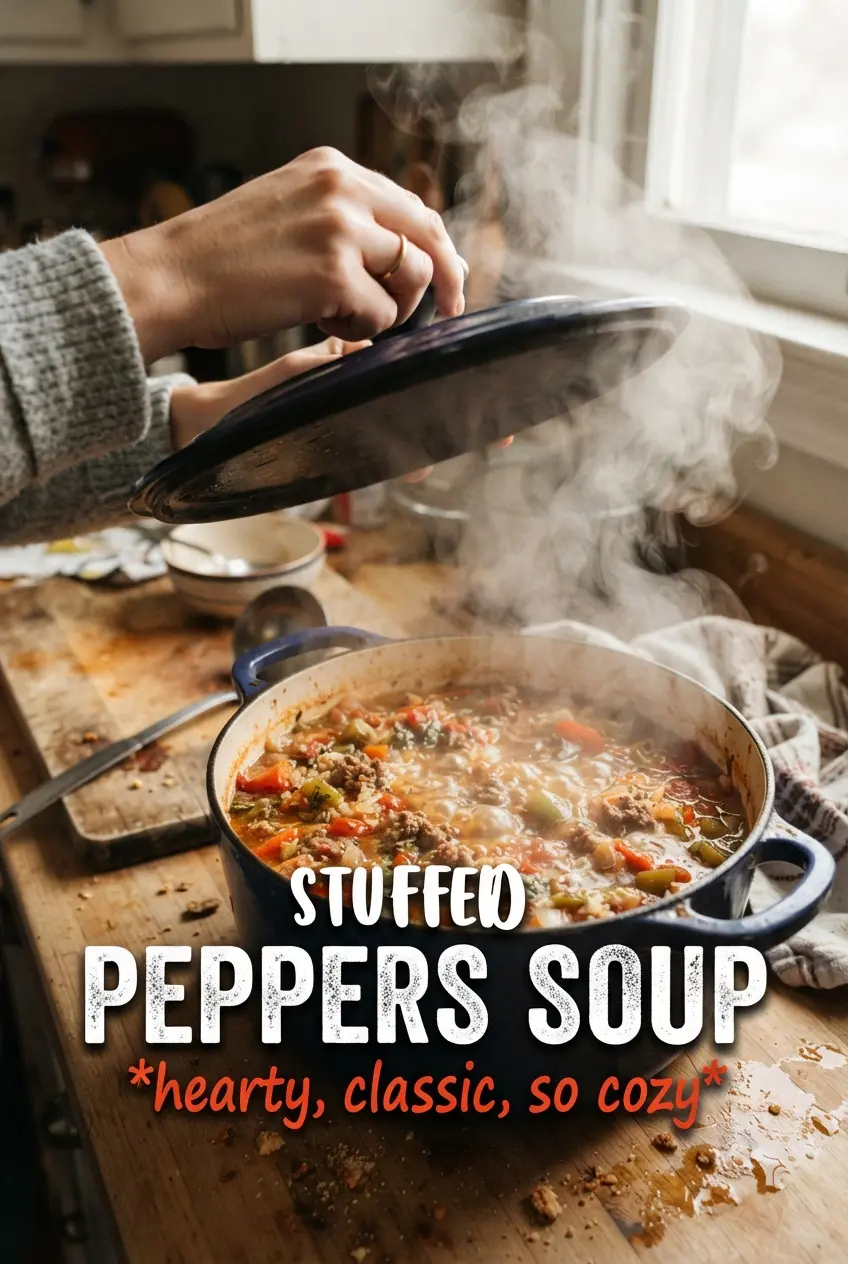
Stuffed peppers soup gives you all the comfort of classic stuffed peppers without the fuss of hollowing, filling, and baking individual peppers. The broth turns rich and tomato-y, the rice soaks up all that flavor, and the beef keeps every spoonful hearty enough to count as dinner. Topped with cheddar and a little parsley, it lands somewhere between a cozy soup and the old-school casserole people keep going back to.
The trick here is building the base in layers. Browning the beef first gives you a savory foundation, then the onion, peppers, garlic, and tomato paste cook long enough to lose their raw edge and pick up a little sweetness. That short sauté step matters more than it looks on paper. It keeps the soup from tasting flat, which is the main problem with a lot of stuffed pepper soup recipes.
Below, I’ve included the timing that keeps the rice tender instead of mushy, plus a few swaps that work if you want to adjust the meat, make it lighter, or stretch it for another meal.
The rice stayed tender, the peppers still had a little bite, and the broth tasted like stuffed peppers in spoonable form. I added the cheddar on top and it melted into the soup just enough to make it taste even richer.
Love the hearty tomato broth and cheesy stuffed pepper flavor? Save this Stuffed Peppers Soup for the nights when you want a full dinner in one bowl.
The Secret to Keeping the Rice Tender Instead of Mushy
The biggest mistake with stuffed peppers soup is letting the rice sit in the pot too long. Rice keeps drinking liquid even after it turns tender, so if you simmer it hard for ages, the broth gets thick and the grains lose their shape. That’s why the rice goes in near the end and the soup simmers just until it’s cooked through.
The other place this recipe can go sideways is the tomato base. Tomato paste needs a minute or two in the pot with the vegetables so it darkens slightly and loses that raw, metallic edge. Skip that step and the soup tastes thinner than it should, even if you use good broth.
- Brown the beef fully. You want actual browning on the meat, not just gray crumbles. Those browned bits add the deep, savory note that makes the soup taste like a real main dish.
- Cook the vegetables until they soften. The peppers should still hold their shape, but the onion needs to turn translucent and lose its sharp bite.
- Hold the rice until the liquid is boiling. Adding it too early can leave it gummy by the time the peppers are tender.
What Each Ingredient Is Doing in This Bowl

- Ground beef — This gives the soup its backbone. An 85/15 or 90/10 blend both work; if you use a fattier blend, drain the excess grease so the broth doesn’t turn slick.
- Bell peppers — Green peppers bring the classic stuffed pepper flavor, while the red pepper adds sweetness. Don’t skip the green ones if you want the soup to taste like the dish it’s named after.
- Tomato paste — This is the quiet ingredient doing the heavy lifting. It deepens the broth and adds body, and it’s worth cooking briefly with the vegetables instead of stirring in straight from the can.
- Long grain white rice — This is the best choice for a soft but separate grain. Instant rice cooks too fast and turns mushy; brown rice needs a longer simmer and more liquid.
- Crushed tomatoes plus diced tomatoes — The crushed tomatoes thicken the soup, while the diced tomatoes leave you with little bites of tomato in the bowl. Using both keeps the texture from getting one-note.
- Cheddar and parsley — The cheddar melts into the hot soup and gives it that stuffed-pepper casserole finish, while parsley keeps the bowl from feeling heavy. Use sharp cheddar if you want the topping to stand out.
Building the Soup in the Right Order
Browning the Beef First
Start by cooking the beef in a large pot until it loses its pink color and begins to brown. If there’s a lot of fat in the pot, drain it off before adding anything else. That keeps the broth from becoming greasy and lets the tomato and pepper flavors come through cleanly.
Softening the Peppers and Onion
Add the onion and diced peppers to the same pot and cook them for 4 to 5 minutes. They should start to soften and smell sweet, but they don’t need to collapse. When the garlic and tomato paste go in, cook them for another 2 minutes so the tomato paste darkens slightly and the garlic loses its raw edge.
Letting the Broth Come Together
Pour in the crushed tomatoes, diced tomatoes, beef broth, Italian seasoning, garlic powder, and smoked paprika. Bring the pot to a boil so the flavors start blending quickly, then reduce the heat before the rice goes in. If the soup stays at a hard boil after the rice is added, the grains can split and the texture turns heavy.
Cooking the Rice Without Overdoing It
Stir in the uncooked rice, cover the pot, and simmer for 18 to 20 minutes. The rice should be tender but still hold its shape, and the soup will thicken naturally as it sits. Taste a grain before serving; if it still has a hard center, give it a few more minutes, but don’t walk away and let it simmer far past done.
Finishing the Bowl
Season with salt and pepper after the rice cooks, not before. Broth and tomatoes reduce as they simmer, so waiting keeps you from oversalting too early. Ladle the soup into bowls and top it with shredded cheddar and parsley so the heat of the soup melts the cheese just enough.
Three Ways to Make This Work for Your Pantry
Use ground turkey instead of beef
Ground turkey works well if you want a lighter bowl, but it needs a little help. Add the smoked paprika and don’t skip the tomato paste step, because turkey brings less built-in richness than beef. The result is a cleaner, leaner soup with the same stuffed pepper structure.
Make it dairy-free
Skip the cheddar on top or use your favorite dairy-free shred if it melts well. The soup itself doesn’t rely on dairy, so you won’t lose the core flavor. A little extra parsley or a spoonful of olive oil at the end helps round out the bowl.
Swap the rice for cauliflower rice
If you want a lower-carb version, stir in cauliflower rice near the end instead of uncooked white rice. It only needs a few minutes to heat through, and adding it late keeps it from going watery. The broth stays bold, but the soup will be lighter and less thick.
Use cooked rice from another meal
Cooked rice can save time, but add it at the very end and simmer only until heated through. If it cooks for the full 18 to 20 minutes, it will break down and thicken the soup too much. This version is best if you want to use leftovers and don’t mind a slightly softer texture.
Storage and Reheating
- Refrigerator: Store for up to 4 days. The rice will keep absorbing broth, so the soup gets thicker as it sits.
- Freezer: It freezes, but the rice softens after thawing. For the best texture, freeze without rice if you know you’ll be saving portions, then add freshly cooked rice when reheating.
- Reheating: Warm gently on the stove over medium-low heat with a splash of broth or water. Microwave reheating works too, but stir halfway through so the rice and tomatoes heat evenly and don’t dry out on top.
Answers to the Questions Worth Asking
Stuffed Peppers Soup
Ingredients
Equipment
Method
- Brown the ground beef in a large pot over medium-high heat until no longer pink, then drain the fat.
- Sauté the onion and all bell peppers for 4-5 minutes until softened, then add the garlic and tomato paste and cook for 2 minutes.
- Add the crushed tomatoes, diced tomatoes, beef broth, Italian seasoning, garlic powder, and smoked paprika, then bring everything to a boil.
- Stir in the uncooked long grain white rice, cover, and simmer for 18-20 minutes until the rice is cooked through.
- Season with salt and pepper to taste, then ladle into bowls and top with shredded cheddar and fresh parsley.